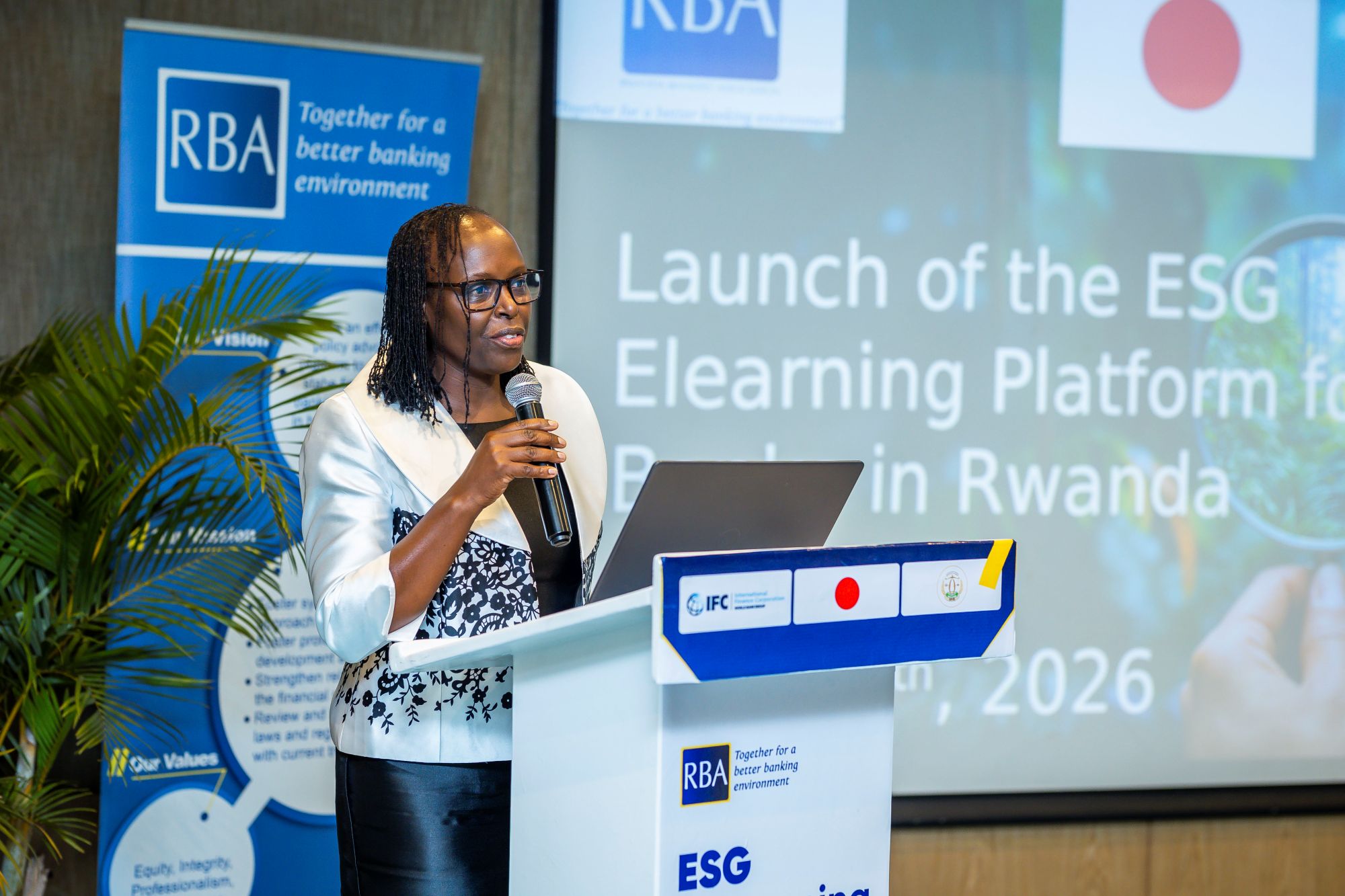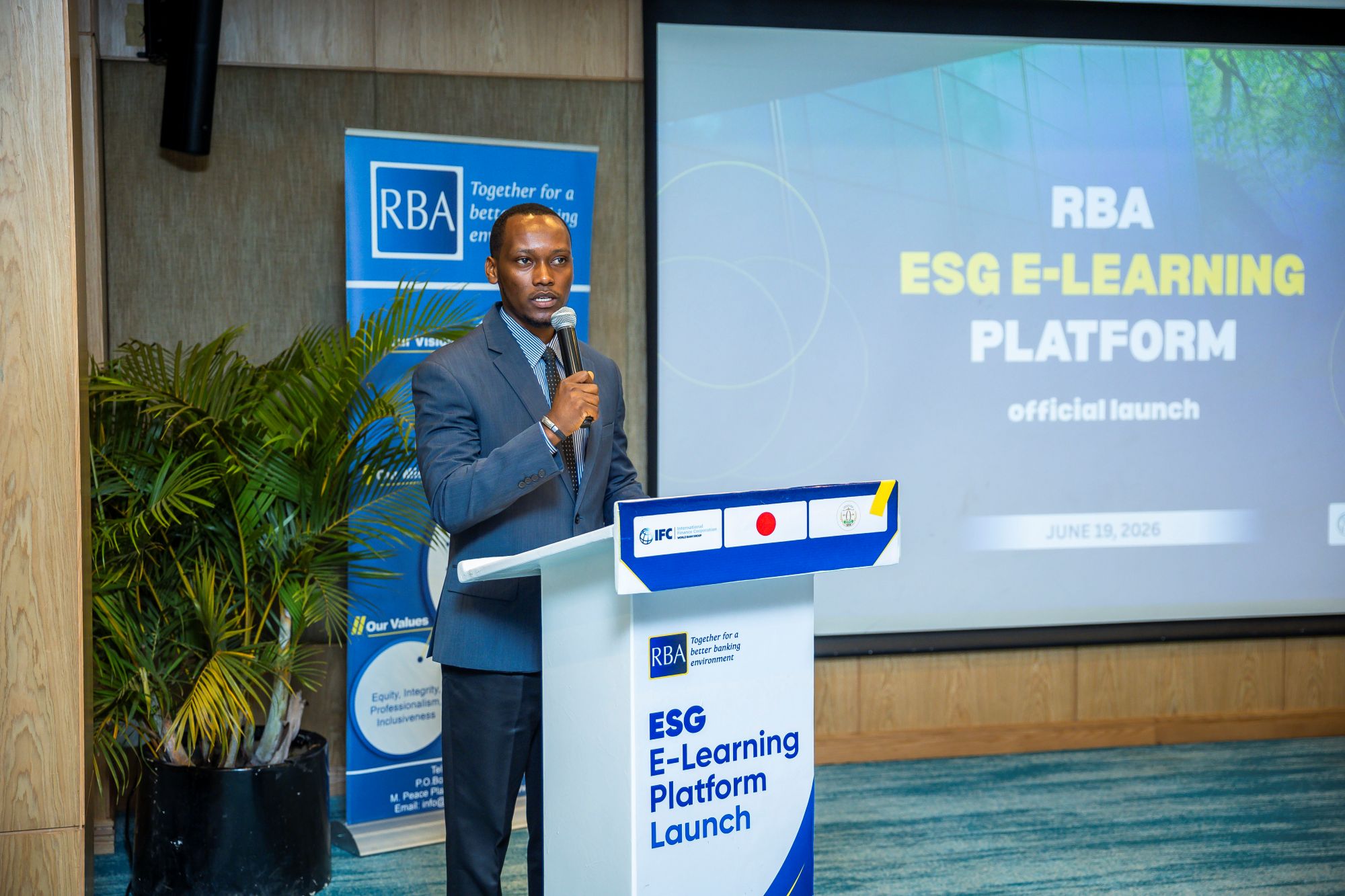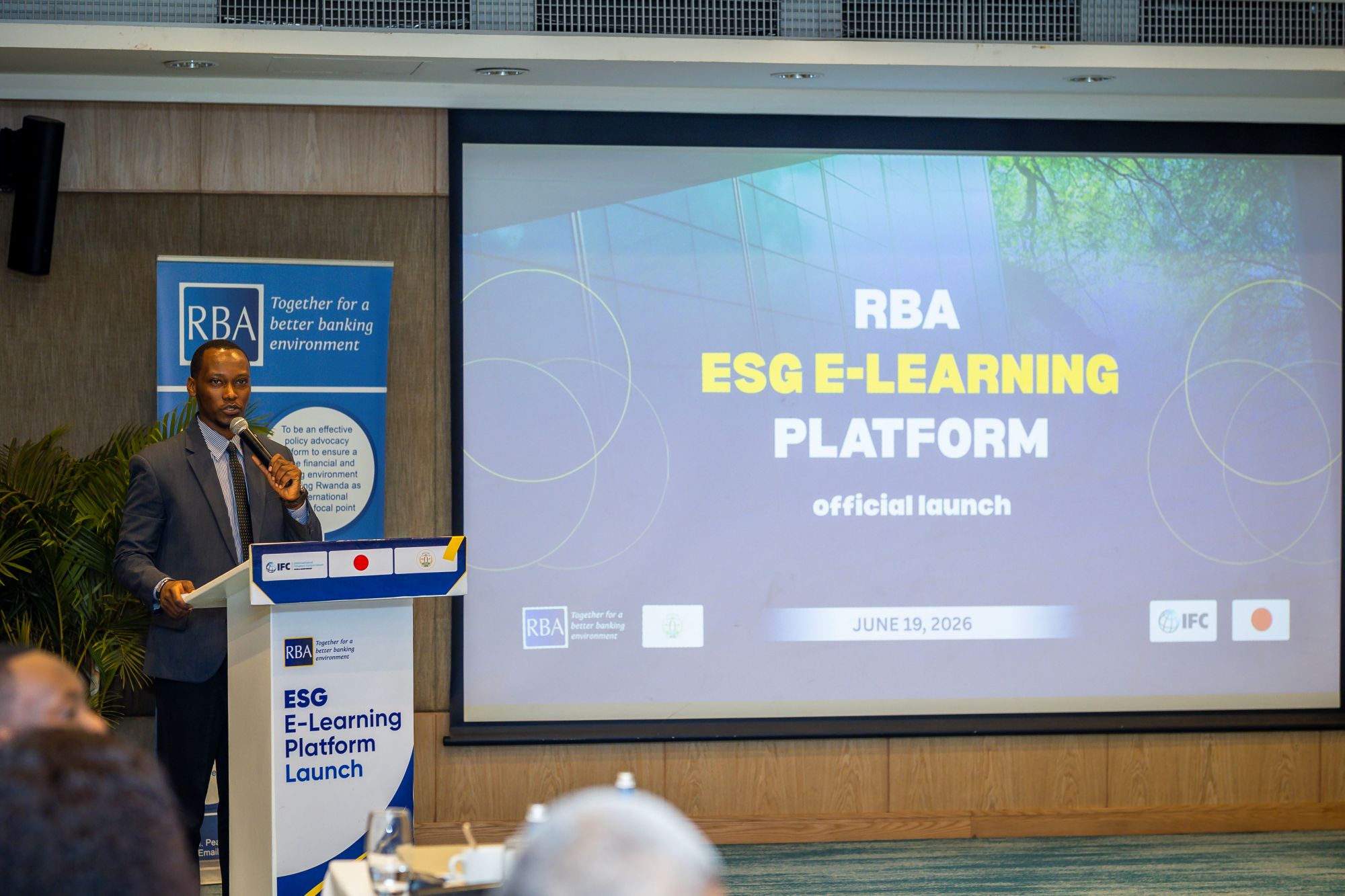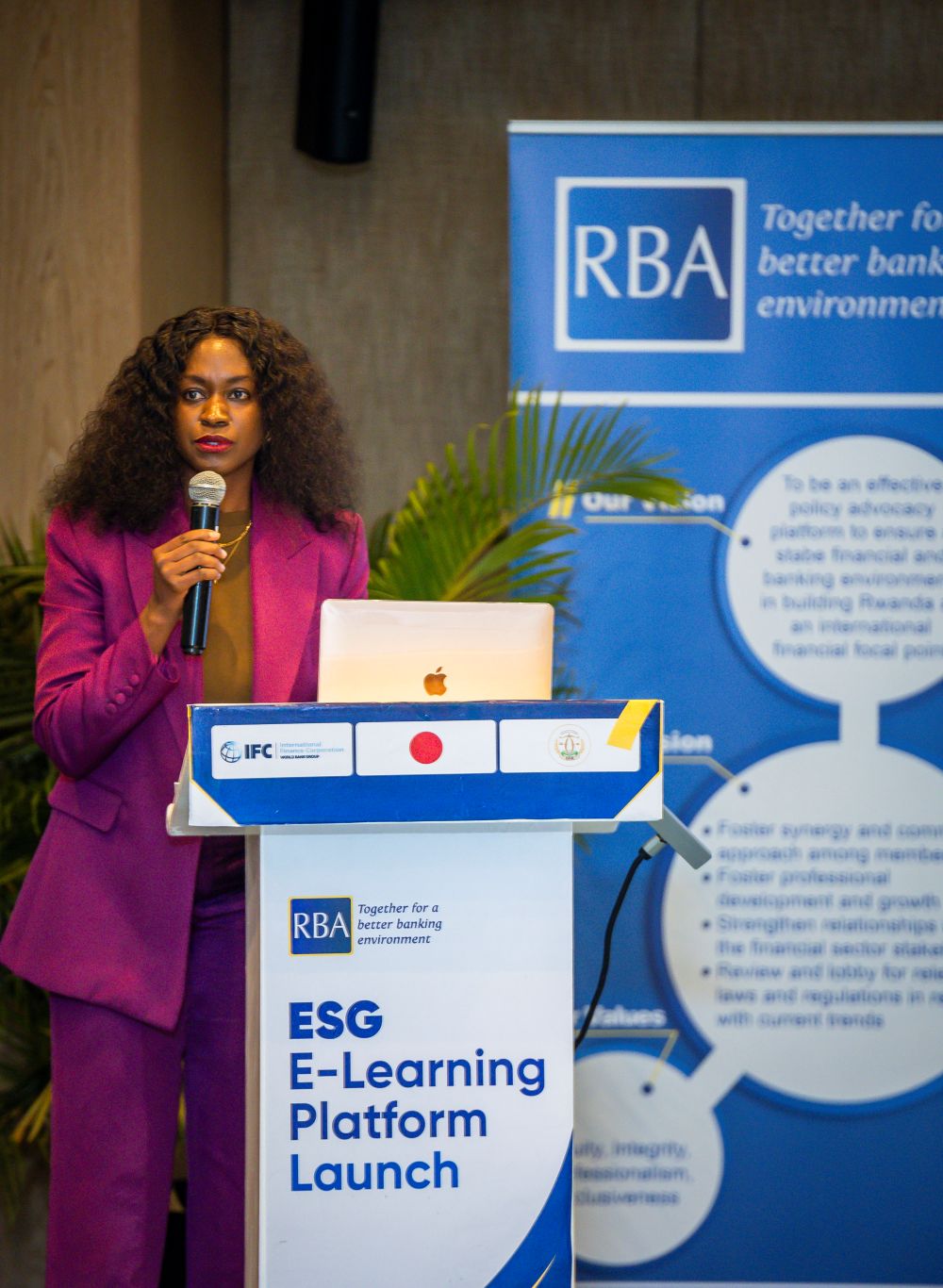

The digital learning platform is expected to equip banking professionals with the skills needed to integrate ESG principles into their operations as the sector responds to growing sustainability, regulatory and market expectations.
The platform provides continuous, accessible and locally relevant training through structured modules covering ESG fundamentals, climate risk management, sustainable finance, governance, ESG disclosure, financial inclusion, nature finance, and environmental and social risk management.
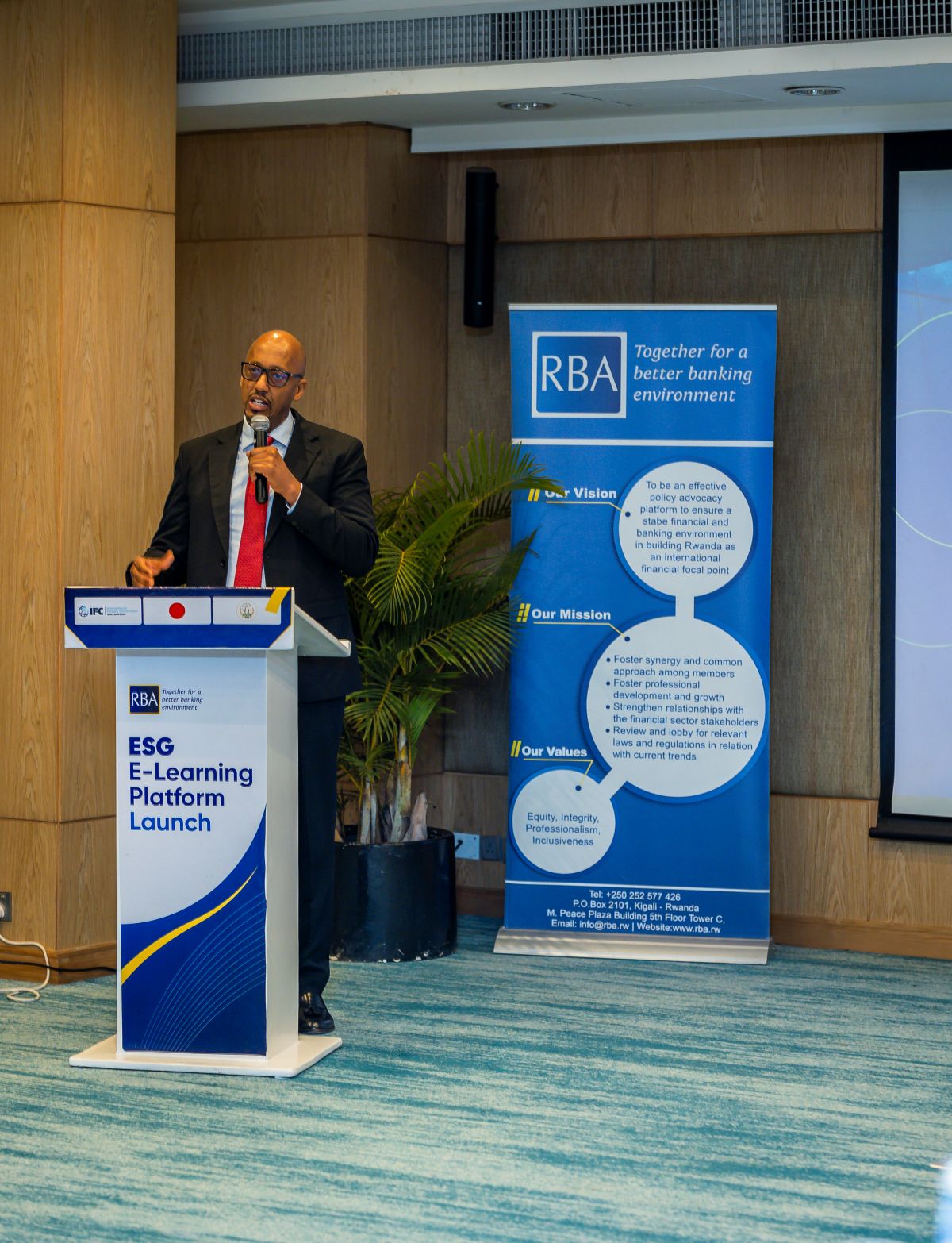
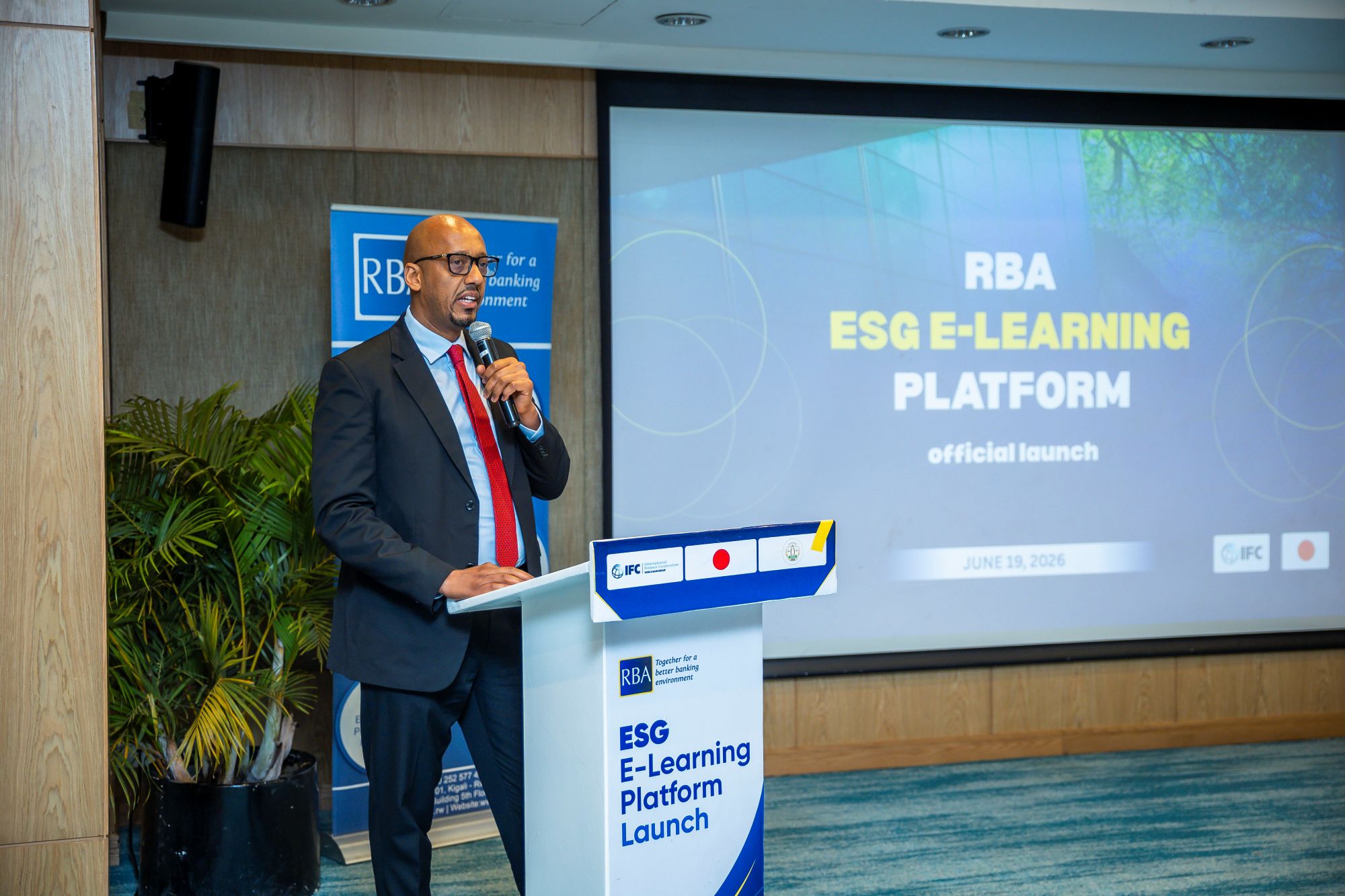
Speaking during the launch on Friday, Rwanda Bankers' Association Chief Executive Officer, Tony Francis Ntore, said sustainability has become a core element of modern banking and financial risk management as climate change, social inequality and governance challenges continue to reshape the global financial landscape.
He noted that Rwanda has already laid a strong foundation through initiatives such as the Green Growth and Climate Resilience Strategy, Nationally Determined Contributions and the Green Taxonomy, prompting the banking sector to strengthen its own sustainability efforts.
Ntore revealed that the association's journey began with the ESG Awareness Guidelines for Banks before evolving into an ESG Community of Practice that brings together banks, regulators and development partners to exchange knowledge and best practices.
'The platform's value goes beyond training,' he stated. 'It strengthens risk management, supports stronger Environmental and Social Management Systems, improves readiness for new regulations, and helps finance Rwanda's sustainable development goals more effectively.'
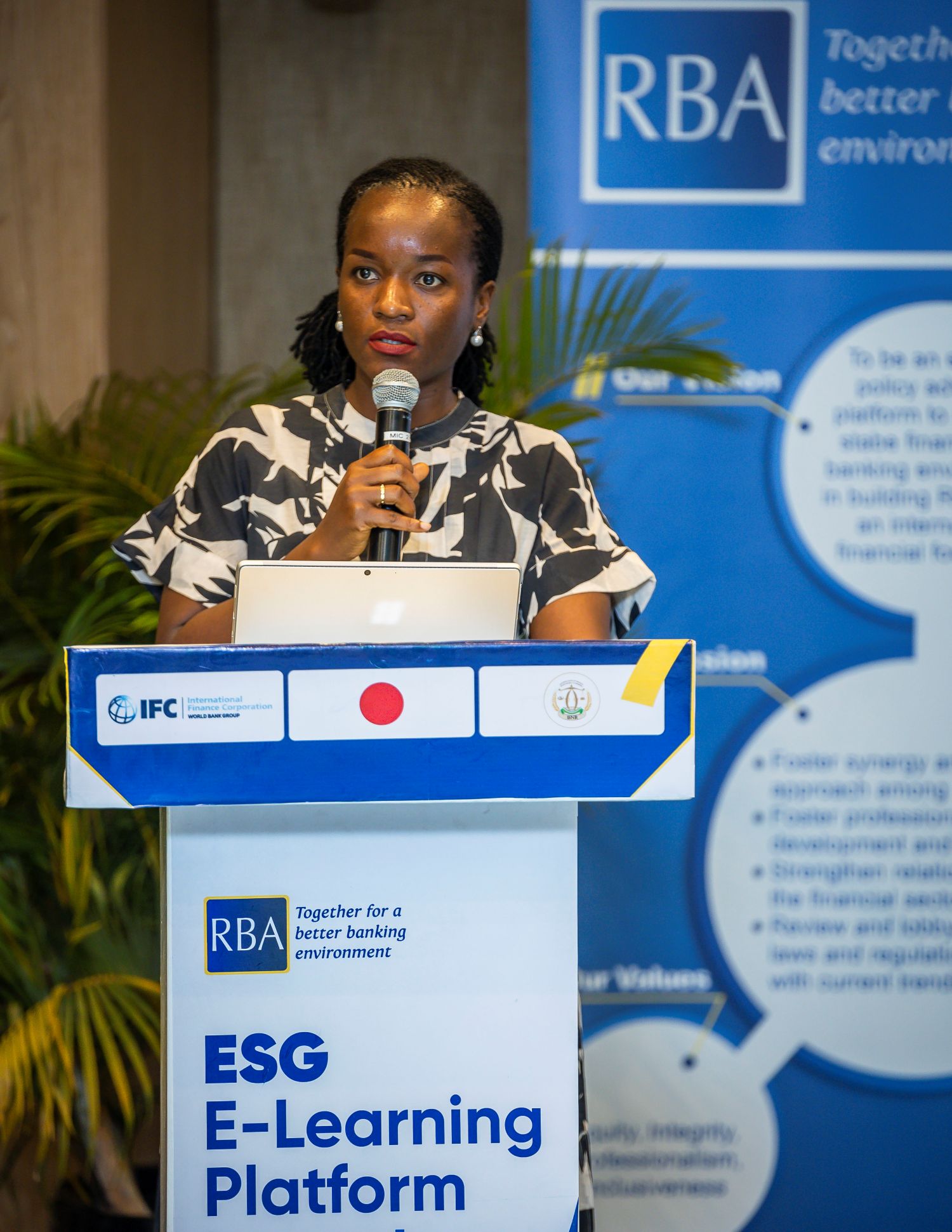
The launch was officiated by the Minister of Environment, Dr. Bernadette Arakwiye, who underscored the critical role financial institutions play in financing Rwanda's transition to a climate-resilient and low-carbon economy.
'Every day, banks make decisions that shape the future of our economy,' she remarked. 'The projects you finance, the risks you assess and the clients you support can accelerate our transition to a greener and more competitive economy, or expose businesses and financial institutions to growing environmental and climate-related risks.'
She added that economic prosperity and environmental protection are mutually reinforcing, arguing that countries and businesses investing in sustainability and resilience are becoming more competitive, more attractive to investors and better prepared for future shocks.
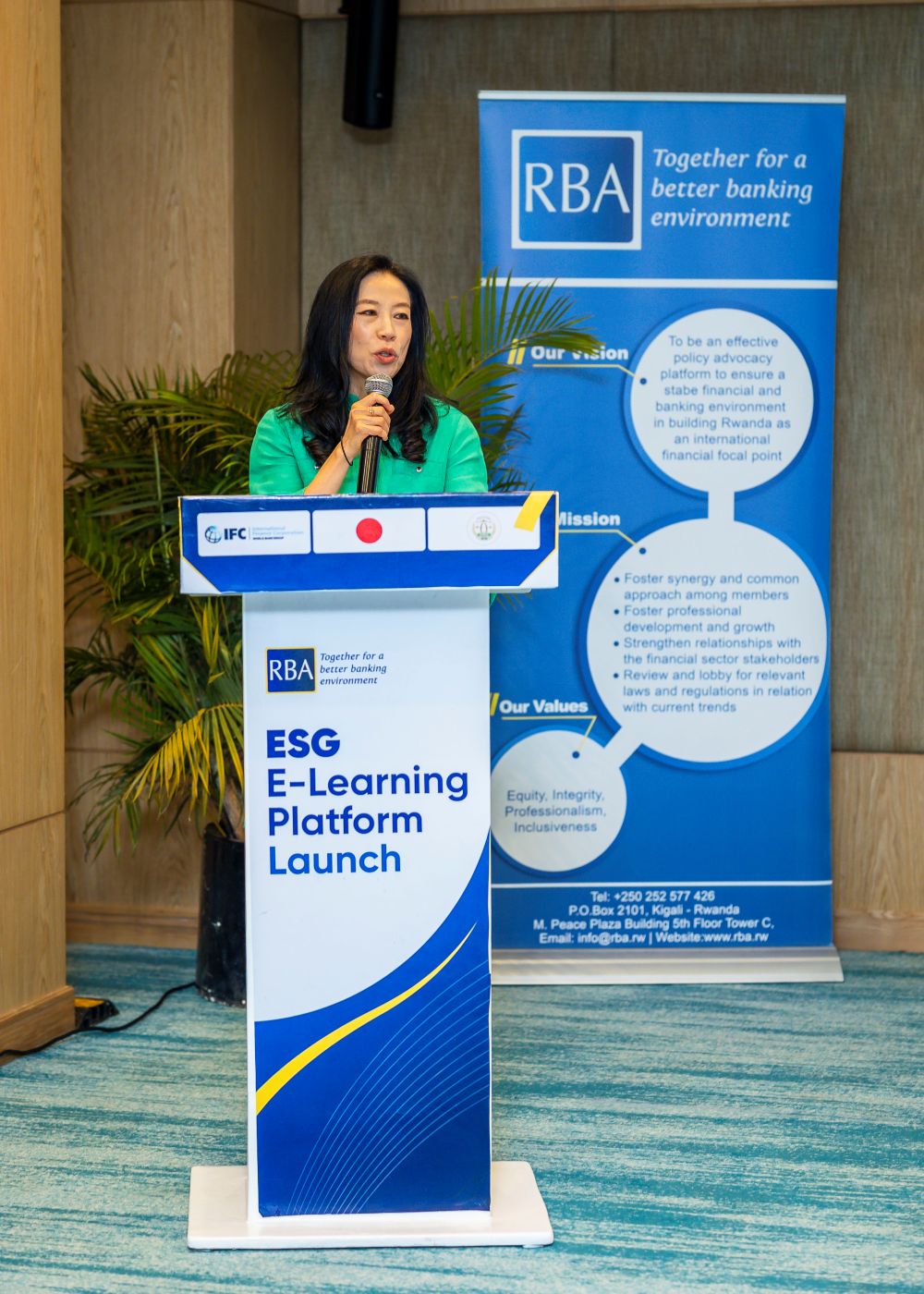
Also speaking at the launch, IFC Resident Representative to Rwanda and Uganda, Jiyeon Janice Ryu, highlighted the importance of strengthening the banking sector's capacity to identify, assess, and finance sustainable investments.
She said that as Rwanda advances its climate, development and economic transformation agenda, financial institutions will play an increasingly important role in directing capital towards projects that generate both financial returns and sustainability outcomes.
Ryu added that continued collaboration among banks, regulators, policymakers, development partners and the private sector will be essential to building a more resilient and sustainable economy.
The launch of the ESG e-learning platform marks another milestone in Rwanda's sustainable finance journey, with the initiative expected to serve as a key resource for building the expertise needed to translate the country's sustainability ambitions into practical action across the financial sector.
The Rwanda Bankers Association is the umbrella body for licensed banks operating in Rwanda and works to promote collaboration within the banking industry while advancing initiatives that support a stable, innovative and inclusive financial sector.