
The meeting took place at Urugwiro Village and brought together Daniel Libeskind, Founder and Principal Architect of Studio Libeskind; Nina Libeskind, Co-founder of Studio Libeskind; Stefan Blach, Partner at Studio Libeskind; and Holm Keller, Chairman of the kENUP Foundation.
The planned monument is expected to transform the Kigali Genocide Memorial in Gisozi, where more than 250,000 victims of the 1994 Genocide against the Tutsi are laid to rest, into a powerful space for remembrance, education, and reflection through cutting-edge technology and a deeply immersive, personal visitor experience.
Daniel Libeskind was born in 1946 in Poland to Jewish parents who survived the Holocaust, the Nazi murder of six million Jewish people during World War II. That history is inseparable from his work. Rather than designing buildings that simply house exhibitions, Libeskind engineers the architecture itself into the emotional experience: walls lean, floors tilt, spaces are left deliberately empty. The building becomes the story.
This is the philosophy coming to Gisozi. Here are 10 projects that show what that means in practice:
1. Jewish Museum Berlin (Germany)
This is the project that founded Studio Libeskind and established its global reputation. The titanium-zinc-clad building zigzags across its site, its surface cut by narrow, irregular windows that slash the facade like wounds.
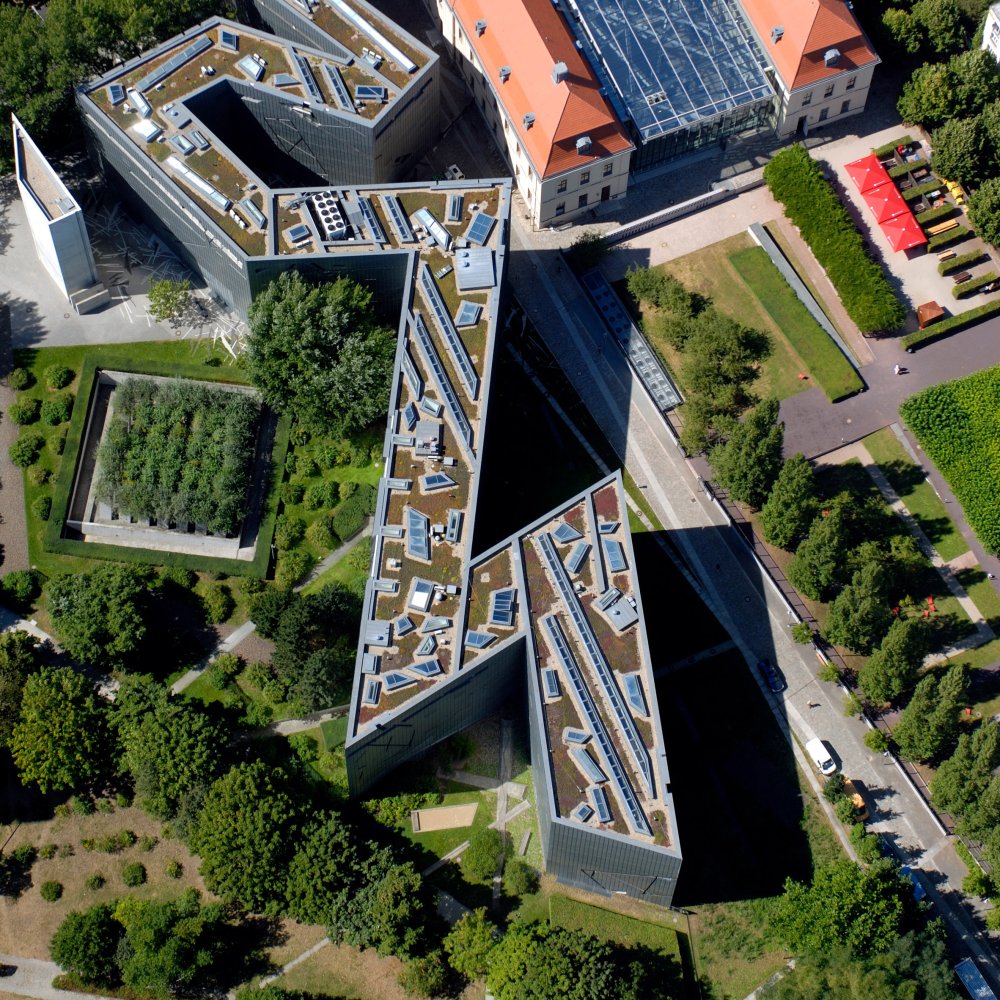
Inside, a series of 'Voids', tall, unheated concrete chambers, cut through the building from basement to roof. Visitors can peer into them from bridges overhead but cannot enter. They represent the absence left by the six million people killed in the Holocaust: the conversations, children, and contributions that no longer exist. The emptiness is the exhibit.
- Completed: 2001
- Construction cost: $87 million (approx. €60 million)
2. World Trade Center Master Plan (New York City, USA)
On 11 September 2001, nearly 3,000 people were killed when terrorist attacks brought down New York's Twin Towers. The 16-acre site became the most scrutinised piece of land on earth. After an intense international competition, Libeskind's 'Memory Foundations' plan was selected to guide the rebuilding.
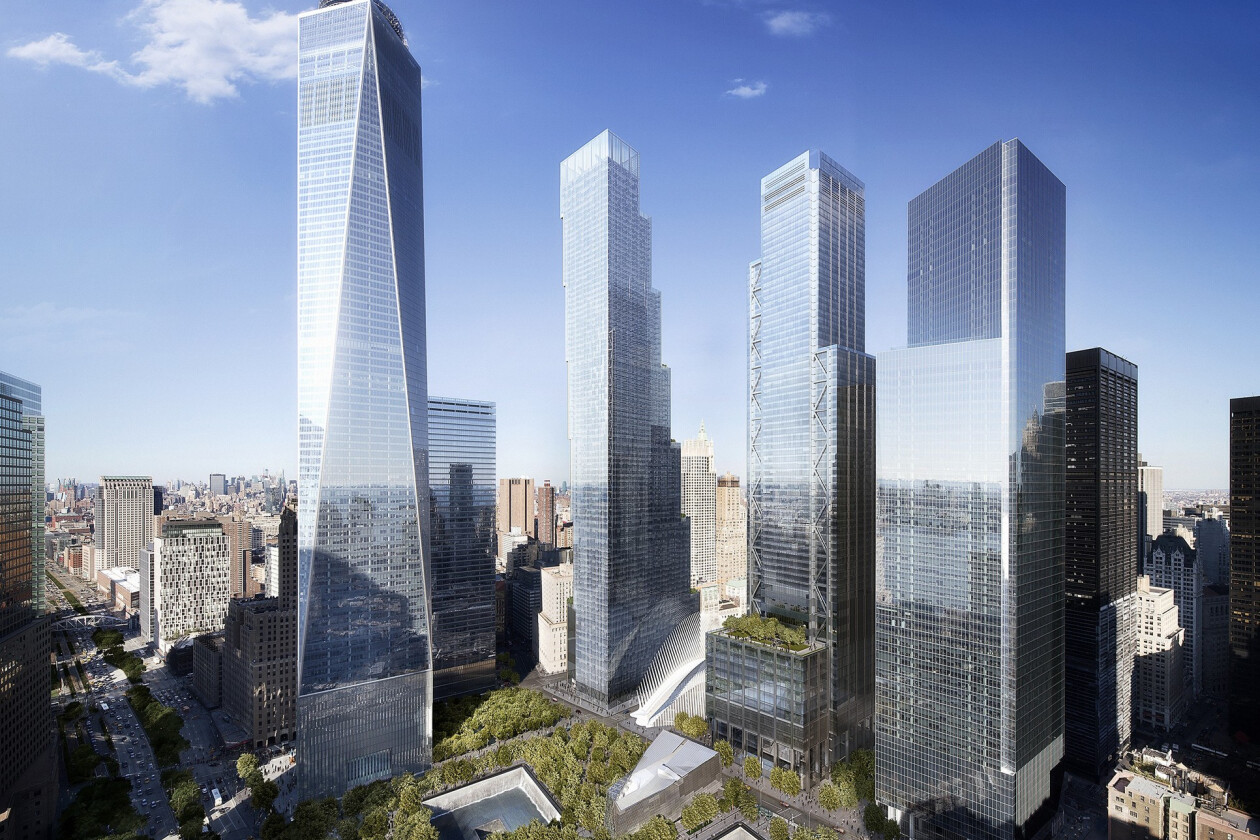
Where others proposed filling the ground with new towers immediately, Libeskind kept the towers' footprints permanently open, the space that became today's memorial pools. He also fought successfully to preserve a stretch of original underground slurry wall that had survived the collapse, framing it as a symbol of resilience. It remains visible to visitors at the 9/11 Memorial Museum today.
- Completed: 2003 (master plan selected); site construction 2006–2016
- Construction cost: Total site redevelopment cost over $20 billion. One World Trade Center alone cost $3.9 billion, making it the most expensive skyscraper ever built in the United States at the time.
3. Imperial War Museum North (Greater Manchester, UK)
During World War II, the Trafford Park area of Greater Manchester, home to factories producing Lancaster bombers and Rolls-Royce aircraft engines, was targeted in the Manchester Blitz. Over two nights in December 1940, 684 people were killed. The Imperial War Museum's northern branch was built on that same bombed waterfront.
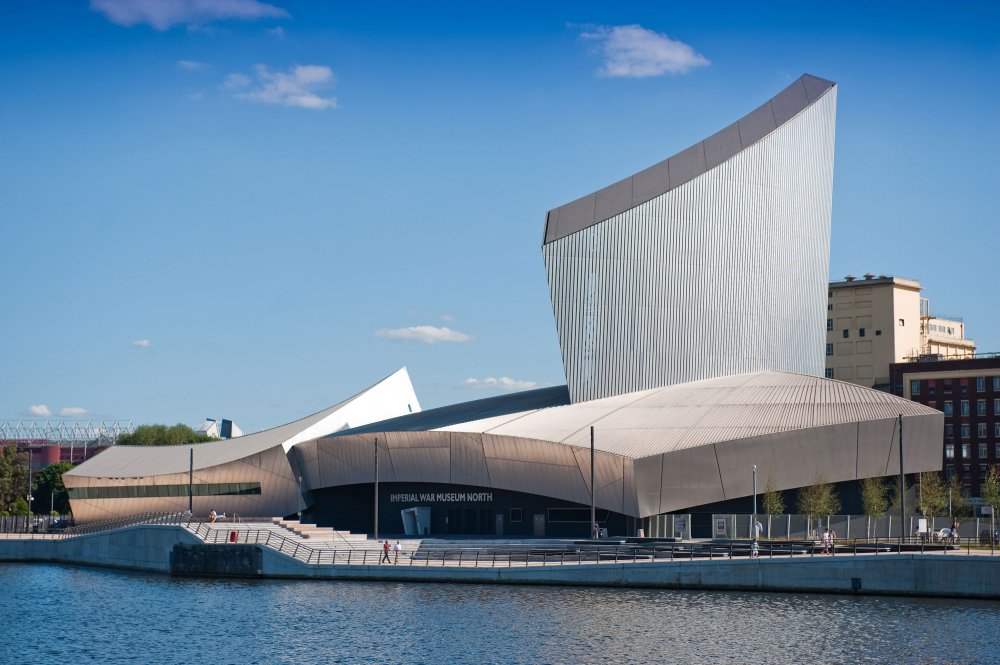
The building is composed of three interlocking aluminium-clad shards representing war on earth, in the air, and on water, fragments of a globe shattered by conflict. Inside, floors curve subtly underfoot and walls lean at unsettling angles. There are no comfortable right angles. The disorientation is deliberate: Libeskind wanted the building itself to produce the instability of wartime before a single exhibit is read.
- Completed: 2002
- Construction cost: £28.5 million (approx. $40 million). Originally budgeted at £40 million, the project was completed under budget after funding shortfalls led to design economies including substituting metal for concrete in the shards.
4. Military History Museum of the Bundeswehr (Dresden, Germany)
In February 1945, British and American bombers conducted devastating raids over Dresden, creating a firestorm that killed tens of thousands of civilians. Decades later, Libeskind was asked to transform the city's neoclassical military arsenal, originally completed in 1876, from a glorification of military power into an honest reckoning with war's costs.
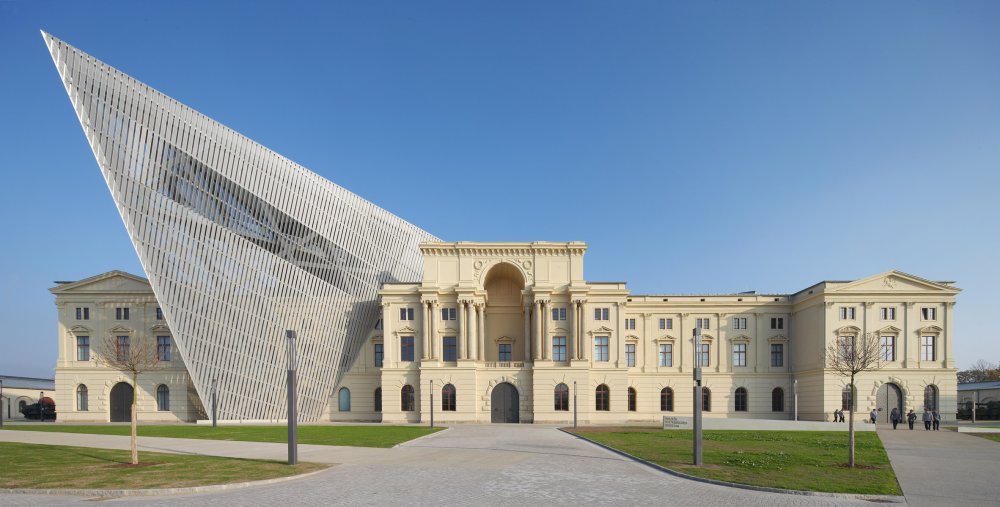
His response was to drive a massive five-storey steel-and-glass wedge straight through the centre of the old building. The contrast between nineteenth-century stone and sharp modern glass is deliberately violent: authoritarian order cracked open. The tip of the wedge points in the direction from which Allied bombers approached on those February nights, a permanent, silent gesture anchoring the building to the city's defining wound.
- Completed: 2011
- Construction cost: €48 million (approx. $65 million), funded entirely by the German federal government.
5. National Holocaust Monument (Ottawa, Canada)
Canada's national Holocaust memorial features six raw concrete volumes that, viewed from above, form a fractured Star of David, the ancient symbol of Jewish identity, broken apart. Visitors move through narrow, oppressive concrete corridors that gradually open upward to the sky: confinement giving way to hope.
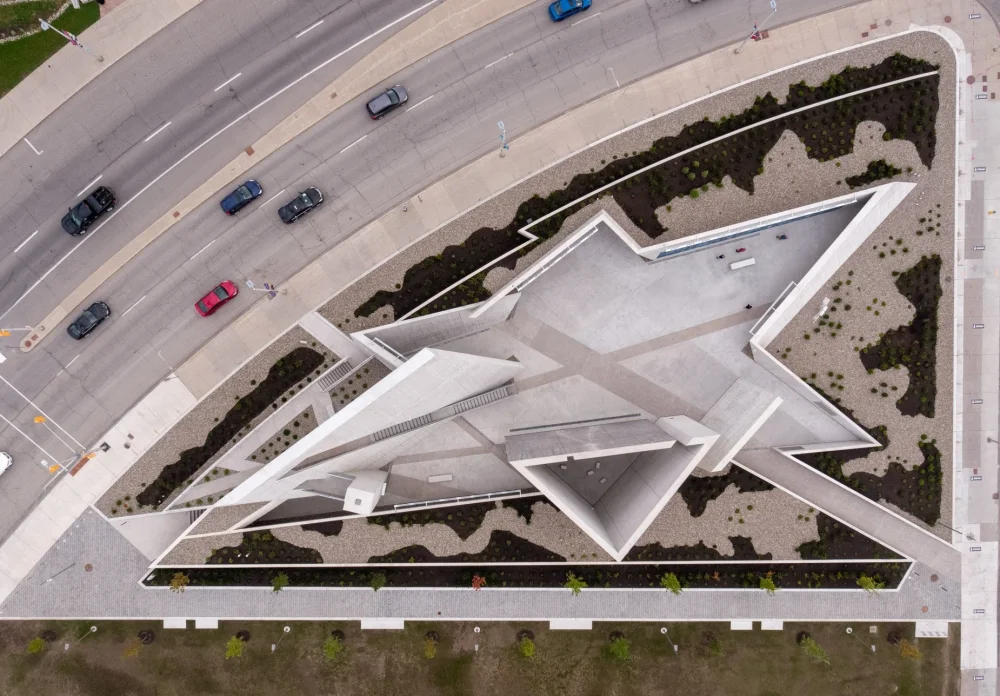
The interior walls carry large monochromatic photographs by artist Edward Burtynsky, laser-etched directly into the concrete, haunting wide-angle images of European death camp landscapes. History is not displayed on a panel to be walked past. It is built into the walls themselves.
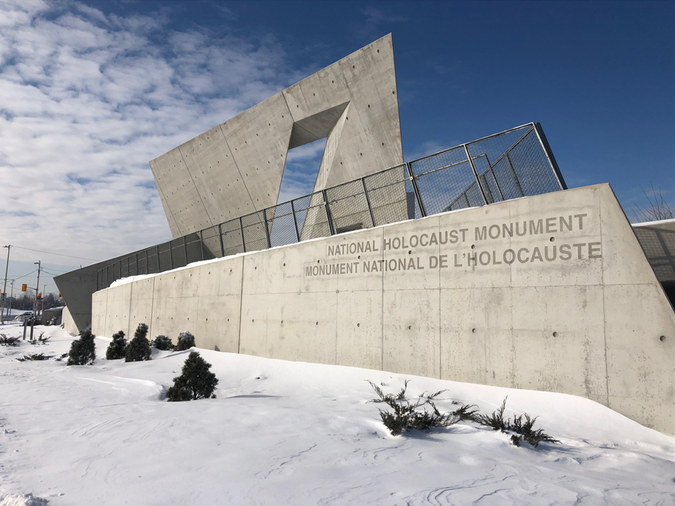
- Completed: 2017
- Construction cost: C$7.2 million (approx. $5.6 million USD), split between the Canadian government and private donors.
6. Reflections at Keppel Bay (Singapore)
Not every Libeskind project is a memorial. This luxury waterfront development—six curved glass towers between 24 and 41 storeys, demonstrates that the studio's philosophy translates equally into the architecture of everyday life.
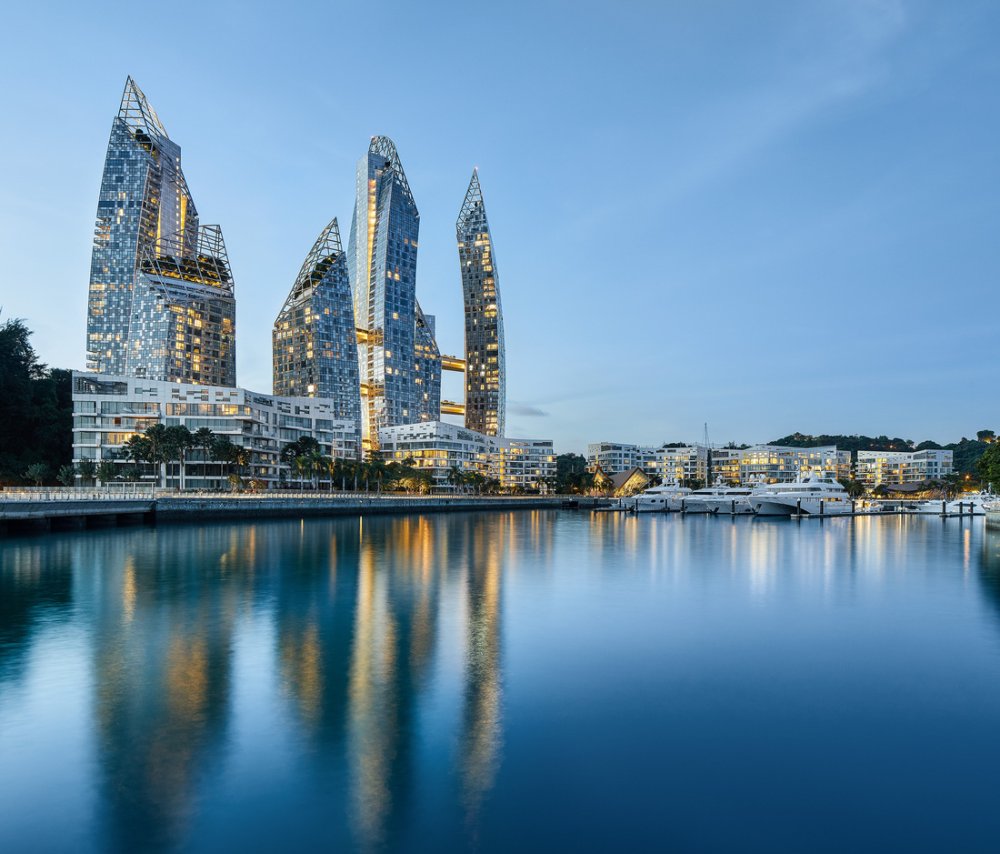
In a city defined by residential uniformity, the development was designed so that no two apartments across the entire complex share the same floor plan or view. Shifting angles, alternating orientations, and changing crown geometry give every home its own character. It is Libeskind's argument, made in glass and steel, that people deserve to live in spaces shaped for them, not mass-produced around them.
- Completed: 2011
- Construction cost: Construction cost not publicly disclosed. The development sold 1,129 luxury apartments across a 750-metre waterfront site, with unit prices at the time of sale ranging from SGD $1.5 million to over SGD $10 million.
7. Złota 44 (Warsaw, Poland)
Warsaw was systematically destroyed by Nazi Germany during World War II, over 85% of the city razed. That it stands today, rebuilt and thriving, is one of history's great acts of collective will. It was into this city that Libeskind returned to build his first major project in his birth country.
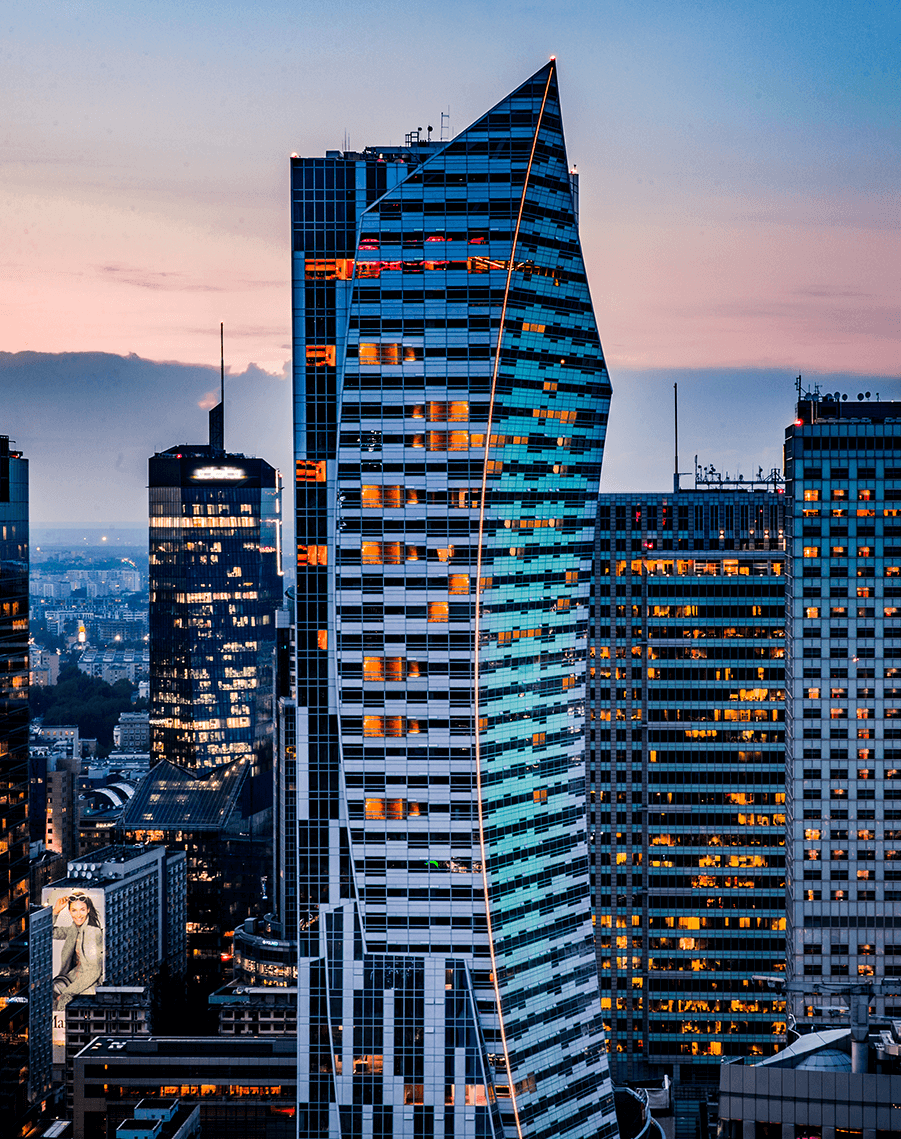
The 52-storey, 192-metre luxury residential tower's sweeping glass facade curves upward in the shape of an eagle's wing, Poland's national emblem, representing freedom and sovereignty. Across the street, the heavy communist-era Palace of Culture looms. Złota 44 rises in direct contrast: light, fluid, and forward-looking.
- Completed: 2016
- Construction cost: Estimated €163 million (approx. $175 million) construction cost. The project faced severe financial difficulties; the original developer sold it midway through construction for just €50 million after significant losses.
8. Haeundae Udong Hyundai I'Park (Busan, South Korea)
Busan is South Korea's second largest city and its largest port, a place whose identity is inseparable from the ocean. This waterfront development comprises three residential towers, the tallest reaching 72 storeys, alongside a hotel, offices, and retail.
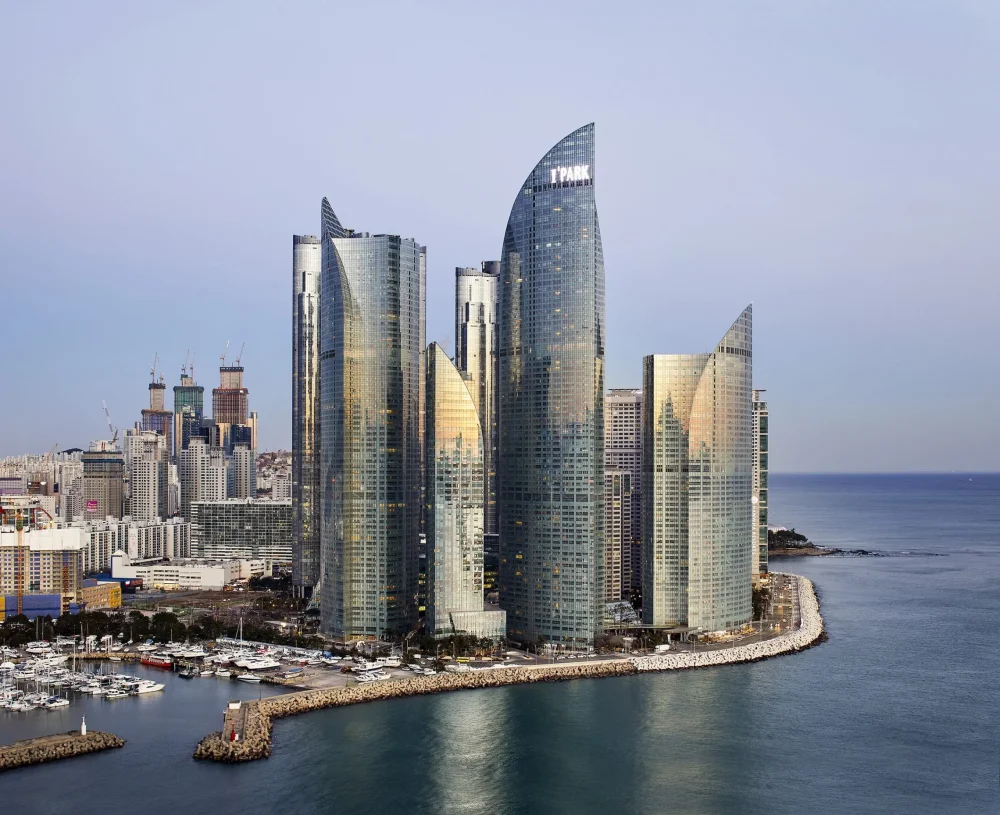
Each tower was mathematically modelled to present a completely different silhouette depending on the angle of approach, the buildings seem to shift and breathe as you move around them. The curves draw on Korean natural tradition: ocean waves, wind-filled sails. The result is a large-scale modern complex that belongs unmistakably to the coastline it occupies.
- Completed: 2011
- Construction cost: Construction cost not publicly disclosed. The full 4.5-million-square-foot mixed-use development is one of the largest residential complexes in South Korea.
9. PwC Tower / CityLife Master Plan (Milan, Italy)
Part of a major regeneration of Milan's historic fairgrounds, this 175-metre office tower, known locally as Il Curvo (The Curved One), tilts and arcs in a single clean geometric sweep from base to summit. In a skyline of vertical towers, its curve is immediately legible from across the city.
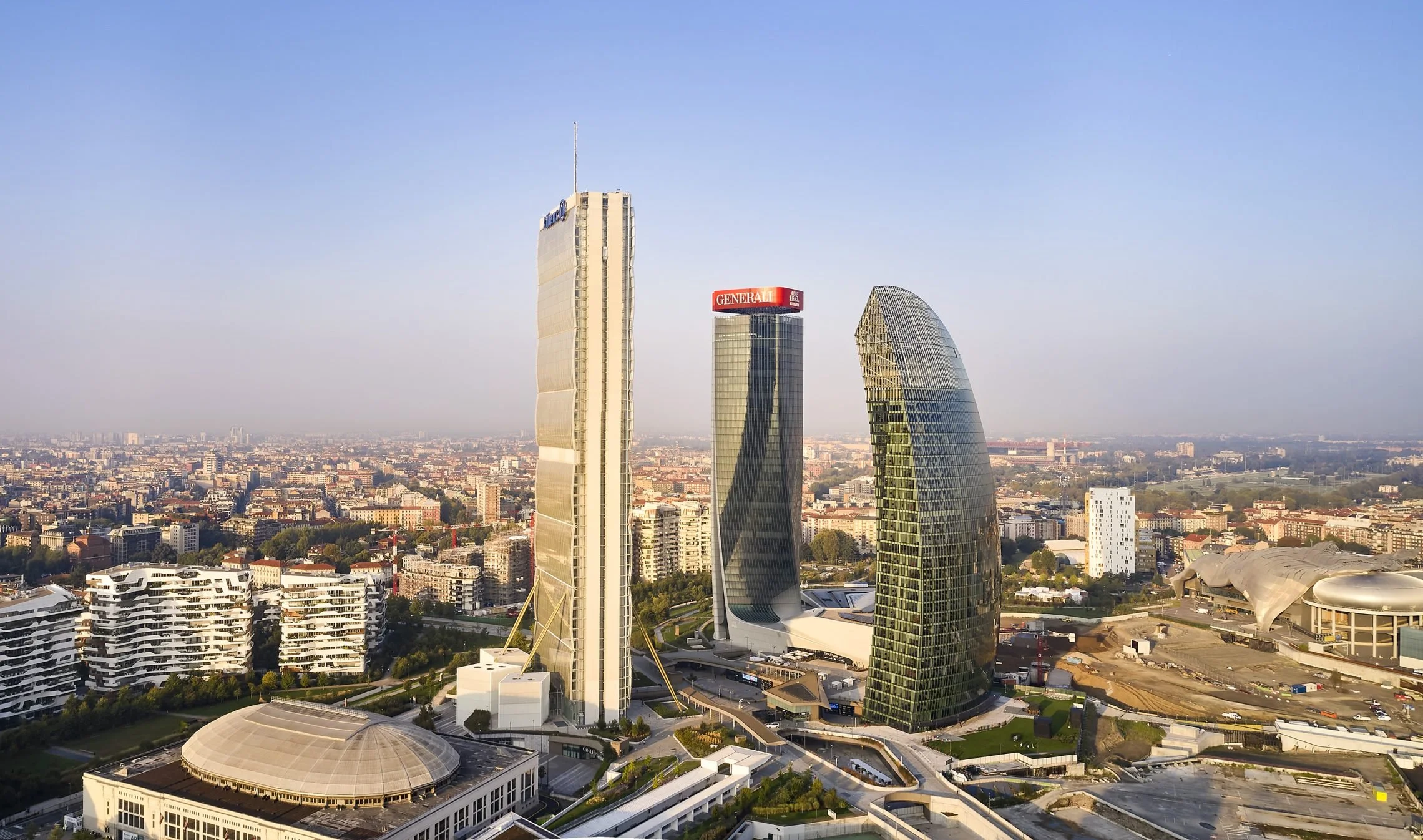
The design is a contemporary reinterpretation of the arcing forms found throughout Italian architectural history, translated into glass and steel. A building that speaks to where it stands rather than ignoring it.
- Completed: 2020
- Construction cost: Construction cost not publicly disclosed. The broader CityLife masterplan, encompassing three towers by Libeskind, Zaha Hadid, and Arata Isozaki, plus residential and retail, represents a total investment of over €2 billion.
10. Infinity Towers (Shanghai, China)
Currently under construction for the Lingang Group, these twin 100-metre commercial towers twist as they rise, their forms designed to evoke two dancing cranes, ancient Chinese symbols of longevity and wisdom, leaning toward each other mid-step.
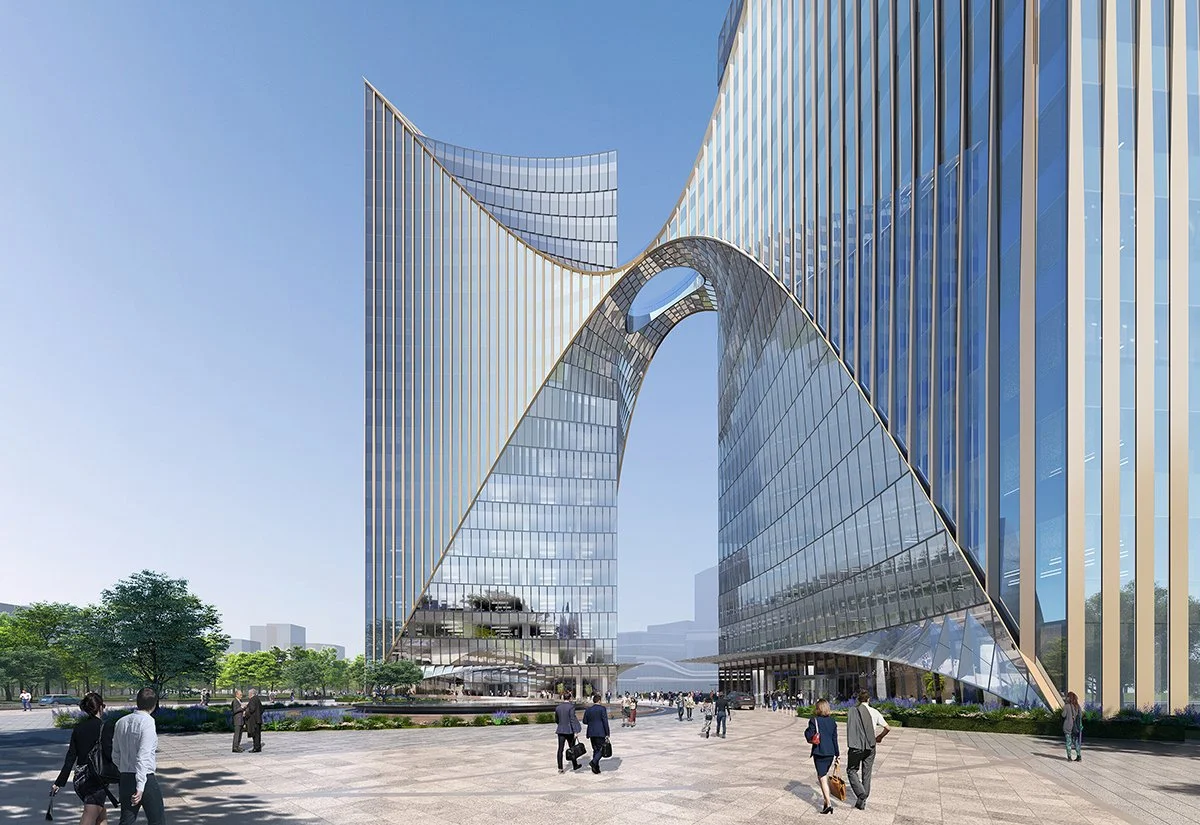
The towers are connected at the 15th floor by a skybridge whose centre features a circular opening in the floor, looking directly down onto public water plazas below. It is a small gesture but a characteristic one: in a building designed to function, Libeskind finds the moment where structure, nature, and wonder briefly meet.
- Completed: Under construction (expected completion not publicly confirmed)
- Construction cost: Construction cost not publicly disclosed.
Other Notable Projects
Studio Libeskind has also designed the
- Zhang Zhidong Museum (Wuhan, China)
- Tikva Jewish Museum (Lisbon, Portugal)
- Modern Art Center Vilnius (Lithuania)
- Danish Jewish Museum (Denmark)
- The Garden of Earthly Worries
- The Wheel of Conscience Crystals at CityCenter (United States)
- Bord Gáis Energy Theatre (Ireland)
- Run Run Shaw Creative Media Centre (Hong Kong)
- Ogden Centre at Durham University (United Kingdom)
- Memoria e Luce 9/11 Memorial (Padua, Italy)
- Albert Einstein Discovery Center (Ulm, Germany)
Together, these projects demonstrate Studio Libeskind's defining conviction: that architecture is not a container for history, it is a way of making history felt. It is an approach that speaks directly to what Kigali will build at Gisozi.