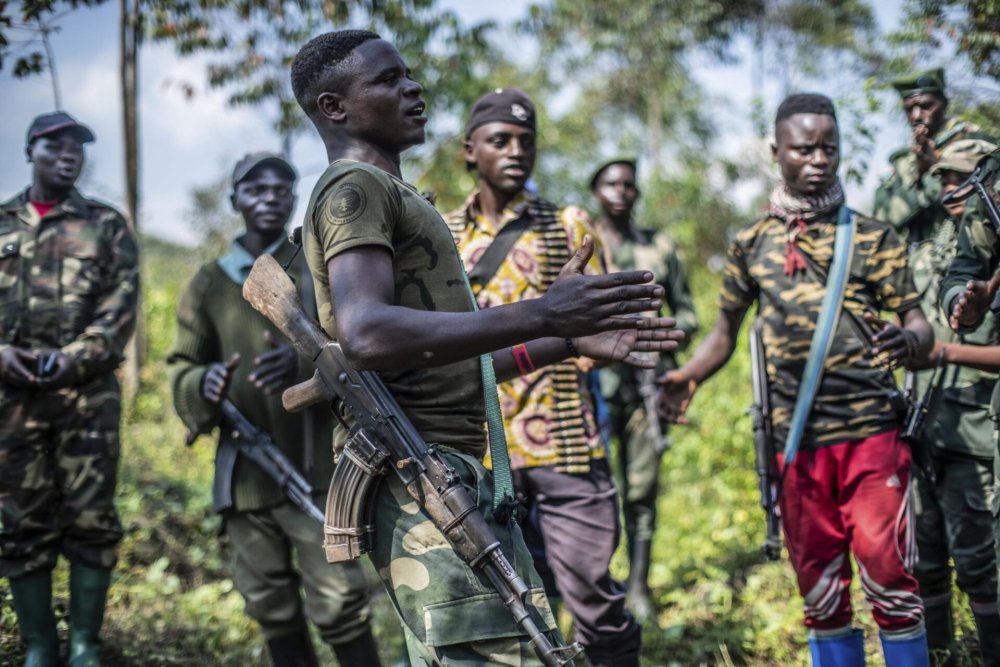

Ngoma made the remarks during an interview with the BBC while discussing an agreement reached between FDLR and the DRC government regarding the future of the armed group.
He said that agreements related to the Washington Accords and accompanying documents include a provision requiring the DRC to dismantle FDLR, but argued that the process should not involve military action.
According to Ngoma, FDLR and the DRC agreed that Kinshasa should not use force in efforts to dismantle the group.
'Those agreements contain a section stating that Congo must dismantle FDLR. That section is what led us to discuss how Congo can fulfil that responsibility without using force to destroy us, but rather through awareness campaigns, especially because the CONOPS document contains both approaches,' he said.
The remarks highlight the close engagement between FDLR and the DRC government, with both sides holding discussions on how the group's dismantling should be carried out.
Rwanda has for years called for the complete disarmament and dismantling of FDLR.
Ngoma also said no deadline had been set for implementing the agreement between FDLR and the DRC.
'We have not been given a deadline. Each side has responsibilities, and we did not establish a timeline because there are also issues we have requested to be addressed first,' he said.
He added that FDLR operates in eastern DRC, particularly in areas currently controlled by the M23 rebel group, where he said its fighters are most visible.
Rwanda has consistently identified FDLR as a security threat because the group was founded by individuals linked to the 1994 Genocide against the Tutsi and operates near Rwanda's borders.
During peace talks between Rwanda and the DRC, from the Luanda process to the Washington Accords, the issue of FDLR has remained central. Rwanda has maintained that dismantling the group is a key condition for removing security measures it has put in place along its border.
Rwanda Government spokesperson Yolande Makolo recently reiterated that the Washington Accords were not intended to create negotiations aimed at persuading FDLR, but rather to ensure its removal through disarmament and dismantling.
'The Washington Agreement calls for the neutralisation of the FDLR—not a negotiated protocol with a genocidal militia that the DRC government continues to arm and collaborate with,' Makolo said.
She added that declarations of voluntary disarmament are meaningless while the group remains integrated into the Congolese army and continues to fight on the frontlines.
'Voluntary 'disarmament' announcements while the FDLR remains embedded in the Congolese army & active on the frontlines change nothing. Implementation means verifiable dismantlement, not theatre.'
On July 28, 2026, DRC officials, including Regional Integration Minister Floribert Anzuluni and Government spokesperson Patrick Muyaya, announced that FDLR had agreed to lay down its arms, adding that the remaining step was for Rwanda to remove its defensive measures.
Rwanda rejected that position, arguing that FDLR should not be treated as an ordinary armed group engaging in negotiations with a government.
Rwanda's Foreign Affairs Minister Olivier Nduhungirehe recently said the agreement between the DRC and FDLR was separate from the Washington peace agreement and criticised Kinshasa's continued portrayal of the FDLR issue as resolved.