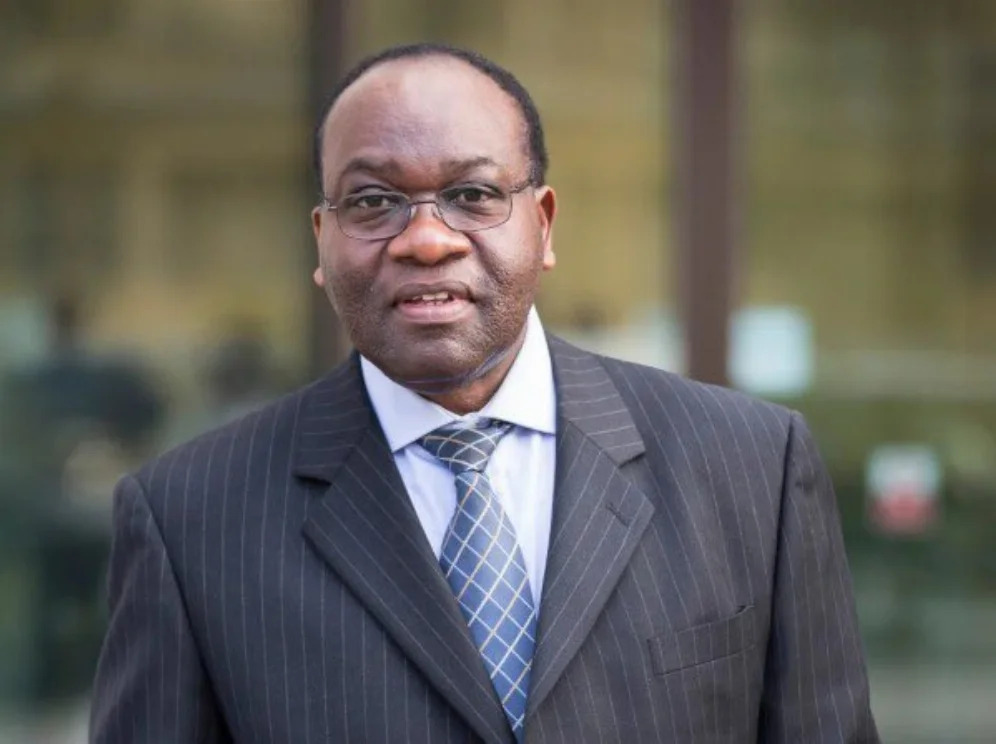

The Crown Prosecution Service (CPS) said on September 21 that Dr Vincent Bajinya, now known as Vincent Brown, had been charged with one offence of conduct ancillary to genocide and six offences of conduct ancillary to murder as a crime against humanity.
The charges are brought under Section 52 of the International Criminal Court Act 2001.
According to the CPS, the charges relate to allegations that Bajinya took part in the Genocide against the Tutsi in April 1994 and directed and incited acts of murder and genocide carried out by others.
'The Crown Prosecution Service made its decision after reviewing a file of evidence submitted by the War Crimes Team at the Metropolitan Police. We concluded that our legal test for bringing criminal charges had been met,' said Frank Ferguson, head of the CPS Special Crime and Counter Terrorism Division.
The CPS said its decision to prosecute was made independently of the police and government and based on the available evidence.
Bajinya, who was born in Kigombe Cell, Karago Commune, in the former Gisenyi Prefecture, now lives in Islington, north London, and is due to appear at Westminster Magistrates' Court on Tuesday, September 22.
Bajinya trained as a medical practitioner and later worked as a physician at King Faisal Hospital in Kigali. He also held a position at the National Office for Population (ONAPO), where his work included family planning and related public education.
He has been alleged to have had links to the Akazu, an informal network associated with President Juvénal Habyarimana and his wife, Agathe. The network was widely described as influential in Rwanda's political and economic affairs during Habyarimana's presidency, which began after he took power in a 1973 coup.
Allegations against Bajinya also include involvement in the organisation of roadblocks during the 1994 Genocide against the Tutsi. He was accused of helping to recruit and oversee people manning roadblocks in Rugenge district of Kigali, where he lived, and near Kibihekane School in north-western Rwanda, an area where large-scale killings of Tutsi were reported in the early stages of the genocide.
Witnesses have further alleged that he was involved in the killings of Dominique Leandre in Rugenge, and Charlotte Kamugaja and her infant child.
The historic charges follow years of legal proceedings and investigations involving Bajinya, who was among five genocide suspects living in the UK.
Bajinya arrived in the UK in 1999 with his family. In 2004, he changed his name from Bajinya to Brown after obtaining British citizenship.
He was arrested by UK police in December 2006 alongside three other genocide suspects as part of an extradition case. In 2008, a Westminster Magistrates' Court judge ruled that the four could be extradited to Rwanda, but the decision was overturned on appeal by the Divisional Court in 2009.
A second extradition attempt began in 2013. In 2015, a UK court ruled that Bajinya and the other suspects could not be extradited to Rwanda on the grounds that they were at risk of not receiving a fair trial. The decision was upheld by the High Court in 2017.
Following a request from Rwandan officials in 2018 for the UK to investigate the five suspects, the Metropolitan Police began assessing available evidence in 2019.
Four of the five suspects, including Bajinya, were voluntarily questioned by police in September 2020 over allegations of genocide and crimes against humanity.
The CPS said criminal proceedings against Bajinya are now active and warned against reporting or sharing information that could prejudice the proceedings.