

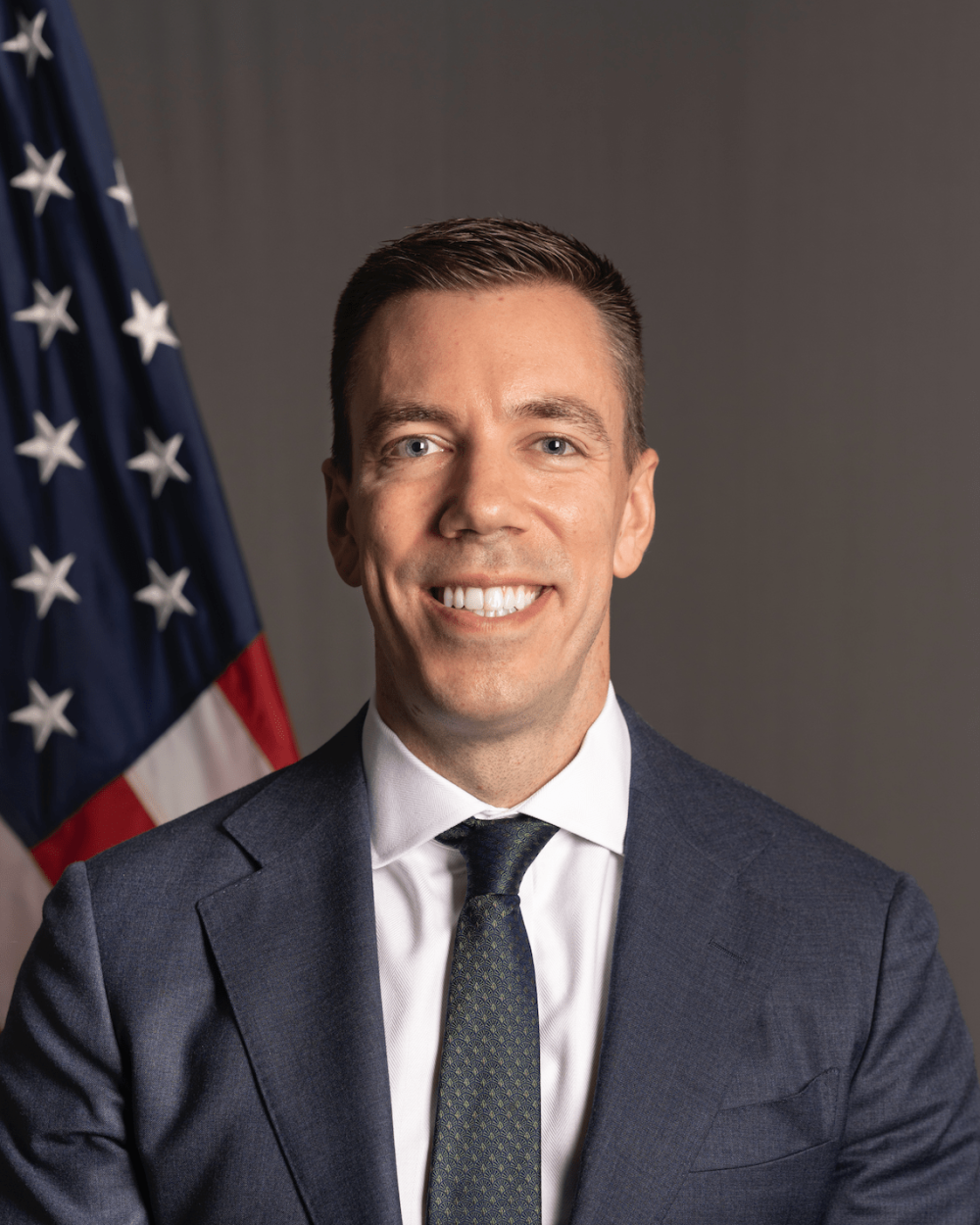
Checker made the remarks on Thursday, September 24, during his confirmation hearing before the US Senate Foreign Relations Committee.
If confirmed, Checker said his approach would be guided by what he described as 'America First diplomacy', built around respect for sovereignty, pragmatic cooperation and the protection of US interests.
'I would engage in an America First diplomacy grounded in strategic humility, respect for sovereignty, quiet leverage on values-based issues, and pragmatic collaboration on mutual interests,' he told senators.
Checker said the safety of US citizens in Rwanda and US Embassy staff would be his highest priority, alongside efforts to expand trade and investment between the two countries.
'I would also lead the team of outstanding diplomats there to expand our trade and investment relationship and advance regional stability in the Great Lakes,' he said.
Washington Accords
Much of Checker's testimony focused on the Washington Accords between Rwanda and the DRC, which he described as an important step towards lasting peace in the region.
He told senators that the agreement's success would depend on 'full and verifiable compliance by all parties'.
'The United States seeks a strong, positive relationship with Rwanda, but its government first must live up to its commitments to President Trump,' he said.
Responding to a question from Foreign Relations Committee Chairman Bill Hagerty, Checker said the Washington Accords represented a significant opportunity to link peace efforts in eastern DRC with economic integration.
He described the agreement as 'the most meaningful advance towards resolving this decades-long conflict in its history', crediting Trump, Secretary of State Marco Rubio and Senior Adviser Massad Boulos for their diplomatic efforts.
Checker said the economic component of the agreement was aimed at transforming the region's mineral sector and creating opportunities for US companies.
He pointed to the Regional Economic and Investment Framework, which he said contains commitments by Rwanda and the DRC on transparency and traceability of minerals including tin, tantalum and tungsten.
Checker said the framework could help US companies secure supplies of minerals with applications in defence and consumer electronics while creating a more transparent investment environment in the region.
'So this is really economic integration for peace,' he stressed.
He nevertheless identified implementation as the main challenge facing the Washington Accords, saying both Rwanda and the DRC must respect each other's territorial integrity.
Rwanda has repeatedly maintained that implementation of the Washington Accords must be assessed against the commitments made by both Kigali and Kinshasa.
Rwanda maintains that it remains committed to the agreement but has argued that its obligations cannot be implemented selectively. Kigali points to the DRC's support for the FDLR militia group as a security issue that must be addressed through its complete neutralisation, as outlined in the accords signed last year.
The Washington framework includes provisions addressing the neutralisation of the FDLR and the lifting of Rwanda's defensive measures, with implementation overseen through joint mechanisms.
Wider US-Rwanda engagement
Beyond the eastern DRC conflict, Checker said he would seek to expand political and economic engagement between Washington and Kigali, including creating new opportunities for US businesses.
He also cited regional cooperation on broader challenges, including the current Ebola crisis.
Checker also hailed Rwanda's resilience in rebuilding the country after the Genocide against the Tutsi, highlighting its efforts to restore security, rebuild institutions and foster a sense of national identity. He described the country's post-genocide recovery as extraordinary, saying Rwanda had developed an enduring sense of self-reliance in the years since the 1994 Genocide against the Tutsi.
At the same time, he stressed that US foreign policy would ultimately be guided by American national interests.
Checker was nominated by Trump in July. He previously served as Deputy Assistant Secretary for Southern Africa and Foreign Assistance at the US Department of State and as Senior Bureau Official leading the Bureau of African Affairs.
He also served at the National Security Council and spent more than a decade at the CIA working on conflict and security issues.
If confirmed by the US Senate, Checker will succeed Eric Kneedler, who concluded his tour of duty as US Ambassador to Rwanda early 2026.
Source : https://new.igihe.com/english/trumps-rwanda-envoy-nominee-nicholas-checker-outlines-key-priorities/
