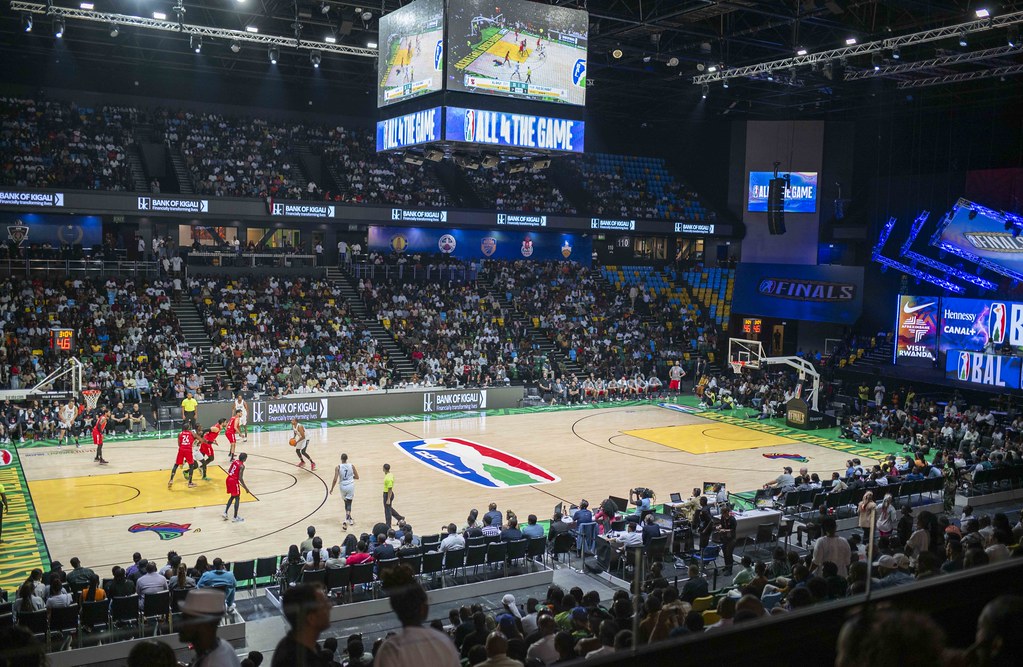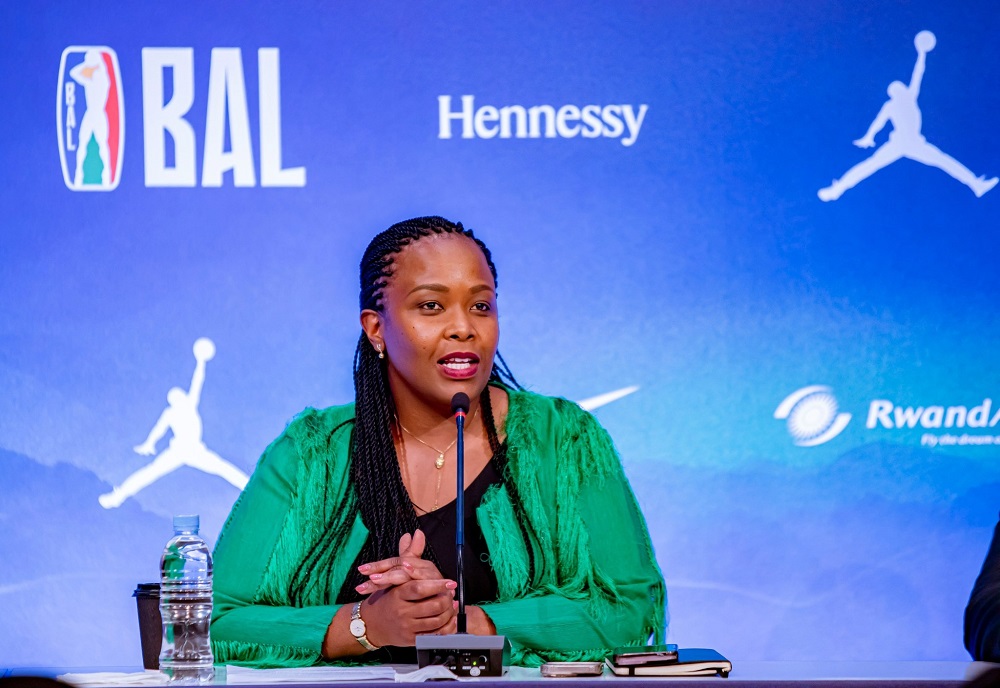

Clare Akamanzi, CEO of NBA Africa, outlined the plans during a panel at the Unstoppable Africa 2026 forum in New York on September 21, held on the sidelines of the 81st United Nations General Assembly.
Akamanzi explained that the BAL had spent its first six seasons proving that a credible professional basketball competition could be built and sustained on the continent.
The focus is now shifting towards creating opportunities for African and global investors to own BAL teams permanently.
'We're now going to a more permanent structure where we're giving and exploring opportunities for African investors and other global investors to own teams permanently, in perpetuity, in the BAL, backed by the NBA and FIBA,' Akamanzi stated during the panel, titled 'Real Value from the Field: Protecting and Profiting from Africa's Talent Pipeline,' and moderated by WNBA All-Star and broadcaster Chiney Ogwumike.
She revealed that NBA Africa is already seeing interest from investors, including those on the continent, who are exploring team ownership as a commercial opportunity.
The move comes as the BAL seeks to deepen its business ecosystem beyond the games themselves, with opportunities spanning team ownership, sponsorship, media, hospitality, transport, aviation, security and digital services.
Akamanzi pointed to the league's first six seasons as a proof of concept, demonstrating that African audiences are willing to consume professional basketball and that companies on the continent are increasingly prepared to invest in the sport.
'We showed that Africans are actually ready to consume sport,' she remarked, pointing to the growing audience for the BAL in countries including Rwanda, South Africa, Senegal, Morocco and Egypt.
She also highlighted the league's growing corporate base, noting that it finished the previous season with 22 marketing partners, mostly African brands.
Media partnerships have also expanded around the competition, with broadcasters including Canal+ helping distribute BAL games to audiences across the continent.
The economic impact of the league has been significant. NBA Africa estimates that the first four BAL seasons generated $250 million in GDP across the countries where games were hosted and contributed to 37,000 jobs.
Akamanzi reiterated that the league's longer-term expansion could increase its estimated economic contribution to $5.4 billion in GDP and 650,000 jobs within a decade.
For Akamanzi, the next challenge is to turn the league's growing audience and commercial interest into a deeper ownership structure that allows African investors to participate directly in the value created by the sport.
'It's really looking at the game beyond the court,' she emphasised, arguing that investment in sports also creates opportunities across the wider economy.
Simon Tiemtore, founder, chairman and CEO of Lilium Capital Group and chairman of Vista Bank Group, backed the push for greater African ownership, pointing to the difficulty many investors face in entering the sports business.
Tiemtore disclosed that he was working with NBA Africa and Afreximbank through its Creative Africa Nexus (CANEX) programme to create financing structures that could enable more Africans to own teams.
'It's expensive to get in, to have an entry point,' Tiemtore noted. 'So with Afreximbank, we created some sort of structure financing program to essentially enable more Africans to own their own team and their own destiny.'
He also cited his investment in E1, the electric powerboat racing championship, where he co-owns Team Drogba Global Africa with partners including Afreximbank.
Kingsley Pungong, executive chairman of Rainbow World Group, stressed that private investment alone would not be enough to build a sustainable sports industry.
He called for African governments to place sports at the centre of economic policy and invest in the infrastructure needed to support professional leagues.
'You need infrastructure. You need enshrined policy,' Pungong argued, noting that athletes will continue to move to markets offering stronger commercial opportunities unless African countries build ecosystems capable of retaining and rewarding talent.
He pointed to Saudi Arabia, China and the United States as examples of markets where long-term investment, infrastructure and government support have helped build powerful sports ecosystems.
Tiemtore also called for stronger financial services tailored to African athletes, including banking, wealth management and investment products that can help athletes preserve and reinvest wealth generated abroad.
He noted that many African sporting stars use financial institutions outside the continent and argued that African banks should develop products that allow athletes to manage their earnings and invest back home.