

The stadium meets the standards set by the Fédération Internationale de Football Association (FIFA) and is among the leading sports facilities in the country.
The newly renovated Amahoro Stadium was officially inaugurated on July 1, 2024, in a ceremony attended by President Paul Kagame and CAF President Dr. Patrice Motsepe.
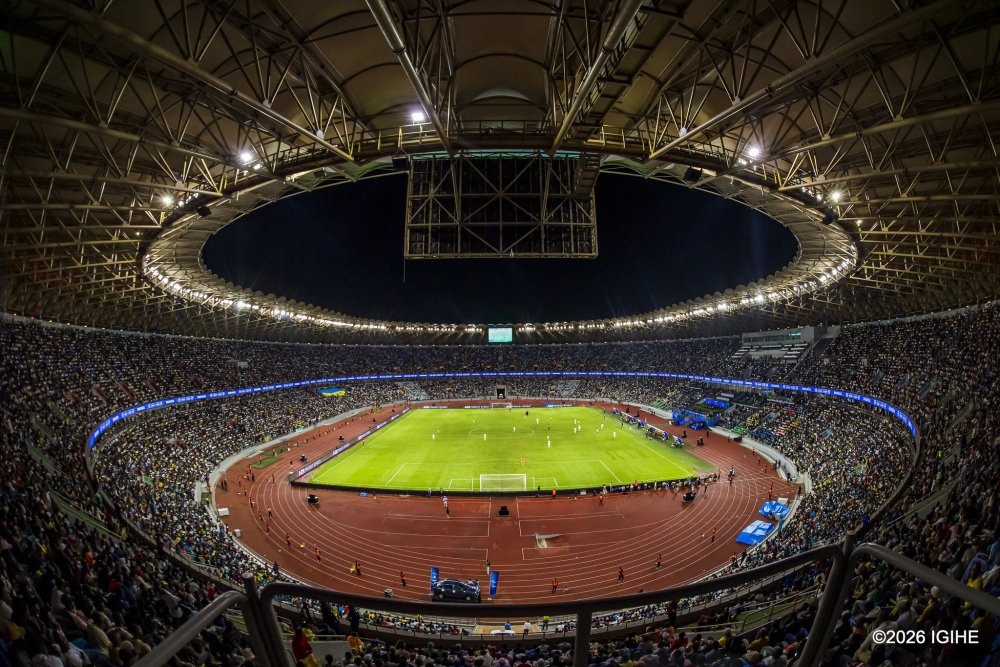
The stadium has a seating capacity of 45,000 people and covers an area of approximately 75,000 square metres. The facility stands 40 metres above ground level.
The renovation of Amahoro Stadium cost approximately $160 million. The project included the construction and installation of facilities required to meet international standards set by CAF and FIFA, making the stadium one of the most modern sports facilities in the region.
However, following the completion and reopening of the stadium, some areas were identified as requiring additional improvements. The further renovation is intended to enhance the facility and ensure it can better serve the various activities and events hosted there.
The additional renovation is part of the government's broader investment in sports infrastructure.
Rwanda's 2026/2027 national budget, which took effect in July 2026, includes the renovation and improvement of sports infrastructure among its key priorities. The programme covers various stadiums both in Kigali and across the country.
For the 2026/2027 financial year, Rwf 90.7 billion has been earmarked for further renovation works at Amahoro Stadium, underscoring the government's continued investment in upgrading the country's sports infrastructure.
Speaking to IGIHE, a senior official from the Ministry of Sports said the stadium will undergo further improvements to make it more suitable for hosting a wider range of activities beyond sports.
People who attend events at Amahoro Stadium have often raised concerns about the visibility of the content displayed on the stadium's two large screens. Some spectators say it can be difficult to clearly see the screens regardless of where they are seated.
One of the improvements planned under the renovation will be the expansion of the stadium's screens. They will be made larger to ensure that spectators can clearly see the images and messages displayed on them from any seat in the stadium.
Poor visibility has previously led to the installation of televisions in the VIP section so that guests could follow what was happening during events taking place at the stadium.
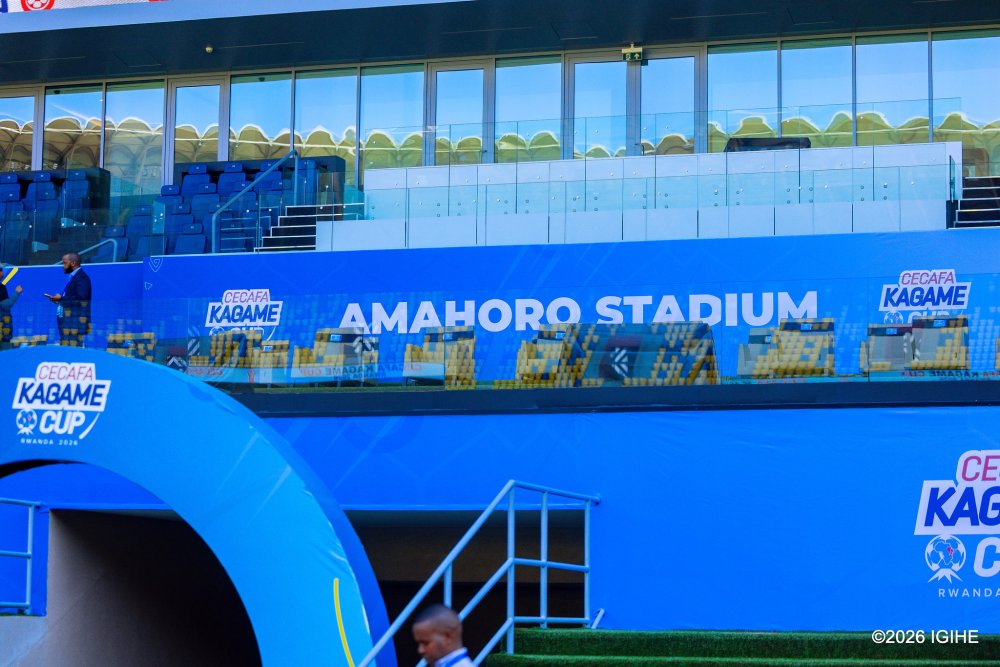
Visitors to Amahoro Stadium have also raised concerns about the VIP seating area, noting that some seats could be exposed to rain when it falls. The VIP section will therefore be redesigned and improved to provide better protection and comfort for those seated there.
So far, Amahoro Stadium has not hosted a major standalone entertainment event. Most events held at the facility have been combined with other activities, including sporting events.
Part of the Rwf 90.7 billion allocated for the renovation will be used to improve the stadium so that it can host major concerts and other large entertainment events without damaging the playing field.
The improvements will also address the stadium's sound system. Spectators have often complained that it is difficult to hear announcements and other audio clearly inside the stadium, resulting in the use of additional speakers alongside the existing sound system.
The stadium also requires regular maintenance and other routine works to preserve the infrastructure. These include cleaning and various other maintenance activities carried out as part of the ongoing upkeep of the facility.
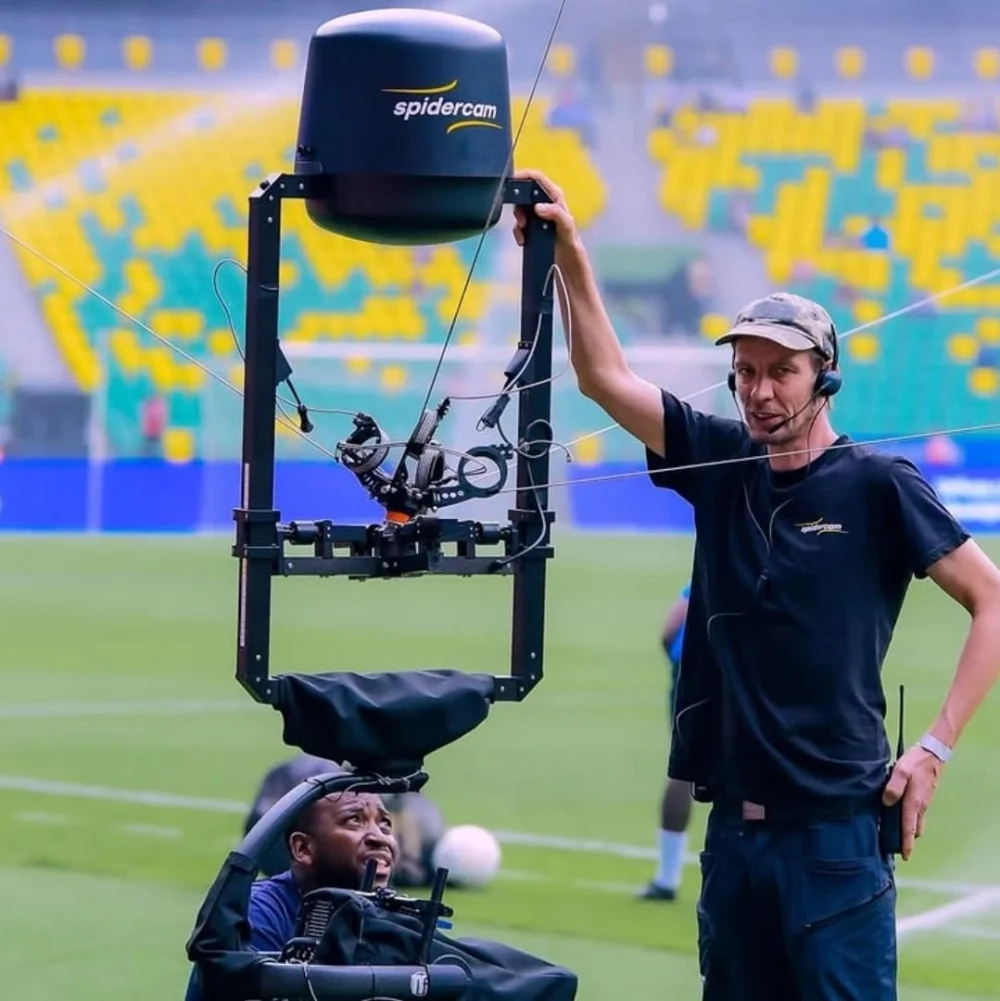
Spider camera at Amahoro Stadium remains operational
The Spider Camera installed at Amahoro Stadium has not been used regularly for some time. However, the Ministry of Sports, which oversees the stadium, says the camera has not developed any problems and is still used for major events.
The Spider Camera is a cable-suspended camera system that moves through the air along cables. It was manufactured by Ross Video Ltd. and can travel at a speed of up to nine metres per second across an area measuring 250 by 250 metres.
The camera weighs 340 kilogrammes. It measures 87 centimetres in length, 88 centimetres in width and 87 centimetres in height.
It is designed to withstand dust and high temperatures, with an outer body made of aluminium. The system is designed to operate in temperatures ranging from -10 to 40 degrees Celsius.
The spider camera is powered by rechargeable batteries that allow it to operate while moving through the air. Each battery can provide up to four hours of continuous operation.
The system is compatible with several professional cameras that can be used to capture live footage during events and sporting competitions. These include Sony P1, P43 and P50 cameras, Grass Valley LDX 80 and LDX 86, Panasonic AK-UB300 and Hitachi DH-H200.
For standard video production, the system can also accommodate cameras including the RED Epic series, namely Dragon, Helium and Monstro, as well as the ARRI Alexa Mini, Sony F55 and Venice, and Panasonic Varicam.
The spider camera is therefore designed to provide high-quality aerial footage for major sporting, entertainment and other large-scale events held at Amahoro Stadium.
Sports facilities generate revenue for Rwanda
Rwanda's 2026/2027 national budget includes more than Rwf 1.3 billion to settle outstanding costs related to the construction of Ngoma Stadium, another Rwf 1.3 billion for outstanding payments linked to the construction of Bugesera Stadium, and an additional Rwf 1.3 billion to clear outstanding costs for the construction of Nyagatare Stadium.
The Ministry of Sports says that although sports infrastructure requires significant investment, the facilities are also expected to generate revenue and contribute to recovering part of the funds invested in their construction.
During the 2025/2026 financial year, the Ministry of Sports set a target of generating at least Rwf 5 billion in revenue from sports facilities. By the end of the financial year, however, the ministry had generated Rwf 5.69 billion, exceeding its target.
The revenue was generated from Huye Stadium, BK Arena, Kigali Pelé Stadium and Amahoro Stadium. In October 2025, Amahoro Stadium was placed under the management of QA Venue Solutions, a private company contracted to manage the facility.
The Ministry of Sports is also continuing to seek private-sector partners to manage other sports facilities and ensure that they are used more effectively to generate revenue and maximise the value of the investments made in their construction.
Source : https://new.igihe.com/english/renovation-works-at-amahoro-stadium-to-cost-rwf-90-7-billion/
