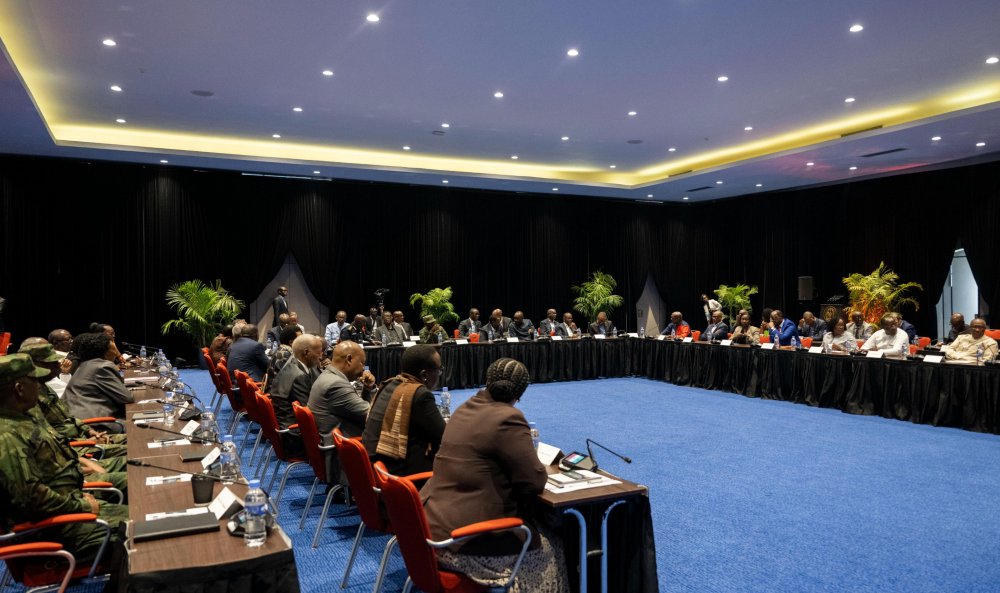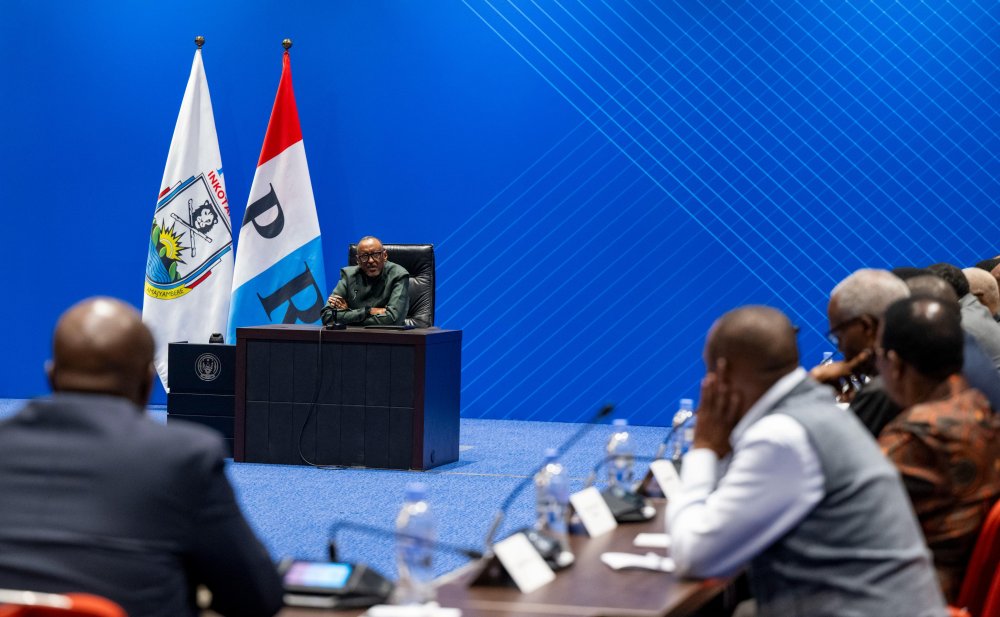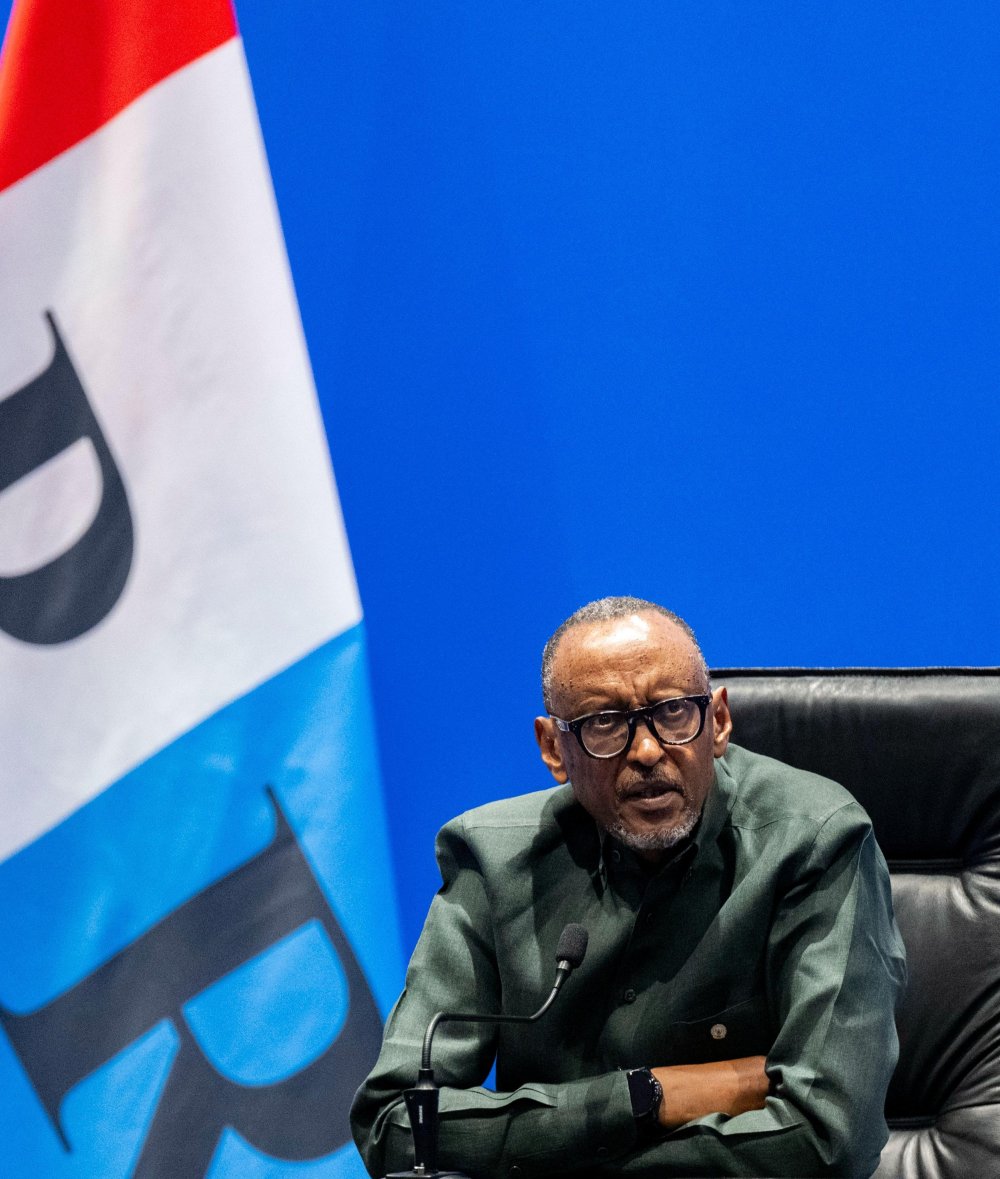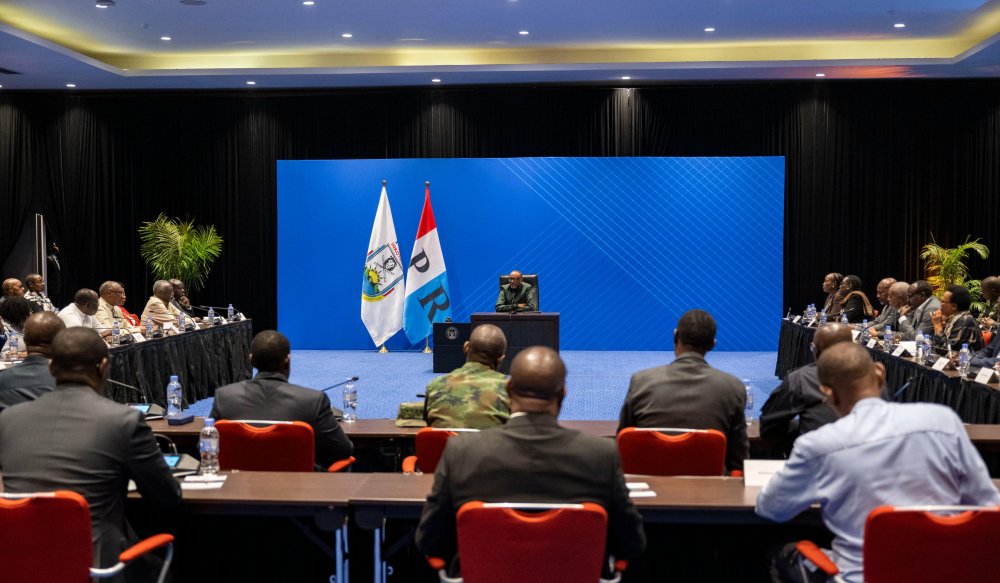

The meeting took place on July 27, 2026, at Intare Arena, according to Rwanda's Office of the President, Urugwiro Village.
'The meeting emphasized the importance of members upholding the Party's values, including people-centered governance and accountability, to advance the Party's mission of Rwanda's continued development,' reads a statement released by Urugwiro Village.
From refugee movement to political organisation
The FPR-Inkotanyi traces its roots to 1987, a pivotal year that marked a turning point for Rwandan refugees who had spent nearly three decades in exile.
The period followed remarks by then-President Juvénal Habyarimana, who, when asked about the return of Rwandan refugees, reportedly likened the country to 'a glass already full of water,' suggesting there was no room for their repatriation.
The statement reinforced the belief among many refugees that returning home through dialogue was unlikely.
At the same time, the Rwandan Alliance for National Unity (RANU), an organisation established in 1980 to advocate for the return of refugees, began restructuring to pursue its objectives more effectively.
By 1987, many Rwandan refugees, particularly those living in Uganda, were enjoying greater stability following the rise to power of President Yoweri Museveni, whose liberation struggle had included the participation of many Rwandans.
RANU subsequently embarked on organisational reforms, introducing new leadership structures and strategies to strengthen its campaign.
Among those tasked with advancing the movement was Tito Rutaremara, now Chairperson of Rwanda Elders' Advisory Forum. He helped establish a political training school in Uganda aimed at educating new members on the organisation's ideology and long-term objectives.
The RPF Cadre School opened in June 1987, preparing members to mobilise support and recruit followers who clearly understood the movement's mission.
University students were trained and encouraged to pass on the ideology to others, creating a network of mobilisation among Rwandan refugees across Uganda, Burundi, Tanzania, Kenya and what was then Zaire.
Birth of the RPF and armed struggle
Following the expansion of its support base, RANU convened a General Assembly in December 1987, bringing together members from across the diaspora.
One of the key resolutions adopted during the meeting was to rename the organisation the Front Patriotique Rwandais (RPF) Inkotanyi.
The following year, members met in Washington, D.C., where they reaffirmed their commitment to continue pursuing their objective of returning to their homeland.
As the movement evolved, its leaders concluded that achieving this goal would require an armed wing. They established the Rwanda Patriotic Army (RPA), which launched its first military offensive into Rwanda on October 1, 1990.
Many of the RPA's senior officers had previously served in Uganda's armed forces. Among them were Maj Gen Fred Gisa Rwigema, who led the campaign in its early stages, and Maj Gen Paul Kagame, who assumed command after Rwigema was killed shortly after the offensive began.
The RPA continued the liberation struggle, eventually ending the 1994 Genocide against the Tutsi and paving the way for national reconstruction under the leadership of the FPR-Inkotanyi.
Development gains since 1994
Following the Genocide against the Tutsi, Rwanda faced severe economic devastation. The country's economy, already among the smallest in the region before 1994, contracted by about 50 percent in its aftermath.
In 1995, Rwanda's national budget stood at just Rwf56 billion, with more than 90 percent financed through foreign aid. Per capita income was approximately $111.9, placing Rwanda among the world's poorest nations.
Over the following decades, the country pursued reconstruction and economic reforms centred on accountability, citizen-focused governance and institutional development.
According to official figures, Rwanda's Gross Domestic Product grew by 9.4 percent in 2025, increasing from Rwf19.918 trillion in 2024 to Rwf23.387 trillion.
The national budget for the 2026/27 fiscal year reached Rwf7.7963 trillion, representing a 12 percent increase from the revised Rwf6.9521 trillion budget for 2025/26. Foreign borrowing is projected at Rwf1.9741 trillion.
For many years after liberation, Rwanda sustained annual economic growth averaging between 7 and 8 percent. Life expectancy has also risen dramatically—from about 28 years immediately after the Genocide against the Tutsi to nearly 70 years today, reflecting improvements in healthcare, living standards and social protection.