

According to the report presented to the UN Security Council Sanctions Committee on June 5, 2026, mercenary groups provide battlefield support, maintain military assets including combat aircraft, and train members of the Armed Forces of the Democratic Republic of the Congo (FARDC) in advanced drone operations, radar systems, jungle warfare, intelligence gathering, operational planning, secure communications and target identification.
Despite the longstanding cooperation, the UN experts say coordination between FARDC and the various mercenary groups has been undermined by weak command structures, resulting in confusion over lines of authority and responsibility.
Advanced training and cooperation with Wazalendo
The report says foreign mercenaries maintain operational bases in Kisangani, Kinshasa, Walikale, Kalemie in Tanganyika Province and Kindu in Maniema Province. Testimonies and other evidence gathered by the UN indicate they continue to play an active role in military operations across North and South Kivu.
In Walikale, North Kivu, and the town of Baraka in South Kivu, foreign mercenaries reportedly provided advanced military training to members of the Wazalendo militias. The programme covered reconnaissance techniques, including identifying enemy positions and operating surveillance drones.
According to testimonies cited in the report, participants were selected based on their level of education. Upon completing the training, many were deployed alongside FARDC troops, with some reportedly issued sniper rifles for operations against the AFC/M23 coalition.
Among those who benefited from the training were fighters under commanders sanctioned by the United Nations, including Guidon Shimiray, leader of the NDC-R armed group operating in Walikale, and members of the CNPSC led by William Yakutumba.
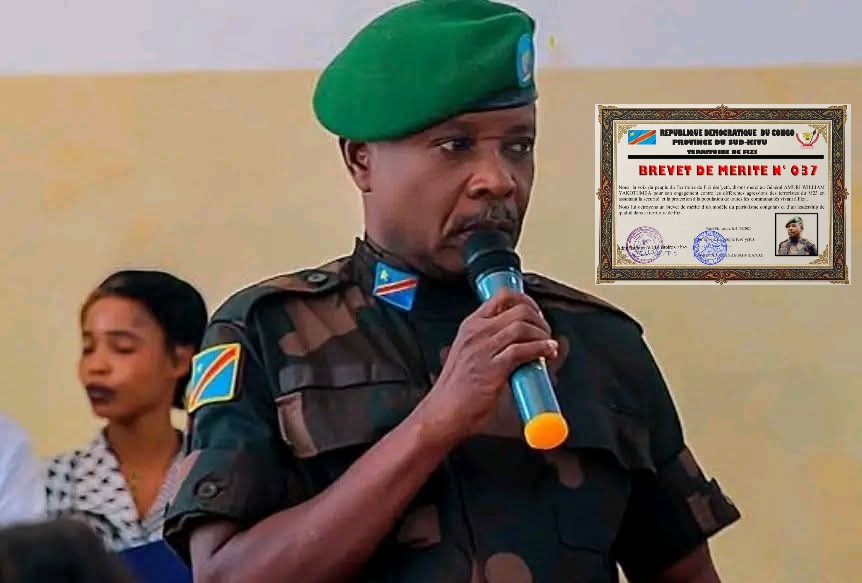
Operations in South Kivu
Between January and March 2026, mercenaries fought alongside FARDC during heavy fighting in South Kivu, participating in coordinated drone and ground operations in several areas, including Minembwe Commune and its surrounding areas.
During the same period, Wazalendo fighters were ordered to withdraw from the highlands of South Kivu and were replaced by a FARDC special forces unit known as 'Hiboux' together with foreign mercenary contingents.
The report says the mercenaries were not deployed across all operational areas. Instead, they were assigned to specialised missions, including coordinating heavy artillery fire, drone strikes and intelligence support. They were also deployed to the city of Uvira in January 2026.
On February 1, 2026, multiple drone strikes involving foreign mercenaries targeted positions held by the MRDP-Twirwaneho armed group in Minembwe.
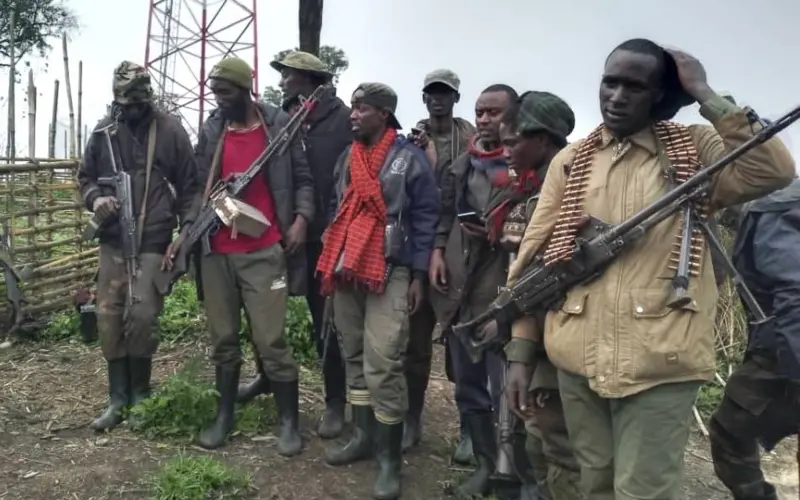
Between February 2 and 8, mercenary units reportedly assisted the Hiboux special forces in recapturing the strategic Point-Zéro junction, a key crossroads linking the roads to Uvira, Baraka and Minembwe.
Secret agreement with Erik Prince
The report also details a confidential five-year cooperation agreement signed between the DRC government and American security contractor Erik Prince in December 2024. Prince is best known as the founder of the private military company Blackwater.
Under the agreement, Prince committed to providing military assistance to FARDC and overseeing security at mining sites across the country through contractors working under his companies.
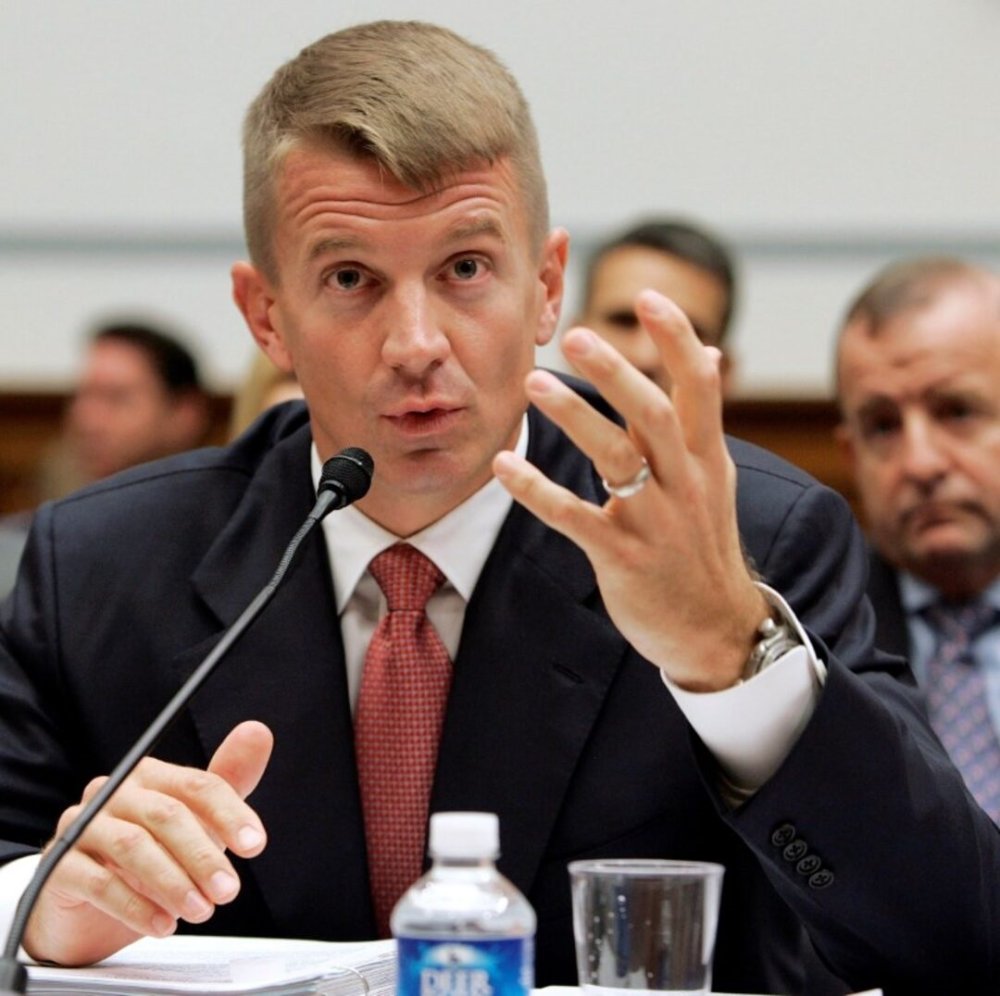
In June 2025, Prince's United Arab Emirates-based company, Quantum Global Consulting, registered a subsidiary in the DRC known as Quantum Global Consulting Africa.
The company also established another entity, Vectus Global, headed by Christophe Sirot, a dual French-American national.
According to the report, Vectus Global signed a contract with the DRC Ministry of Finance to help increase state revenues from mining, combat cross-border smuggling, tackle corruption and reduce tax evasion.
At the end of April 2026, the Ministry of Finance announced the creation of a special unit tasked with securing mining sites, replacing soldiers and police officers previously assigned to those duties. The UN experts say the unit appears to be linked to Vectus Global.
The report further states that the agreement contained confidential military provisions assigning Vectus Global responsibility for strengthening border security, particularly in areas near Rwanda and Zambia.
The contract also authorised the company to advise FARDC on the acquisition and operation of combat aircraft and to recruit former foreign military personnel to support the Congolese armed forces.
According to the UN experts, the broader objective was to strengthen FARDC's military capabilities against Rwanda through advanced military technology, specialised training, strategic advice and the acquisition of modern weapons.
By late 2025, one Vectus employee told the UN investigators that the company's priorities had shifted from securing mining operations to supporting military activities as the conflict intensified.
In February 2026, another employee reportedly told the experts that the DRC government had enlisted Vectus Global to help plan an operation to retake the city of Uvira after it fell to AFC/M23 fighters, with company personnel deployed to South Kivu to support the operation.
However, during an interview with the UN experts in March 2026, Sirot denied that Vectus Global had participated in combat operations, insisting that the company's contract did not include any battlefield role.
The report nevertheless says multiple witnesses, including Vectus employees, identified Sirot as the individual responsible for coordinating the company's military-related activities.
More than 300 recruits from El Salvador
Another major finding concerns the recruitment of former soldiers and police officers from El Salvador.
According to the report, former Salvadoran military personnel and police officers began arriving in the DRC from July 2025 to support the government's coalition in its conflict against AFC/M23.
Initially assigned to maintain military equipment in Kisangani, Tshopo Province, many were later redeployed to Walikale, Baraka and Kalemie.
The UN experts found that a company known as Importaciones de Productos Americanos S.A. de C.V. coordinated the recruitment of more than 300 mercenaries in El Salvador for deployment to the DRC.
The company is registered in El Salvador and is owned by Juan Emilio Velasco Alfaro, a retired colonel in the Salvadoran military, and Rodrigo Antonio Tejada Alvarengar, a former lieutenant.
Most recruits signed one-year contracts that came into effect in July 2025, with each promised a monthly salary of US$4,225.
The report says some of the recruits returned to El Salvador before completing their contracts because of delays in salary payments by the DRC government or injuries and illnesses sustained during deployment.
The Government of El Salvador told the UN experts that it was unaware its citizens had travelled to fight in the DRC and had never authorised their deployment.
