

After graduating from university in 2016, Capt. Nsengiyumva, like many young graduates, began searching for employment. His efforts paid off when he successfully secured a position at the Rwanda Stock Exchange, where he worked in a field he had always been passionate about.
Although he enjoyed his job, his life took a different direction one morning when he came across a recruitment announcement inviting qualified candidates to join the Rwanda Defence Force.
The notice rekindled childhood memories of watching RDF soldiers march in formation as he walked to school, inspiring him to pursue a career in the military.
Without hesitation, he applied for the recruitment exercise, successfully passed the selection process, and began military training in 2017. After completing a year of rigorous training, he officially joined the Rwanda Defence Force, turning his childhood dream into reality.
In an exclusive interview with IGIHE's Ingingo Nkuru program, Capt. Nsengiyumva opens up about his journey from the financial sector to military service. He reflects on what motivated him to join the RDF, discusses his daily responsibilities as an officer, and shares insights into the experiences that have shaped his career over the past eight years.
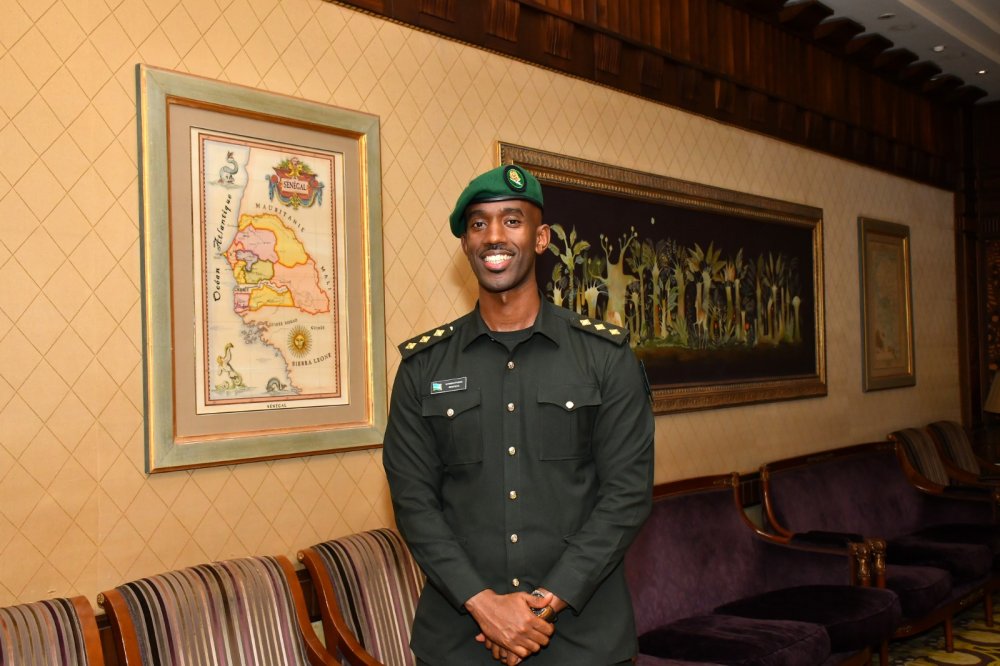
IGIHE:What does the daily life of a Rwanda Defence Force soldier look like?
Capt. Michael Nsengiyumva: The life of a soldier is not very different from ordinary life. At the end of the day, we are human beings like everyone else. However, because of the training we receive and the commitment we make to put our country first, we are prepared to make sacrifices, including giving our lives if necessary. That is the main difference.
As a soldier, you also make discipline the foundation of everything you do, both in your professional duties and in the way you relate with other people. Military service also teaches you resilience, perseverance, and the importance of having clear goals.
IGIHE: You have now spent eight years in the military. Did you grow up dreaming of becoming a soldier? How did that dream develop?
Capt. Michael Nsengiyumva: I would not say it was a single thing that led me here. Looking back, I realize that there were signs from my childhood that this could become my path.
When I was young, the school I attended was not far from where we lived, so we used to walk there every day. During those journeys, we would often meet long lines of soldiers marching. Watching them was always inspiring. They looked disciplined, confident, and proud, and I saw something admirable in the way they carried themselves.
Gradually, I began to dream of becoming one of those people I saw every morning.
As I grew older, especially when I reached secondary school, I started to understand more about who those soldiers were, what they did, and what military service truly meant.
I learned about the important role the Rwanda Defence Force played in liberating the country, and I began to see joining the military as one of the things I could do in life. Among the many dreams and ambitions I had, serving in the national army became one of the paths I wanted to pursue.
However, after completing university, that childhood dream developed into something deeper. At the time, I was still a civilian, but I followed the work of the Rwanda Defence Force closely, not only within Rwanda but also through its international peacekeeping missions in countries such as the Central African Republic and South Sudan.
Seeing the professionalism, discipline, and positive reputation of Rwanda's soldiers motivated me even more. I realized that I also wanted to contribute to building my country, and I could not think of a better way to do that than by becoming part of the Rwanda Defence Force.
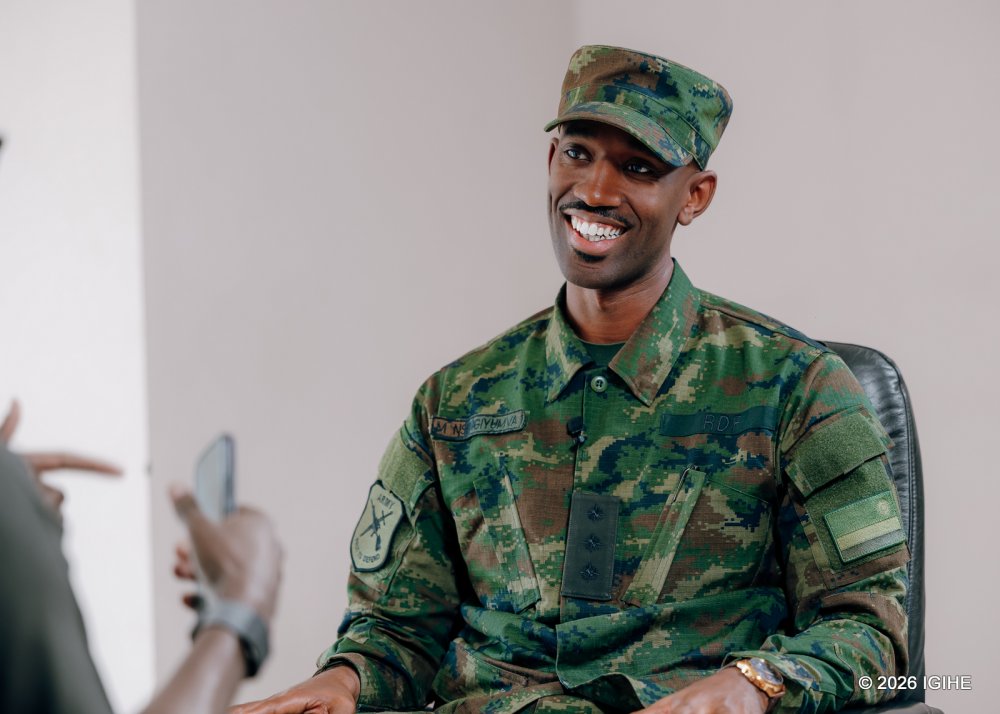
IGIHE: What happened after you graduated from university in 2016?
Capt. Michael Nsengiyumva: After graduating from university, I remember completing my studies in April. Around that time, the Rwanda Stock Exchange was recruiting new employees, so I applied. Of course, it was not the only institution I applied to. Like many graduates, I was searching for opportunities in different places, but fortunately, I was among those who were selected that year.
I started working there, mainly in investment advisory services. My responsibility was to advise individuals and investors based on their financial goals, the projects they wanted to undertake, and the best ways to invest their resources.
I continued working in that field until 2017. It was a career I genuinely enjoyed, and I would not say I left because I was unhappy or because I was looking for an alternative. I was doing something I loved and could have continued doing for many years.
IGIHE: How did you eventually decide to join the military?
Capt. Michael Nsengiyumva: Around February 2017, I came across an announcement inviting people interested in joining the Rwanda Defence Force to apply. Such announcements were not new, but when I saw that particular one, I felt a strong connection to it, as if it was an opportunity meant for me.
I looked at the age requirements and realized that I qualified. I checked the education requirements and found that I met them as well. I was a Rwandan citizen, which was also a requirement. At that moment, I felt that ignoring the opportunity would mean turning down a chance to serve my country.
IGIHE: Some people describe Cadet training as extremely demanding. What was your experience?
Capt. Michael Nsengiyumva: If you were used to waking up at 8:00 a.m., having lunch at noon, and going to sleep early in the evening, military training completely changes that routine. You learn to look beyond your personal comfort and preferences. Instead, you learn to follow instructions, meet expectations, and work together with others.
I remember seeing soldiers and being told that the soldiers we saw beginning their day in the morning would continue working throughout the day and sometimes into the night. At the time, it seemed almost impossible to me.
I would ask myself, 'How can someone continue moving and working for so many hours?' But once you go through military training, you gradually develop that ability. You find yourself doing things you once thought were impossible, and with time, they become part of your daily life.
IGIHE: What qualities should young people between the ages of 18 and 23 who wish to join the military develop?
Capt. Michael Nsengiyumva: Beyond those who aspire to join the military, every young person should strive to have good values and positive character. It is important to be someone with a clear vision, someone who understands that they have goals to achieve and a contribution to make to themselves, their families, and their country.
You should also be someone who believes that possibilities go beyond what you have already experienced. Do not limit yourself to what you can see or what you have achieved today. Believe that through learning, training, and accepting challenges that may seem beyond your current abilities, you can still accomplish great things.
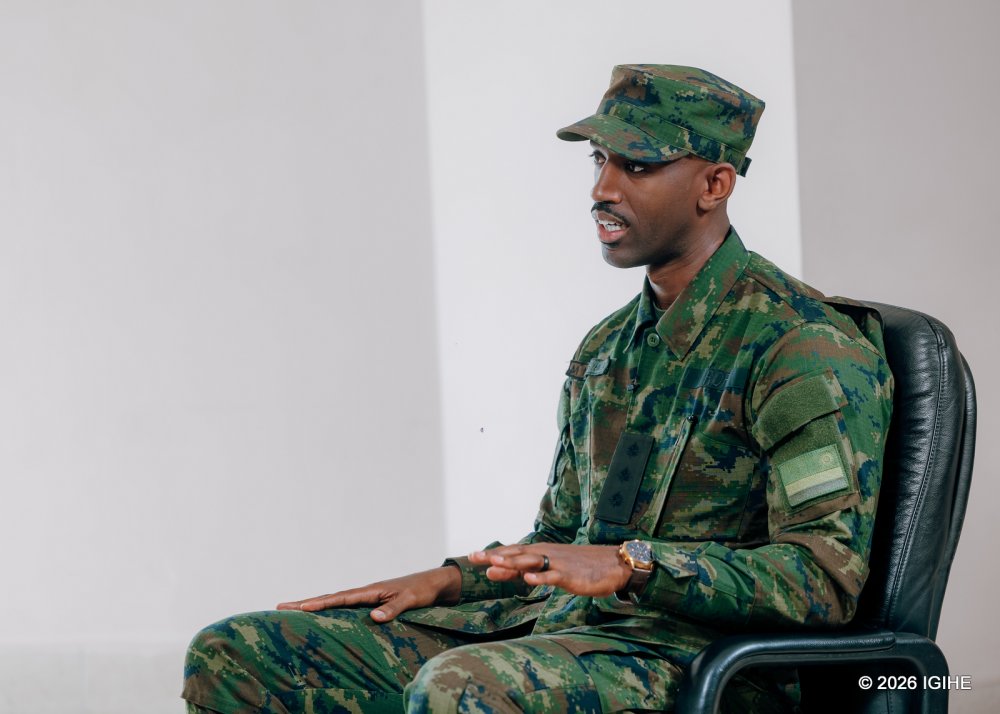
IGIHE: Is there a special feeling that comes with receiving your first military rank?
Capt. Michael Nsengiyumva: It is one of the most memorable and important moments in a soldier's life. Receiving your first rank is a great honour and a moment you always remember.
IGIHE: Rwanda has enjoyed more than 30 years of peace, and many people often associate soldiers with war and combat. During such a period of peace, what does life look like for you as soldiers?
Capt. Michael Nsengiyumva: Protecting the country's sovereignty does not necessarily mean fighting a war. There is a principle that we all learn and uphold: putting the citizen first.
Everything we do within the Rwanda Defence Force, whether it is in healthcare, technical services, administration, or any other area, is focused on ensuring that citizens are safe and able to carry out their daily activities without fear or disruption.
A farmer should be able to work on their land peacefully. A businessperson should be able to conduct their activities in a secure environment. Our responsibility is to create conditions where every citizen feels protected and confident.
Therefore, military service is not only about being on the battlefield. It is also about carrying out your daily duties with the understanding that your work is meant to serve and protect the people.
When citizens see you, they should feel reassured that they are safe and that their well-being is being protected.
IGIHE: What responsibilities do you personally handle in your daily work?
Capt. Michael Nsengiyumva: As a soldier, you must always be prepared to take on any responsibility assigned to you by your commanders. However, in my current role, I work in administration at the Rwanda Defence Force headquarters.
IGIHE: As Rwanda marks the 32nd anniversary of Liberation, what stories from the liberation struggle have inspired you the most?
Capt. Michael Nsengiyumva: The history of Rwanda's liberation is broad, and every part of it gives me inspiration.
However, one thing that continues to stand out for me is the journey of President Paul Kagame, who is also the Commander-in-Chief of the Rwanda Defence Force. He left the life he had established in the United States and returned to join a difficult struggle at a time when Rwanda was facing a serious crisis.
The way he transformed the struggle and led it until Rwanda was liberated is something I reflect on often. It motivates me and pushes me to constantly evaluate myself and learn from that history.
IGIHE: What do you believe young people should do to preserve the achievements and legacy built over the years?
Capt. Michael Nsengiyumva: We grew up hearing about Vision 2020, and today the country is working towards Vision 2050. These visions demonstrate the direction and ambitions that Rwanda has set for itself.
In the same way, every young person should have a personal vision. You should be able to say, 'This is where I am today, but this is where I want to be tomorrow.'
The Rwanda we found when we were born should not remain the same when we grow older. Each of us has a responsibility to contribute something meaningful to the country's development and leave behind a positive impact.
Young people must also avoid behaviours that can harm themselves and society, such as alcohol abuse and drug use. These challenges do not only affect individuals; they also affect the country because they take away valuable human resources, talents, and people who could have contributed to national development.
Beyond education and professional skills, young people must also be ready to adapt to a changing world. Technology continues to evolve every day, and we must develop the ability to learn, adapt, and continue improving ourselves so that we remain relevant in the future.
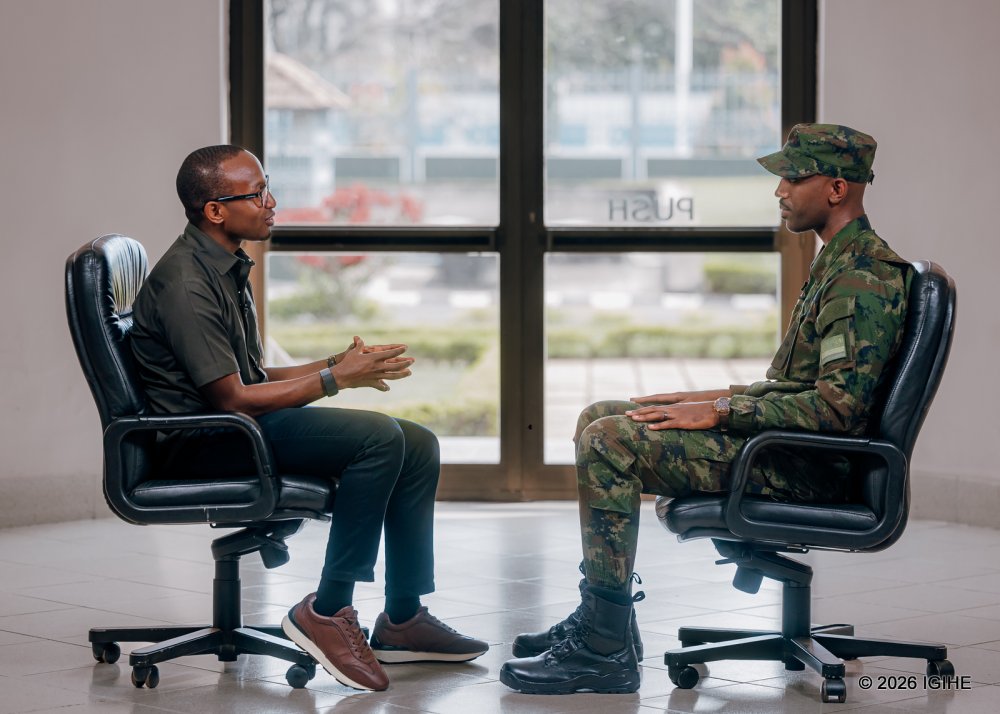
IGIHE: We often see reports of individuals or groups outside the country attempting to undermine Rwanda's security. As those who liberated the country gradually pass on responsibility to your generation, how prepared are you to ensure that no one can threaten the country's security?
Capt. Michael Nsengiyumva: The answer is evident in itself. Today, we have people who were born during the liberation struggle, as well as others who were born after that period, and many of us are now serving in the Rwanda Defence Force.
This demonstrates that there is a continuation of the values that have guided the country, including patriotism, love for Rwanda, and the commitment to make sacrifices whenever the country requires it.
With such values being passed from one generation to another, there is no reason for anyone to worry about the future of Rwanda's security.
More importantly, we understand the history of where our country came from. No one would ever wish to see Rwanda return to the difficult and painful period from which it emerged.
