
July 1 also holds special significance for Rwanda, as it is celebrated as Independence Day. While the two countries have different histories, both have travelled remarkable paths of resilience, recovery, and development.
Over the decades, China and Rwanda have each overcome immense challenges to build and develop their nations, a shared spirit that continues to underpin the growing friendship and mutual trust between the two countries.
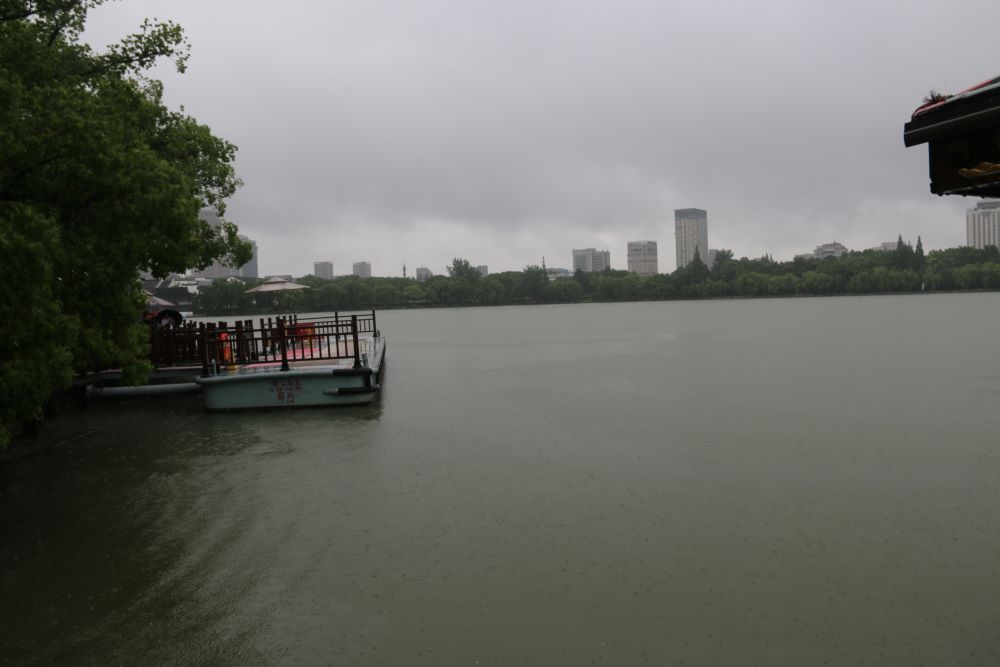
It is against this backdrop that Nanhu Lake takes on a deeper meaning. Widely known for its calm waters, cultural beauty, and rich heritage, the lake is also home to one of the most important sites in modern Chinese history—the Nanhu Revolutionary Memorial Hall, where visitors can retrace the origins of a movement that would go on to shape the course of a nation.
The memorial hall stands as a key site for understanding the early history of the Communist Party of China, especially its founding period in 1921. It is here, beside Nanhu Lake, that history is preserved and retold in a way that connects past political ideas with present national identity. For many visitors, the site is not just a museum, but a place where the origins of CPC philosophy and political thought are remembered and reflected upon.
Nanhu Lake itself is among the most well-known lakes in eastern China. Alongside West Lake in Hangzhou and Xuanwu Lake in Nanjing, it forms part of the cultural and historical landscape of the Yangtze River region. Its natural beauty, shaped over centuries, has long attracted attention, but its modern significance is closely tied to the revolutionary events that unfolded in Jiaxing more than a century ago.
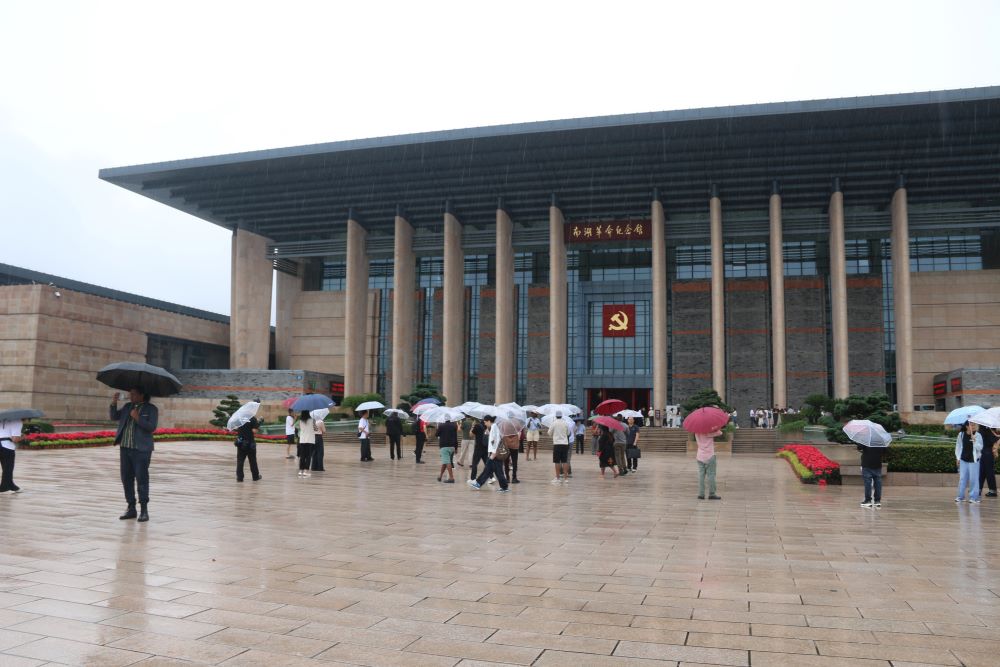
The Nanhu Revolutionary Memorial Hall was established in 1959 and later expanded in 2011 to preserve and present this history in greater depth. Today, it spans more than 19,000 square meters and contains over 10,000 historical artifacts, including documents, photographs, artworks, and rare revolutionary materials connected to the early development of the CPC.
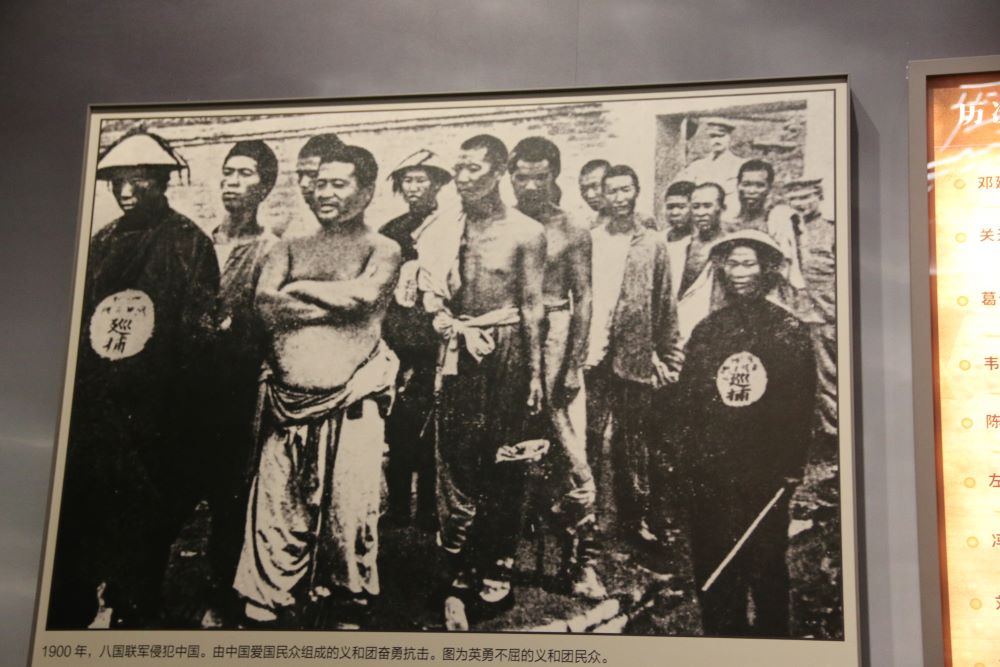
The exhibitions inside the hall trace the formation of the Communist Party of China from its early beginnings under difficult social and political conditions to its gradual development into a major political organization. The displays are arranged to guide visitors through different historical stages, combining physical relics with modern storytelling techniques such as visual projections and immersive presentations.
At the heart of the memorial's historical narrative is the idea that Nanhu played a symbolic role in the shaping of early CPC ideology.
While the Party was officially founded during its First National Congress in 1921, Nanhu Lake in Jiaxing became the place where the meeting concluded after being relocated from Shanghai due to external disruptions. This moment is widely remembered as a defining chapter in the Party's early history.

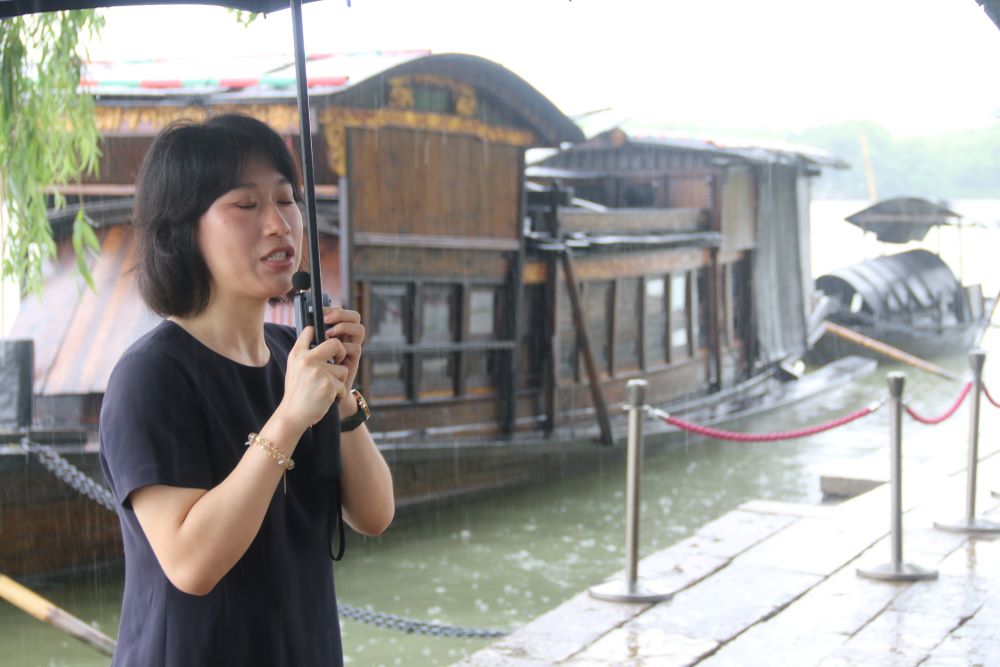
A short walk from the exhibition area leads to the lakeside, where the famous Red Boat is anchored near Yanyu Tower. The boat is a carefully preserved replica built in 1959, modeled after the vessel that became central to the concluding moments of the First National Congress of the Communist Party of China in 1921.
Historical accounts show that the First National Congress was initially held in Shanghai, but it was interrupted by French police during the final stages of the meeting. In response to the disruption, the meeting was relocated to Jiaxing, a move made possible through the assistance of Wang Huiwu, who helped arrange the transfer of delegates and ensured the continuation of the congress. The final discussions were completed on a boat on Nanhu Lake, an event that later became one of the most symbolic moments in CPC history.
Among the delegates involved was Dong Biwu, one of the 13 representatives who attended the founding congress. His accounts, along with historical records, helped verify and preserve the memory of how the meeting concluded on the Red Boat.
Today, the replica Red Boat is carefully maintained using traditional methods and remains one of the most visited landmarks in the memorial area, symbolizing the birthplace of the CPC's concluding declaration.
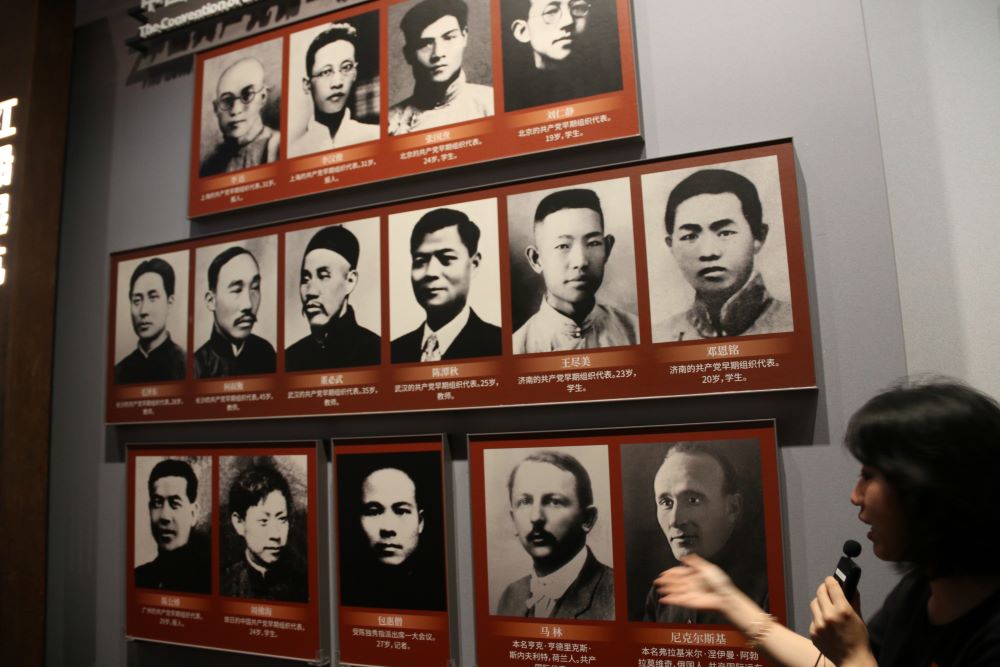
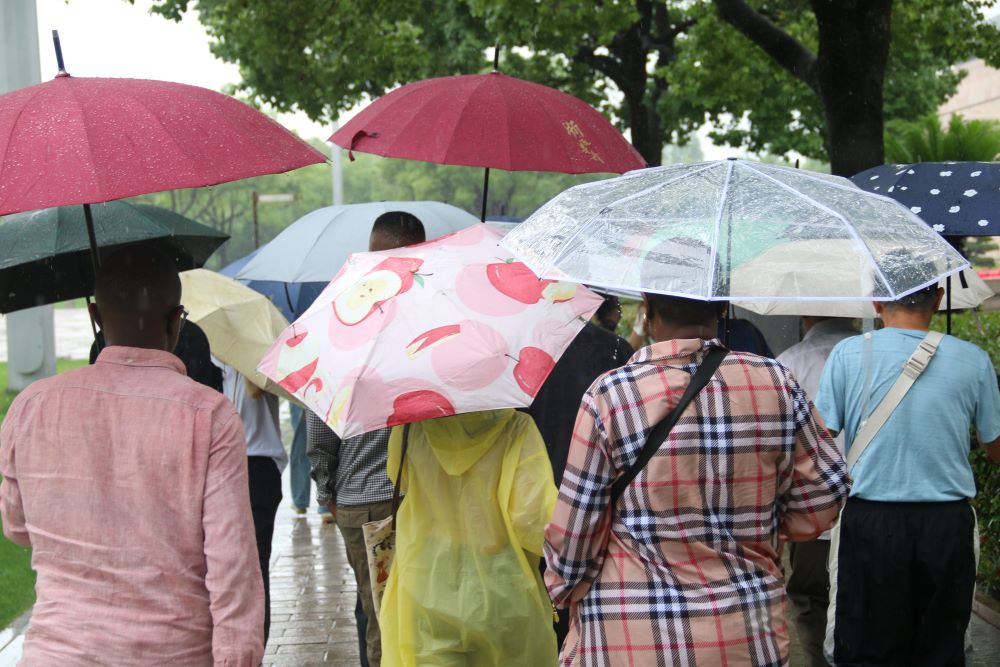
The Nanhu Revolutionary Memorial Hall now welcomes more than one million visitors each year. During peak holidays, visitor numbers rise significantly, with families and young people forming a large share of those who come to explore the site. Many visit not only for tourism but also to understand the historical roots of the CPC and its development over time.
Curators at the memorial emphasize that the purpose of the site is educational as much as it is historical. Over the years, the museum has expanded its exhibitions and introduced modern display techniques to make history more accessible. This includes interactive visuals and structured storytelling designed to engage younger generations while preserving the authenticity of historical materials.
Beyond being a museum, Nanhu blends natural scenery with political history, reflecting both Jiaxing's beauty and the enduring memory of the early days of the Communist Party of China.
As I leave the lakeside on this special date, China's Party anniversary and my own country's Independence Day, I carry with me a subtle lesson: that nations, like boats, are steered by the resolve of those who board them in times of uncertainty. And that memory, whether preserved in a museum or carried in people's heart, is the anchor of every lasting journey.