

According to the DRC government, the term refers to the millions of Congolese who were killed during the plundering of the country's natural resources, particularly strategic minerals needed for modern technology such as coltan, tantalum, tungsten, and others. The DRC argues that these tragedies should be recognized as genocide and acknowledged as such by the international community.
Although the issue concerns the Congo, its implications extend to neighboring countries, including Rwanda. Rwanda sees it differently. It argues that 'Genocost' is a political tool intended to distract attention from the DRC's internal problems, overlook the role of the Kinshasa government in conflicts that have persisted for decades, and attempt to rewrite the history of the 1994 Genocide against the Tutsi in Rwanda.
The controversy has gained greater significance as relations between Rwanda and the DRC continue to deteriorate, particularly over the presence of the FDLR armed group in eastern DRC and the conflict involving FARDC and AFC/M23.
A controversial term
Although 'Genocost' is now used by senior DRC officials, it is not a long-established concept in the country's political history. The term was introduced in 2013 in London by activists from the Congolese Action Youth Platform (CAYP) as a combination of the words 'genocide' and 'cost,' intended to describe what they considered a genocide driven by economic interests.
They designated August 2 as a day of remembrance for crimes committed in the DRC since the 1990s. The date was chosen because it coincides with the launch of the Rassemblement Congolais pour la Démocratie (RCD), a movement that fought against the government of Laurent-Désiré Kabila in 1998 during the Second Congo War.
However, even within the DRC there is no consensus about the date from which 'Genocost' should begin. Some associate it with 1998, others with 1996, when Laurent-Désiré Kabila's AFDL was launched. Meanwhile, Fonarev—the DRC government fund responsible for compensating victims of war-related violence and serious crimes—argues that the history should begin in 1993, before the Genocide against the Tutsi in Rwanda.
This lack of agreement itself highlights a major issue with the term: there is no consensus regarding the period it covers, the crimes it encompasses, the perpetrators involved, or the specific group that was allegedly targeted in a systematic manner, as required under international legal definitions of genocide.
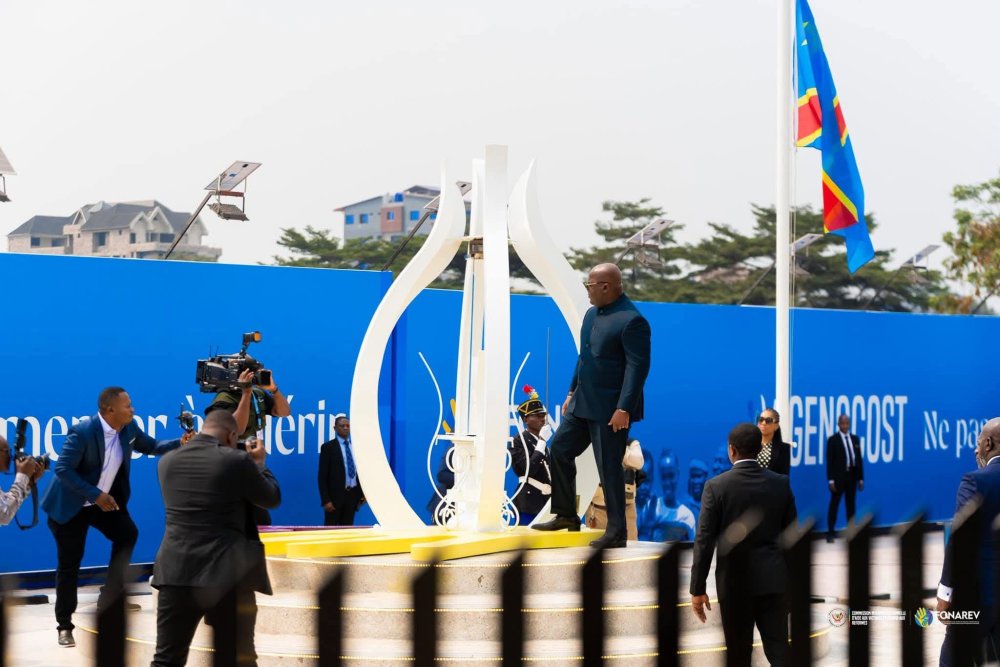
The DRC says it is about justice and dignity
From Kinshasa's perspective, 'Genocost' represents an effort to give a name to the suffering of Congolese people who, for years, have been killed, raped, displaced from their homes, or turned into internally displaced persons within their own country.
Supporters of the term argue that conflicts in the DRC cannot be explained solely as ethnic wars or internal political disputes. Instead, they contend that foreign interests and the trade in mineral resources are fundamental drivers of the violence.
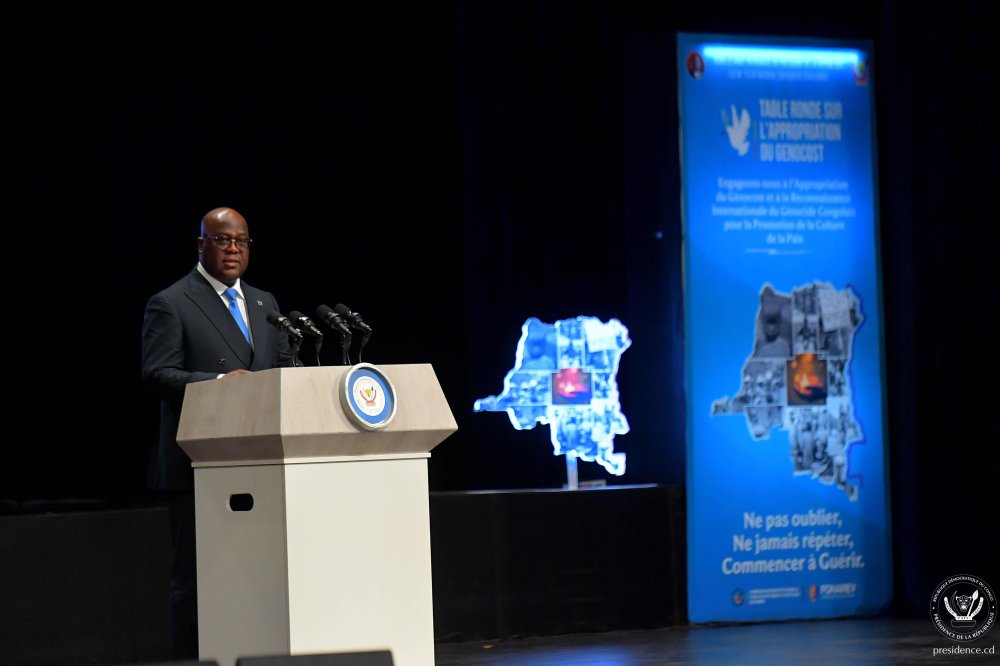
In 2023, after 'Genocost' was incorporated into DRC law through legislation adopted on December 26, 2022, which also established Fonarev, President Félix Tshisekedi presided over the first official state commemoration. In 2025, the DRC inaugurated a 'Genocost' memorial and announced plans to build six additional memorials across the country.
Tshisekedi has also raised the issue at the United Nations, arguing that the international community has both political and humanitarian obligations to recognize what happened in the DRC as genocide.
Why Rwanda views 'Genocost' as a political campaign
Rwanda says the issue is not about denying that Congolese people have died or suffered abuse. It acknowledges that the DRC has experienced severe tragedies involving war, killings, violence, and decades of poor governance.
What Rwanda opposes, however, is the attempt to label those crimes as 'genocide' in a manner it argues is inconsistent with international law and is being used politically to accuse Rwanda and diminish the significance of the Genocide against the Tutsi.
Rwanda's Minister of Foreign Affairs, Olivier Nduhungirehe, has stated that genocide is not a term that can be used arbitrarily. He argued that genocide is defined under international law, while crimes driven by economic exploitation or resource looting already have established legal classifications, including corruption, poor governance, embezzlement of public funds, war crimes, or crimes against humanity, depending on the circumstances.
This forms the basis of Rwanda's argument that the extraordinary suffering experienced by the DRC does not automatically mean every mass killing constitutes genocide.
Under international law, genocide requires proof of an intent to destroy a protected group defined by ethnicity, nationality, race, or religion.
Without evidence of such intent, crimes may qualify as war crimes or crimes against humanity, but not necessarily genocide.
'Genocost,' a term that targets an ethnic group
According to the article, the version of 'Genocost' promoted by Fonarev includes language that assigns collective blame to an ethnic group.
Fonarev defines 'Genocost' as killings of 'Congolese people' allegedly planned by what it describes as 'Tutsi from Rwanda, Uganda, and Burundi.' Rwanda has frequently argued that such language is dangerous because it risks turning public suffering into a tool for promoting ethnic hatred.
This rhetoric comes at a time when eastern DRC has witnessed statements and actions targeting Kinyarwanda-speaking Congolese, particularly Congolese Tutsi. On various occasions, videos have circulated showing Tutsi individuals being killed, burned, or subjected to violence because of their appearance or perceived identity.
For this reason, Rwanda argues that the DRC government should not present itself as a champion against genocide while anti-Tutsi rhetoric and actions continue within the country.
Stephanie Nyombayire, spokesperson for Rwanda's Office of the President, has stated that the Kinshasa government is 'inventing a genocide' to conceal its own shortcomings. She argued that many Congolese who died in the past and those who continue to die today are victims of poor governance, as the state has failed to protect its citizens while leaders prioritize their own interests over public security.
'Genocost' has become a propaganda tool
The DRC's international campaign to promote recognition of 'Genocost' has coincided with renewed fighting in eastern DRC, where Kinshasa accuses Rwanda of supporting AFC/M23.
Researcher Pierre Boisselet of the Ebuteli Institute has suggested that the way Kinshasa uses the term may be intended to portray Congolese suffering as equal to, or greater than, the suffering of Rwandans during the Genocide against the Tutsi. According to him, this could undermine what he described as Rwanda's 'unique moral standing' derived from the events of 1994.
Experts in international law have also pointed out that promoting a term that has not been recognized in legal frameworks may be difficult because states cannot be compelled to accept a concept that has never been internationally agreed upon.
Rwanda therefore argues that if crimes have been committed in the DRC, they should be thoroughly investigated and those responsible brought to justice, but not through the creation of a new term used to wage a political battle.
Some Congolese disagree with the government
The activists who originally launched the 'Genocost' campaign have themselves begun expressing concerns about how the DRC government is using it.
CAYP, the organization that introduced the term, has criticized Kinshasa's approach, arguing that it has become overly focused on conferences, discussions, and symbolic public events rather than implementing concrete measures to protect civilians and assist victims.
Some critics also question how the government can claim to pursue justice for war crimes while including officials who have been associated with past conflicts. One example frequently cited is Jean-Pierre Bemba, who serves within Tshisekedi's administration but is also linked to the history of the Second Congo War.
Others argue that the pursuit of justice should not involve distorting history, assigning blame to an entire ethnic group, or attempting to compete with the history of the Genocide against the Tutsi.
The Genocide against the Tutsi has a documented history, identified perpetrators, a clear extermination plan, organized hate propaganda, state institutions that implemented it, and rulings from international courts confirming its occurrence. Comparing it to a newly coined term that lacks recognition under international law may therefore be viewed as a form of genocide minimization.
