
The Organisation for Economic Co-operation and Development (OECD), which organises PISA, found that 22% of disadvantaged Rwandan students were among the top quarter of science performers in the country.
The OECD describes such students as academically resilient because they achieve relatively strong academic results despite coming from socio-economically disadvantaged backgrounds.
Rwanda's 22% is almost twice the OECD average of 11.9%, placing the country among only four participating education systems that recorded a proportion of at least 22%. The others were Cambodia, Kenya and Uzbekistan.
The finding from the 9th edition stands out in Rwanda's first participation in PISA, which assessed how 15-year-old students use their knowledge and skills to solve problems and respond to real-life situations.
It suggests that coming from a disadvantaged household does not necessarily prevent some Rwandan students from achieving strong results, even though the country's overall performance remained well below the OECD average.
The OECD also found a relatively small difference in science performance between Rwanda's most advantaged and disadvantaged students.
The gap was 30 points, compared with an OECD average of 85 points.
Socio-economic status accounted for only 3% of the variation in science performance among Rwandan students, compared with 12% across OECD countries.
The findings provide an indication that socio-economic background may have a weaker relationship with academic performance in Rwanda than it does in many other education systems.
However, the picture becomes more complicated when overall performance is considered.
Overall learning remains a challenge
Rwanda participated in PISA for the first time in 2025, with 6,622 students from 213 schools taking part, representing about 99,000 15-year-olds across the country.
Only 13% of Rwandan students reached at least Level 2 proficiency in science, compared with an OECD average of 74%.
In mathematics, 8% reached the minimum proficiency level, against 65% across OECD countries, while reading recorded the lowest result, with only 4% reaching Level 2 compared with 69% across OECD countries.
This means that while Rwanda has a notable group of academically resilient students, the broader education system still faces the challenge of raising basic proficiency across the student population.
PISA also revealed a gender gap in Rwanda, with boys outperforming girls in all three assessed areas.
In science, boys recorded an average score of 332 compared with 306 for girls. In mathematics, boys scored 325 against 302 for girls.
Reading showed a smaller difference, with boys scoring 304 compared with 298 for girls.
The reading result is notable because girls generally outperform boys in reading across OECD countries.
Technology use raises another question
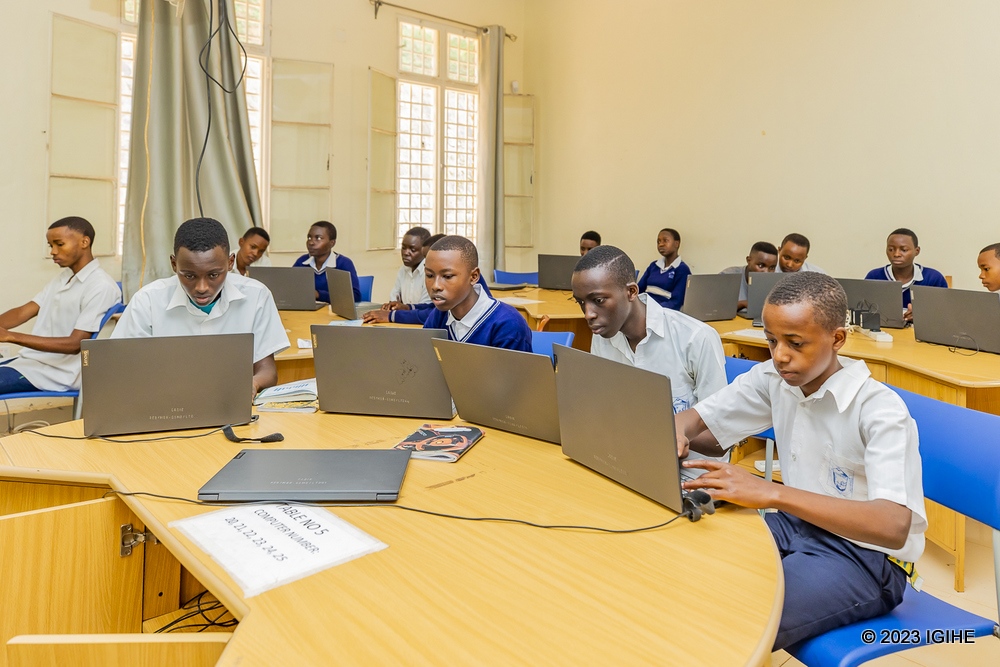
The assessment also highlighted Rwanda's relatively extensive use of digital devices in schools.
Students reported spending an average of 3.2 hours a day using digital devices at school for learning, compared with 1.7 hours across OECD countries.
They also reported spending 2.9 hours a day using digital devices for leisure at school, against an OECD average of 1.1 hours.
The figures do not establish that technology use caused or contributed to Rwanda's academic performance. They do, however, provide an important area for the education sector to examine as the country expands digital learning.
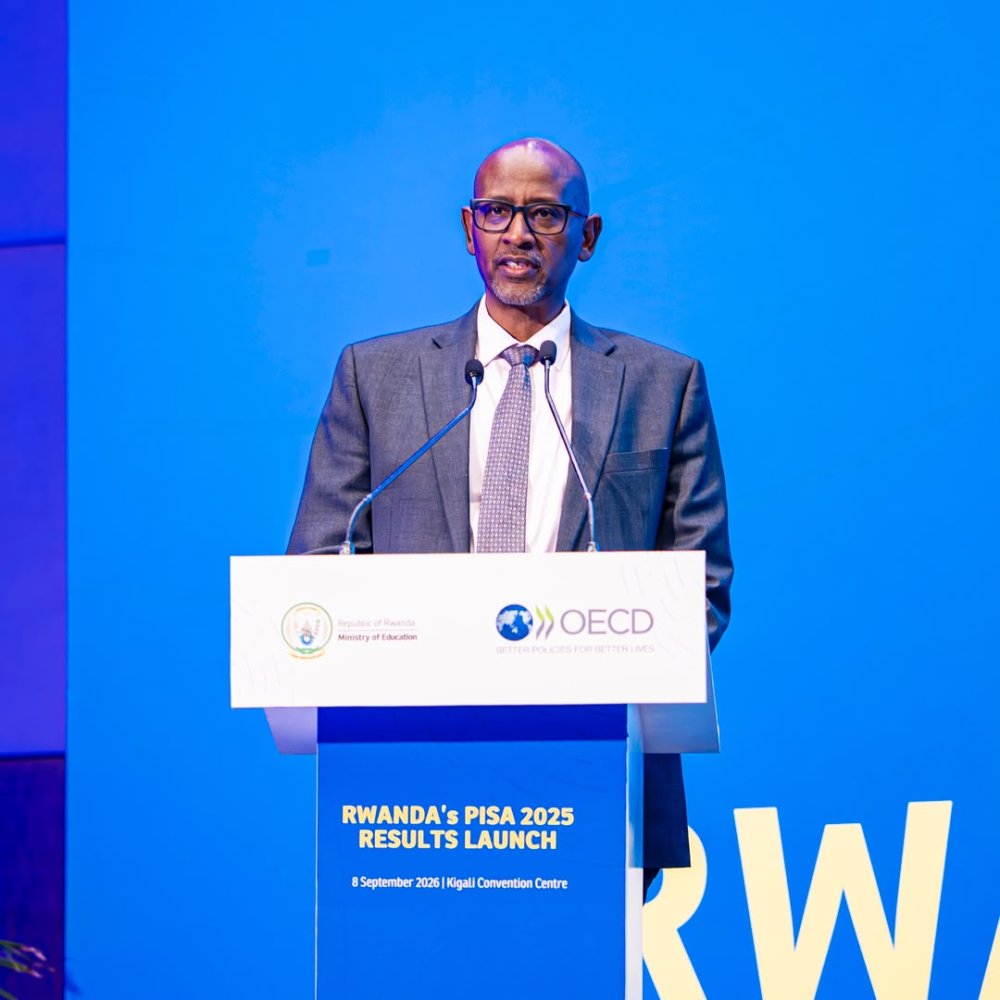
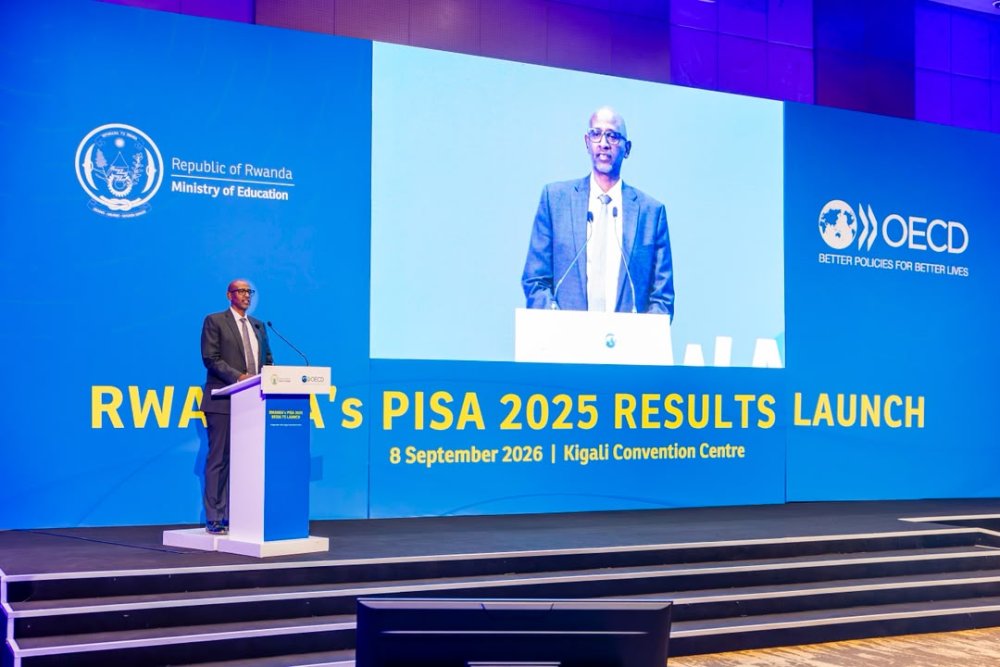
Speaking at a ceremony held in Kigali on September 8, 2026, to present the results of the assessment, Minister of Education Joseph Nsengimana said Rwanda had drawn important lessons from the exercise.
He said Rwanda's performance fell short of expectations, adding that the results would help identify gaps and guide improvements in education.
Minister Nsengimana further explained that Rwanda participated in the PISA 2025 assessment to strengthen its use of data and evidence in making decisions.
On September 17, Rwanda will host PISA Regional Dialogue, bringing together the five African countries that participated in PISA 2025 to jointly review the findings and identify areas that need improvement as well as lessons they can learn from one another.
The dialogue will also bring together countries from other continents that performed well and those that demonstrated reforms in PISA 2025, allowing African countries to learn from their experiences and gain insights into how they can strengthen their education systems.