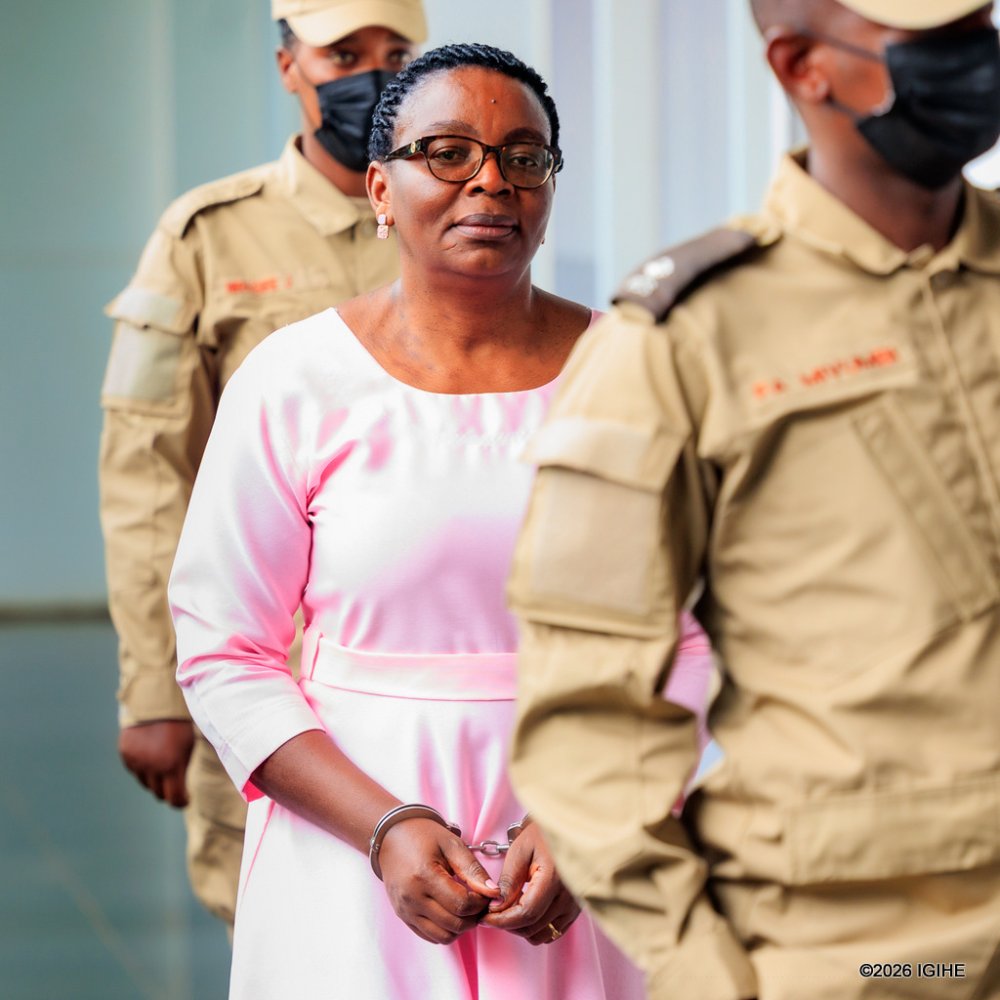

The charges include forming or joining a criminal organisation, inciting riots or public disorder, attempting to undermine the established government, and spreading false information or propaganda intended to turn foreign countries against Rwanda.
The prosecution began presenting its case after earlier proceedings in which Ingabire and her lawyers challenged the panel of judges hearing the case and were fined Rwf500,000 for allegedly delaying the proceedings. The challenge was rejected by the Court of Appeal, which also upheld the fine.
Prosecutors alleged that although Ingabire had advocated removing the government through non-violent means, investigations showed that she was also involved in efforts involving force or weapons.
The prosecution said that after Ingabire was pardoned and released from prison in September 2018, she resumed working with FDU Inkingi and groups based outside Rwanda in efforts aimed at removing the government.
It also linked her to the P5 coalition, which included the Rwanda National Congress (RNC), FDU Inkingi, Amahoro People's Congress, PDP-Imanzi and a faction of PS-Imberakuri led by Bernard Ntaganda.
The prosecution alleged that P5 was involved in attacks in Rwanda, including an October 2019 attack in Musanze District that killed civilians and injured others.
Ingabire's lawyer, Bruce Bikotwa, asked prosecutors to demonstrate her specific role in FDU Inkingi while the group was part of P5. The prosecutor responded that Ingabire founded and continued to lead FDU Inkingi during that period.
The prosecution also referred to a covert investigation and alleged that Ingabire and former FDU Inkingi member Cassien Ntamuhanga were recorded discussing plans to overthrow the government. The recordings, it said, will be presented in court.
Prosecutors further alleged that after Ingabire realised an armed overthrow was not possible, she changed strategy and organised training sessions described as English classes for DALFA Umurinzi members.
According to the prosecution, participants were taught strategies including 'protest and persuasion', 'non-cooperation', 'boycott' and 'mobilisation'. They were allegedly encouraged to use methods such as refusing to participate in some government programmes and to use media platforms to publicise their activities.
The prosecution also alleged that Ingabire coordinated participants inside and outside Rwanda, while journalists Théoneste Nsengimana and Dieudonné Niyonsenga, known as Cyuma Hassan, were expected to help publicise the activities.
The court has given the prosecution four days to present its case, after which the defence will respond.
The hearing was adjourned on Friday afternoon and will resume on September 21 at 9 a.m. when the prosecution will continue presenting its case.