
Implemented by the Rwanda Agriculture and Animal Resources Development Board (RAB), SAIP II aims to promote sustainable agriculture and strengthen food security from October 2024 to October 2026.
The project focuses on several areas of agricultural development, including irrigation, where more than Rwf5 billion has already been invested, while an additional Rwf6 billion is planned for use by December 2026.
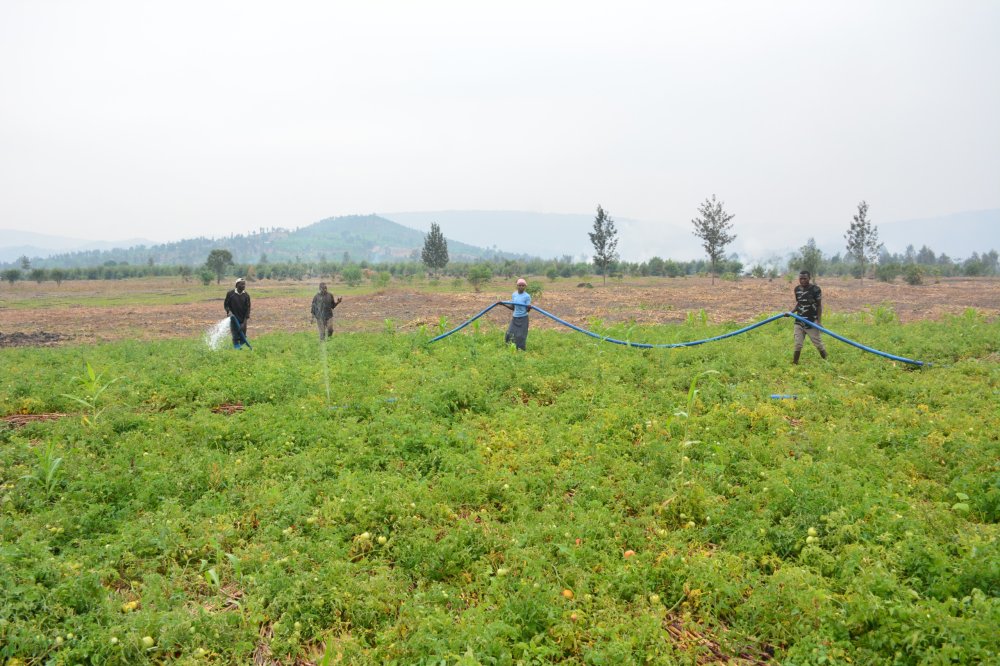
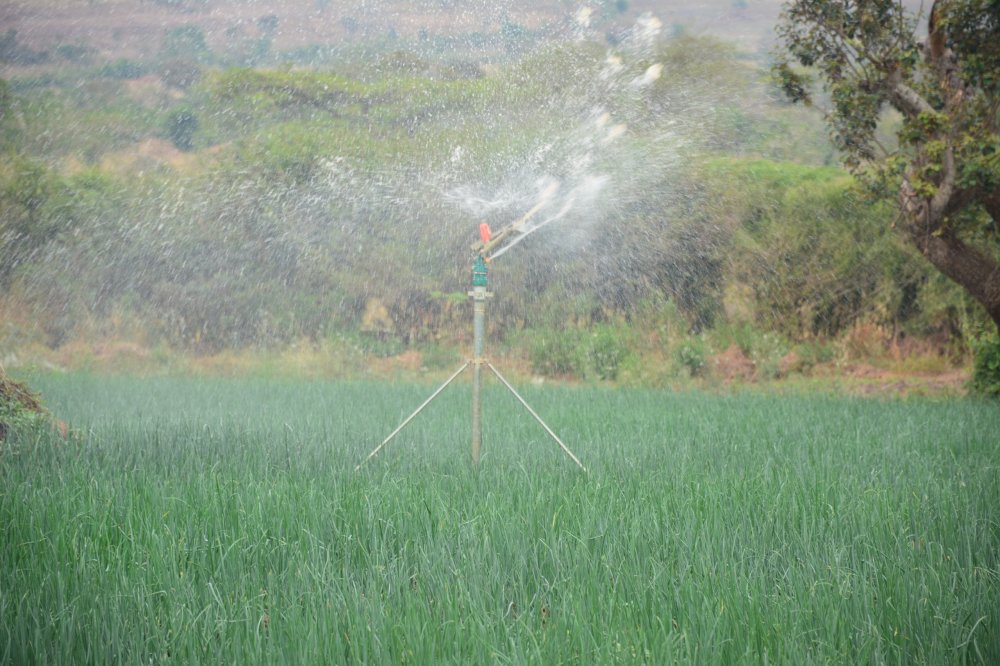
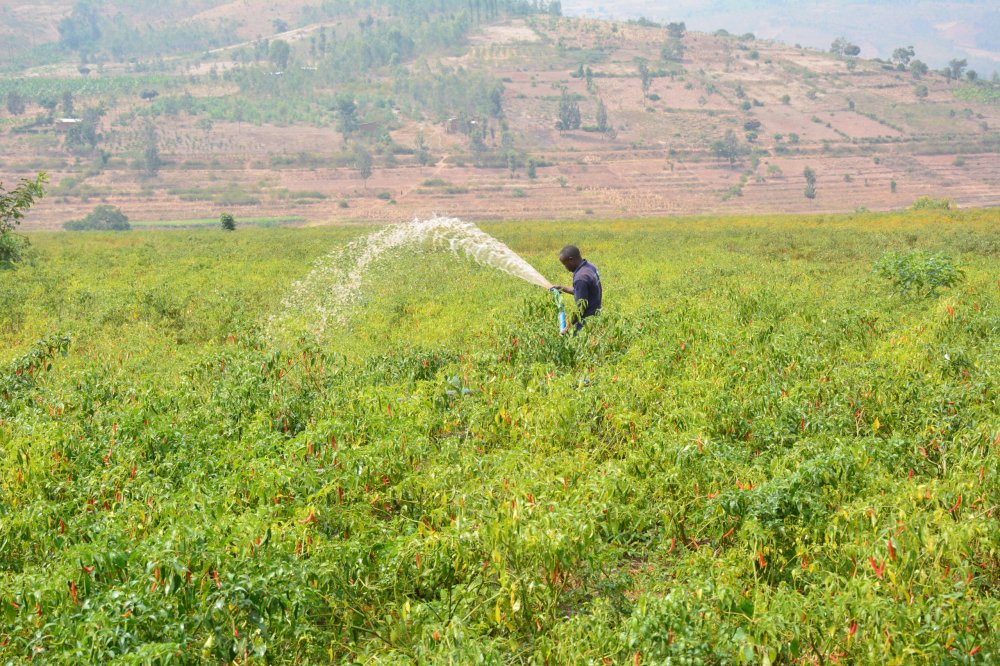
SAIP II supports small-scale irrigation schemes covering areas of up to 10 hectares, particularly benefiting farmers growing crops such as vegetables, tomatoes, chilli peppers, avocados and maize seeds.
Through the project, farmers receive irrigation equipment, training on its use and support to access markets for quality produce.
Jean Paul Buregeya, a tomato and maize farmer in Mimuri Sector, Nyagatare District, said irrigation support transformed his farming activities. He previously relied on manual watering using watering cans, which limited production.
After receiving irrigation support through SAIP II, Buregeya said his tomato harvest value increased from about Rwf1.5 million to Rwf3.5 million.
The improved income has enabled him to invest in assets, including buying a cow worth Rwf1 million and a house valued at Rwf3.5 million within one and a half years.
In Murundi Sector, Kayonza District, farmers in the Buhabwa agricultural zone also say irrigation has helped them overcome challenges caused by drought.
Mbaraga Potiane, who leads farmers in the area, said SAIP II provided more than Rwf70 million to establish an irrigation system covering five hectares.
'On one hectare, watermelon production generates about Rwf7 million. Previously, crops would dry up during periods of intense sunshine. We now have reliable markets, and we have earned up to Rwf15 million from three hectares of chilli peppers, which we export,' he said.
Meanwhile, Faustin Ugirumurera, head of Ubuzima Bwiza Kayonza, a water users' association, said SAIP II support helped improve irrigation systems in the Kayonza Kane agricultural zone in Kabare Sector, which covers 365 hectares.
The zone, where 416 farmers grow fruits and vegetables, had previously faced water shortages that affected crop production during dry periods.
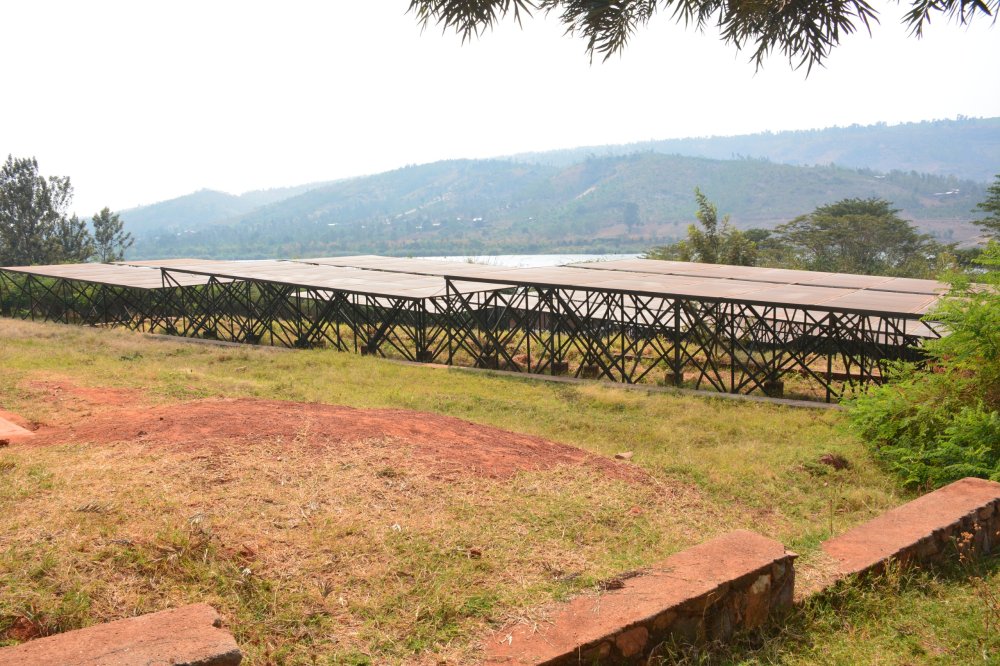
Through SAIP II, farmers received more than Rwf800 million to purchase irrigation equipment, including 540 solar-powered systems and water pumping machines to supply water across the farming area.
The investment has significantly increased productivity. Farmers now harvest more than four tonnes of chilli peppers per hectare, compared with less than 500 kilograms previously. Tomato production has also increased to about five tonnes per hectare, up from less than 400 kilograms.
Kayonza District Acting Vice Mayor Jules Higiro said the project has expanded irrigated farmland in the district, adding more than 170 hectares to the area under irrigation, with further expansion ongoing.
The initiative has increased the number of agricultural zones equipped with irrigation systems in Kayonza to 11, with local authorities urging farmers to maintain the infrastructure so they can continue benefiting after donor-supported projects come to an end.