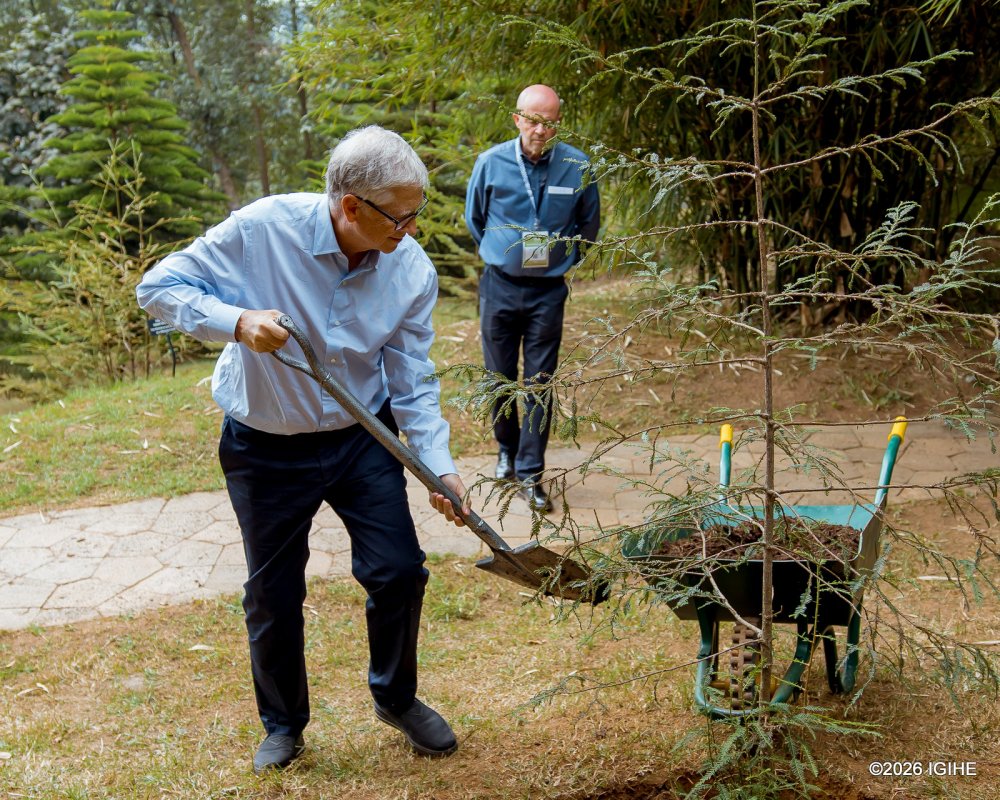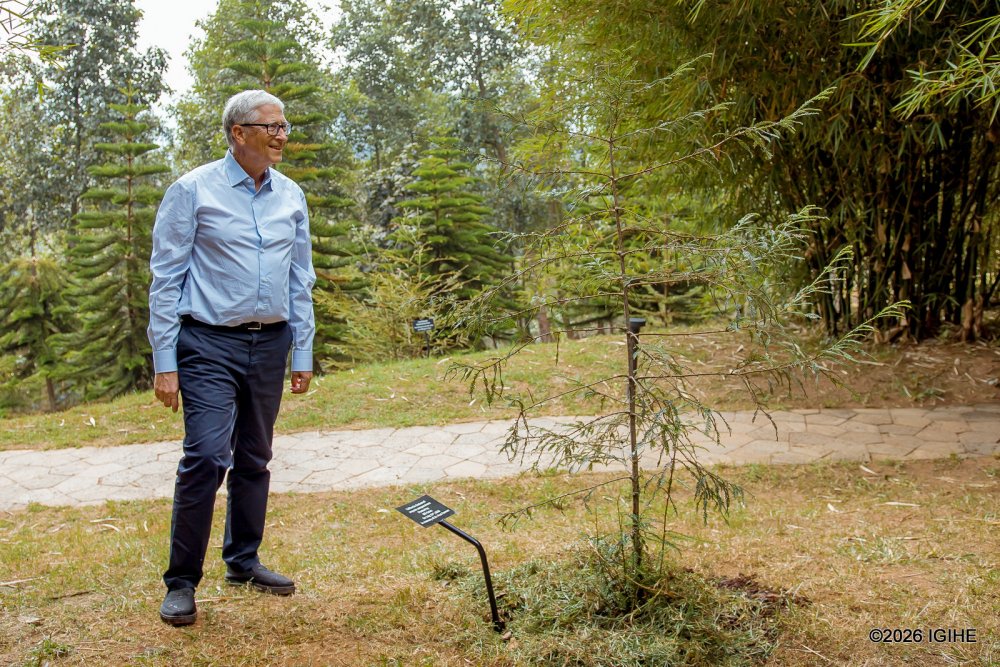

Microsoft co-founder and philanthropist Bill Gates has praised Rwanda's progress in improving healthcare outcomes, while warning that artificial intelligence (AI) must be made accessible to African health systems rather than becoming a tool that benefits only wealthy countries.
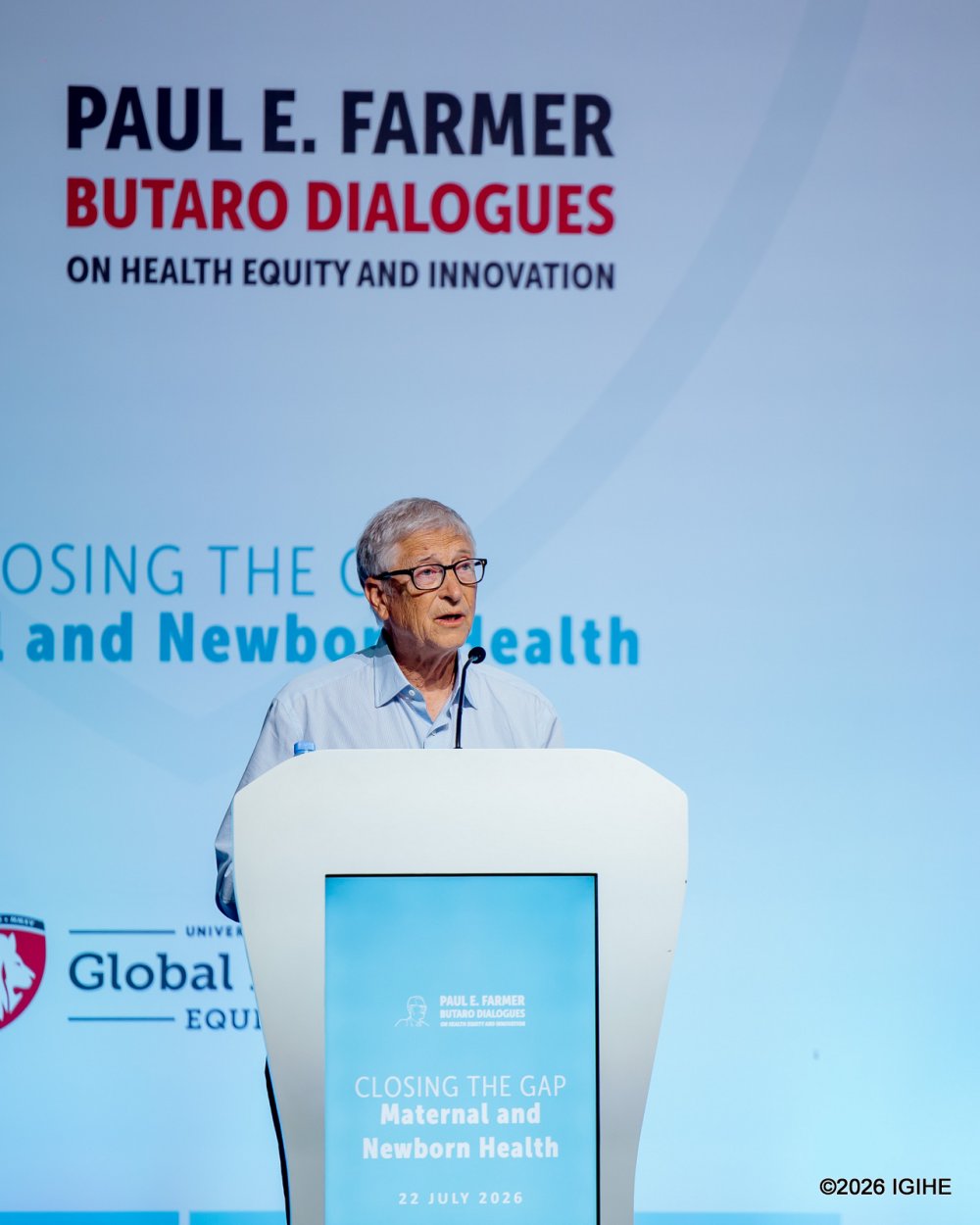
Gates made the remarks on Wednesday while delivering the inaugural lecture at the Paul E. Farmer Butaro Dialogues on Health Equity and Innovation, hosted by the University of Global Health Equity (UGHE) in Butaro, Northern Province.
The dialogue, named after the late physician and global health pioneer Paul Farmer, brought together global health leaders to discuss how medical innovations can reach communities that need them most.
Gates highlighted Rwanda's progress in building a strong healthcare system, using technology and community-based approaches to improve health outcomes, particularly in reducing child and maternal deaths.
'Rwanda as a whole has set a very good example. Its public health system, there's a lot that others could learn from,' he said.
'Since the turn of the century, child deaths have fallen by 80%. Maternal deaths are down over 80%, and those are really incredible numbers.'
He also praised Rwanda's use of digital technology in healthcare, citing his visit to the National Health Intelligence Center (NHIC), where he observed how digital systems are being used to monitor and improve health services.
'Those digital systems will be the foundation for the next generation, which will be powered by artificial intelligence,' Gates noted, adding that Rwanda is 'at the forefront' of exploring how AI can benefit the health system.
However, Gates warned that global health progress is facing growing pressure, partly due to declining financial support from donor countries.
'Today we face greater challenges than ever. Progress in Africa as a whole is definitely in jeopardy. It's a tough time for global health,' he cautioned.
He pointed out that donor countries are reducing their aid budgets, leaving African leaders under pressure to achieve more with fewer resources.
'Around the world, donor countries are shrinking their aid budgets, and so the leaders here are being forced to do more with less,' Gates explained.
He noted that the consequences of those decisions were already becoming visible, highlighting that last year marked the first time since the turn of the century that global childhood deaths increased.
'Not here in Rwanda, but a lot of those additional deaths were in Africa,' he added.
Gates argued that the situation makes it even more important to ensure new technologies, particularly AI, are used to strengthen healthcare delivery in countries with limited resources.
He warned that AI could deepen existing inequalities if it follows the same path as many previous technologies, where benefits are concentrated in wealthier nations.
'If we let things take their normal course, AI, like all advanced tools, will be in the rich countries,' he stated.
'The profit motive, the amount customers can pay, the data centres, it will benefit a narrow part of the world. That would be a great injustice.'
He stressed that Africa should be among the first places to benefit from AI, given the continent's overstretched healthcare workforce.
'Right at the beginning, if anything, we should bring AI to those in need because the most overloaded healthcare workforce in the world, of course, is here in Africa,' Gates emphasized.
He explained that AI tools could help healthcare workers make better decisions, streamline services and identify where additional support is needed.
'The things that help them make decisions and streamline things and show them where we should do more, those will save many, many lives,' he added.
Gates noted that institutions such as UGHE would play an important role in ensuring AI solutions are adapted to local realities, including language needs and health challenges specific to African communities.
The remarks echoed the message of the dialogue, which UGHE Deputy Vice Chancellor Prof. Abebe Bekele described as an effort to bridge the gap between medical innovation and implementation.
Prof. Bekele observed that advances in artificial intelligence, digital health, genomics, diagnostics and clinical care were expanding the boundaries of medicine, but millions of people were still unable to benefit from these breakthroughs.
'The challenge before us is not one of discovery alone. It's one of translation,' he noted.
He stressed that innovations only save lives when they are successfully implemented through policies, education, research and healthcare systems that ensure they reach every woman and child regardless of where they live.
Prof. Bekele explained that the Butaro Dialogues, organised by UGHE and the Consortium of Medical Schools in Africa (COMSA), aim to identify critical maternal and neonatal health innovations and support their adoption across African health systems.
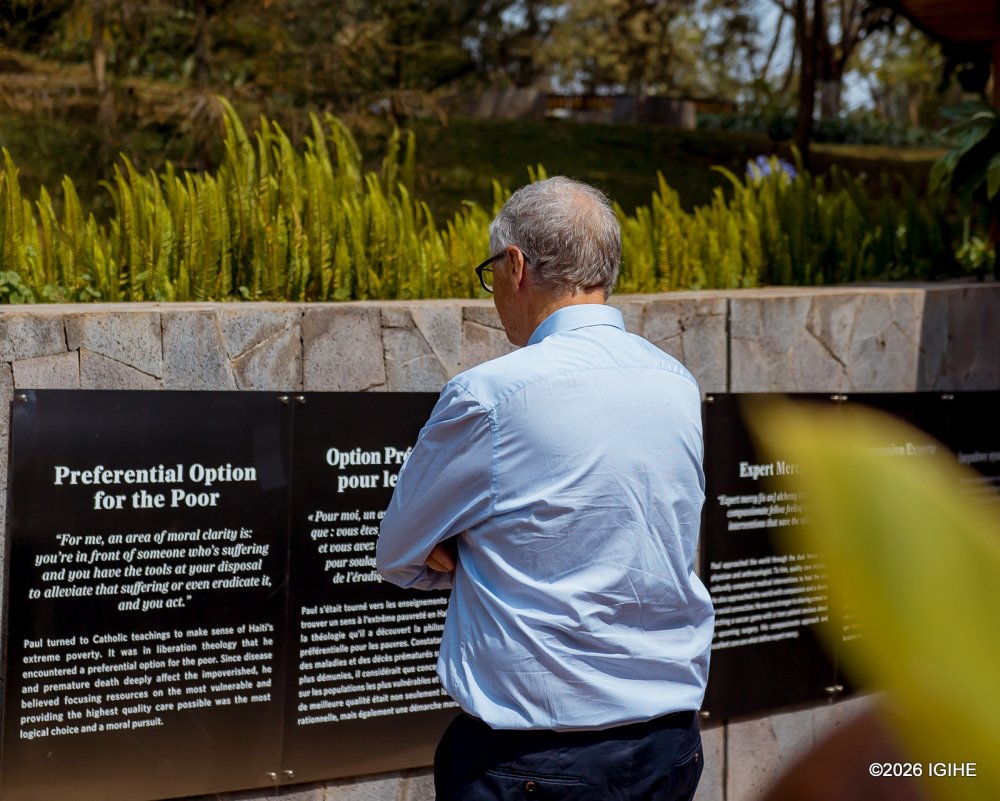
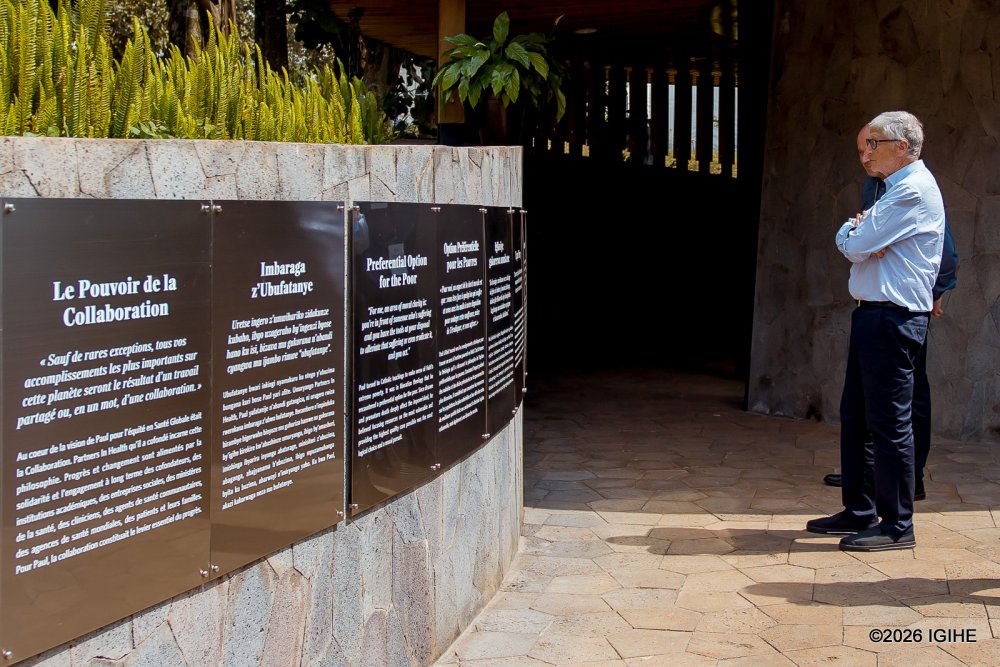
Gates also reflected on the legacy of Paul Farmer, who helped establish UGHE and dedicated his career to expanding access to quality healthcare for underserved communities.
He described Farmer's greatest lesson as the belief that medical breakthroughs only matter when they reach the people who need them most.
'For him, he saw everyone as worthy of having great health,' Gates said. 'What mattered to him were the lives he saved.'
The inaugural Paul E. Farmer Butaro Dialogues brought together government officials, health experts, academics and students to explore how innovation, technology and stronger health systems can advance health equity across Africa.
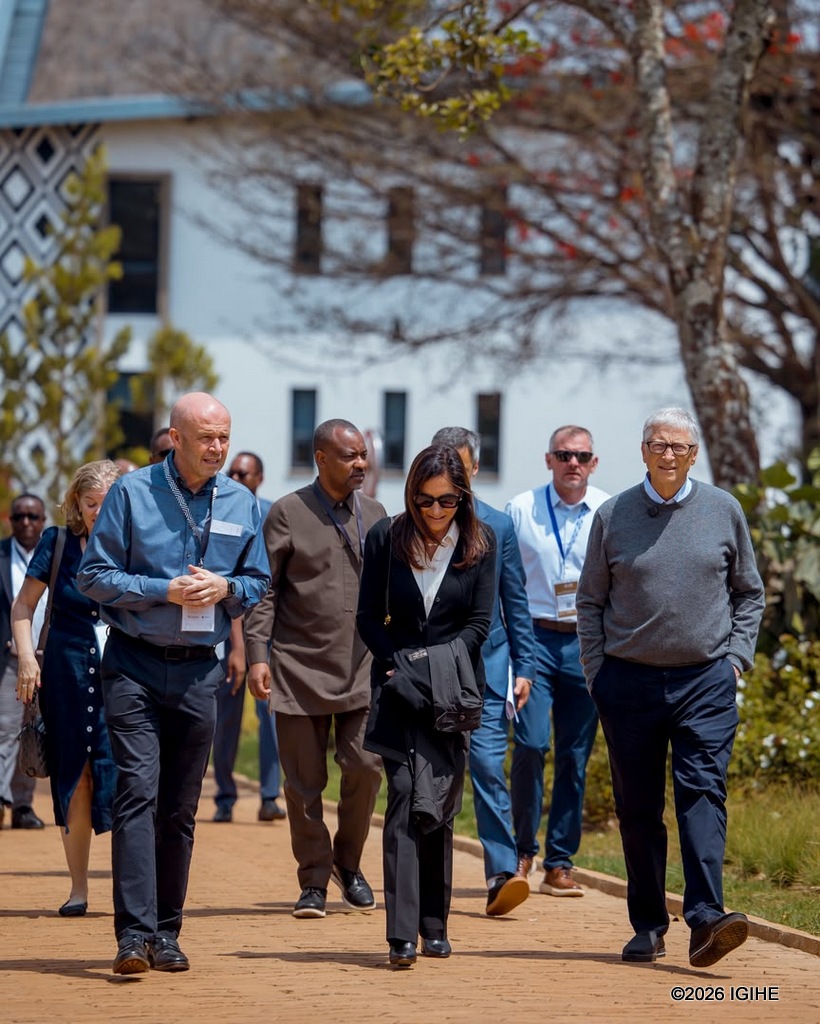
Gates started his engagements in Rwanda on Monday, July 20, as part of a visit focused on learning more about the country's progress in health, agriculture, and digital public infrastructure.
Since arriving in Rwanda, Gates has toured the TKMD syringe manufacturing plant in Rwamagana District, visited Mwulire Health Centre, and met community health workers to gain deeper insight into Rwanda's primary healthcare system.
The Gates Foundation has worked with Rwanda for more than two decades, supporting programmes in healthcare, agriculture, nutrition, and innovation. Earlier this year, Rwanda became the first beneficiary of the Horizon1000 initiative, a $50 million artificial intelligence programme launched by the Gates Foundation in partnership with OpenAI to help African countries use AI to strengthen healthcare delivery.